
Announcements
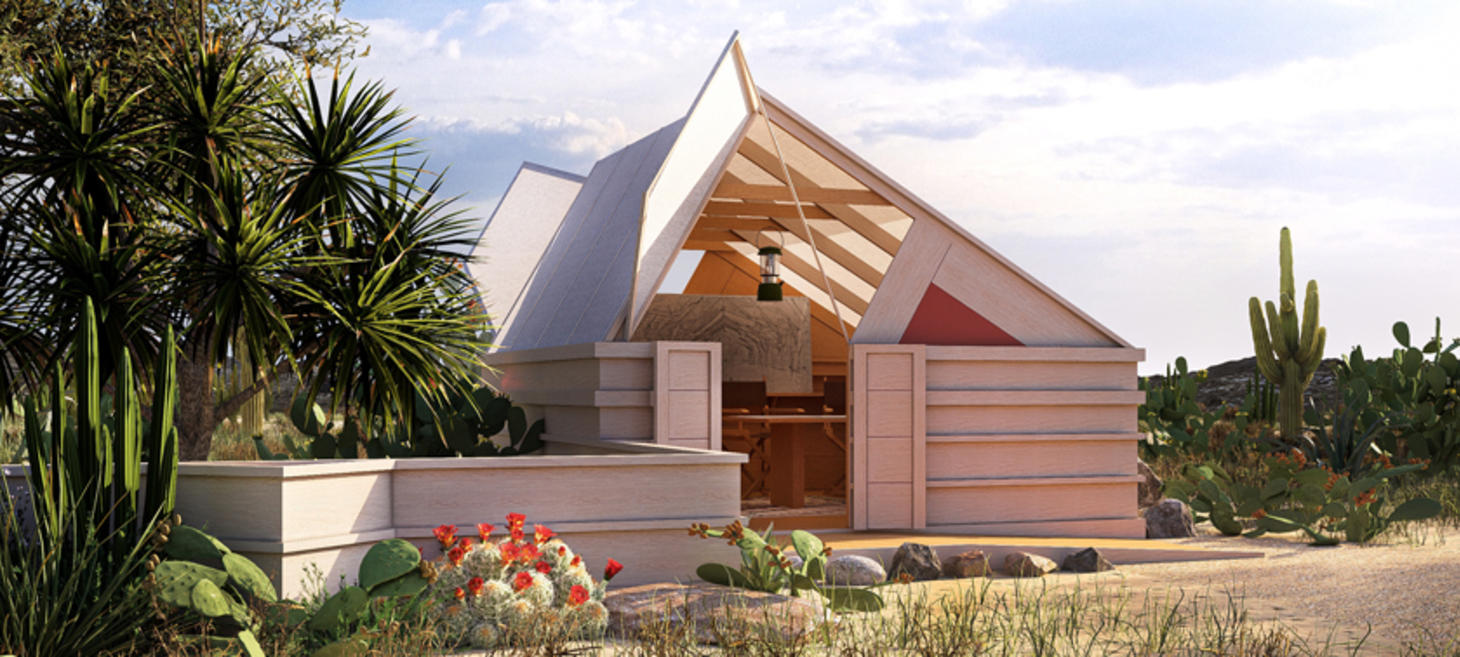
Help Bring Ocatilla Back To Life
The Organic Architecture + Design Archives exists to preserve and share the drawings, ideas, and materials that define organic architecture. This spring, that mission comes into focus with a single objective: raising $50,000 to bring the 2026 Ocatilla Exhibit to life.
At the center is Frank Lloyd Wright’s desert camp experiment at Ocatilla, a turning point in the development of organic architecture. The exhibition will reconnect audiences to this moment through research, design, and a full-scale interpretive experience anchored by a reconstructed camp structure.
This is ambitious work. It requires careful study, thoughtful design, and precise fabrication. It also requires a community willing to invest in making it happen.
OA+D is seeking exhibition sponsors to help carry this forward:
Partner | $10,000+
Supports the exhibition centerpiece with primary recognition across the exhibition, catalog, and communications.
Patron | $5,000
Underwrites the exhibition catalog with prominent recognition in print and in the gallery.
Supporter | $1,000
Advances research and construction of the Ocatilla cabin with recognition on the exhibition display and catalog.
Friend | $500
Helps fund essential design and fabrication with recognition on the exhibition display.
The exhibition will coincide with the 2026 gathering of the Frank Lloyd Wright Building Conservancy, bringing Ocatilla to an international audience of architects, scholars, and enthusiasts.
This is a rare opportunity to help reintroduce a defining chapter of architectural history.
Make a tax-deductible gift or become an exhibition sponsor to support the 2026 Ocatilla Exhibit and help reach the $50,000 goal.
Click for more details: oadarchives.org
The Headlines
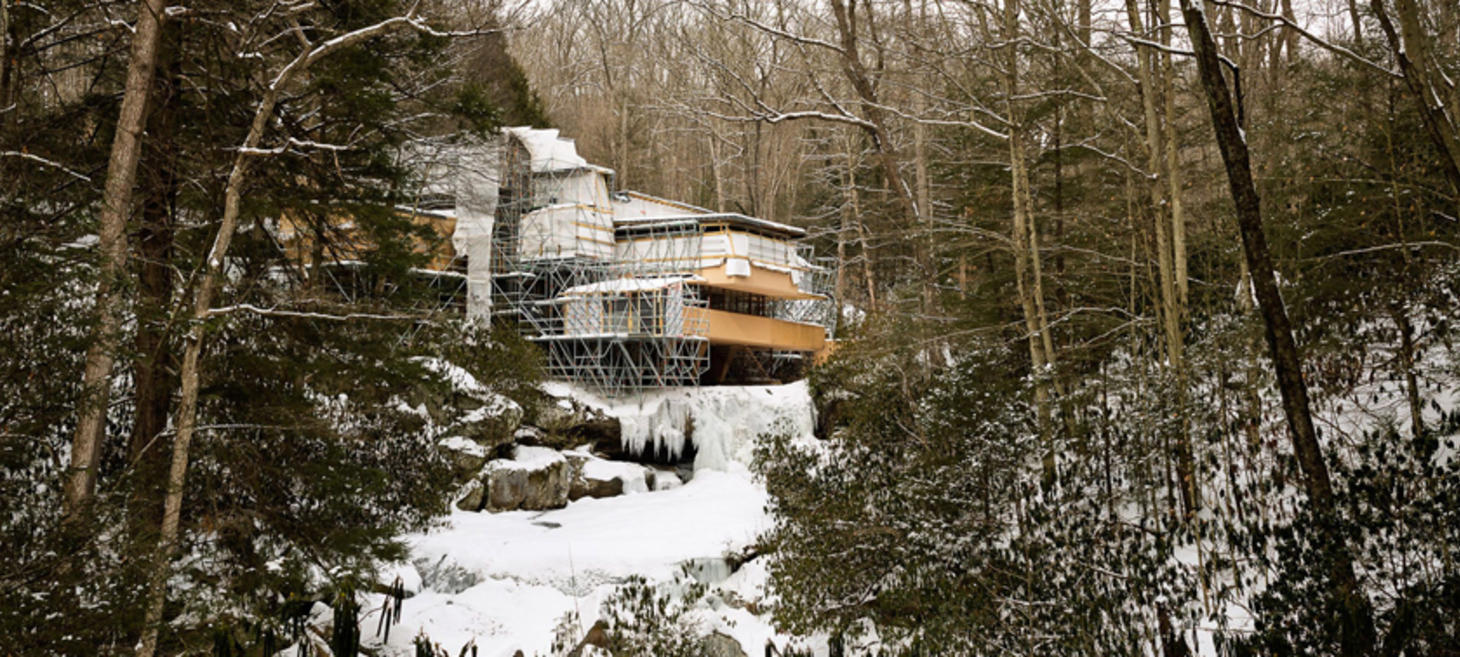
Six Frank Lloyd Wright Preservation Projects
Following the recent completion of renovations on American architect Frank Lloyd Wright's iconic Fallingwater house, Dezeen has rounded up six other complete and in-progress restorations of Wright's work.
Groups such as the Frank Lloyd Wright Building Conservancy and the Frank Lloyd Wright Foundation are both involved in maintaining and preserving the works of US architect Frank Lloyd Wright, who died in 1959 after redefining American architecture.
Throughout the years, this has included legal battles, preservation projects and transporting entire projects across state lines.
Recent preservation efforts tied to the legacy of Frank Lloyd Wright show how maintaining his buildings often involves balancing historical authenticity with ongoing structural challenges and contemporary use. The best-known example is Fallingwater, where a multi-year, multi-million-dollar project addressed chronic water infiltration by repairing roofs, sealing masonry and upgrading systems while keeping the house open to visitors, illustrating how even iconic designs require constant technical intervention to survive.
Another project focuses on the Darwin D. Martin House complex in Buffalo, where restoration has gone beyond the building fabric to recover and reinstate original furniture and decorative elements, reflecting Wright’s “total design” philosophy and the difficulty of reconstructing interiors that had been dispersed over decades.
At Taliesin in Wisconsin, the Hillside Theater has been carefully restored to fix structural deterioration and water damage while discreetly upgrading accessibility and backstage facilities, demonstrating how preservation increasingly includes adapting historic spaces for modern use without undermining their character.
Meanwhile, Taliesin West in Arizona shows a different approach, where conservation is paired with new programming such as artist residencies and installations that reinterpret the site, suggesting preservation can also mean keeping buildings culturally active rather than freezing them in time.
Other projects emphasize ongoing stewardship across Wright’s broader portfolio, including efforts led or supported by groups like the Frank Lloyd Wright Building Conservancy, which coordinates research, advocacy and maintenance strategies for hundreds of surviving structures, many of which face aging materials and environmental stress.
Taken together, these projects show that preserving Wright’s architecture is less about one-off restorations and more about continuous, evolving care—ranging from technical repairs and historical reconstruction to adaptive reuse and cultural programming—all aimed at sustaining buildings that were often experimental from the start and therefore especially vulnerable over time.
Click for more details: dezeen.com
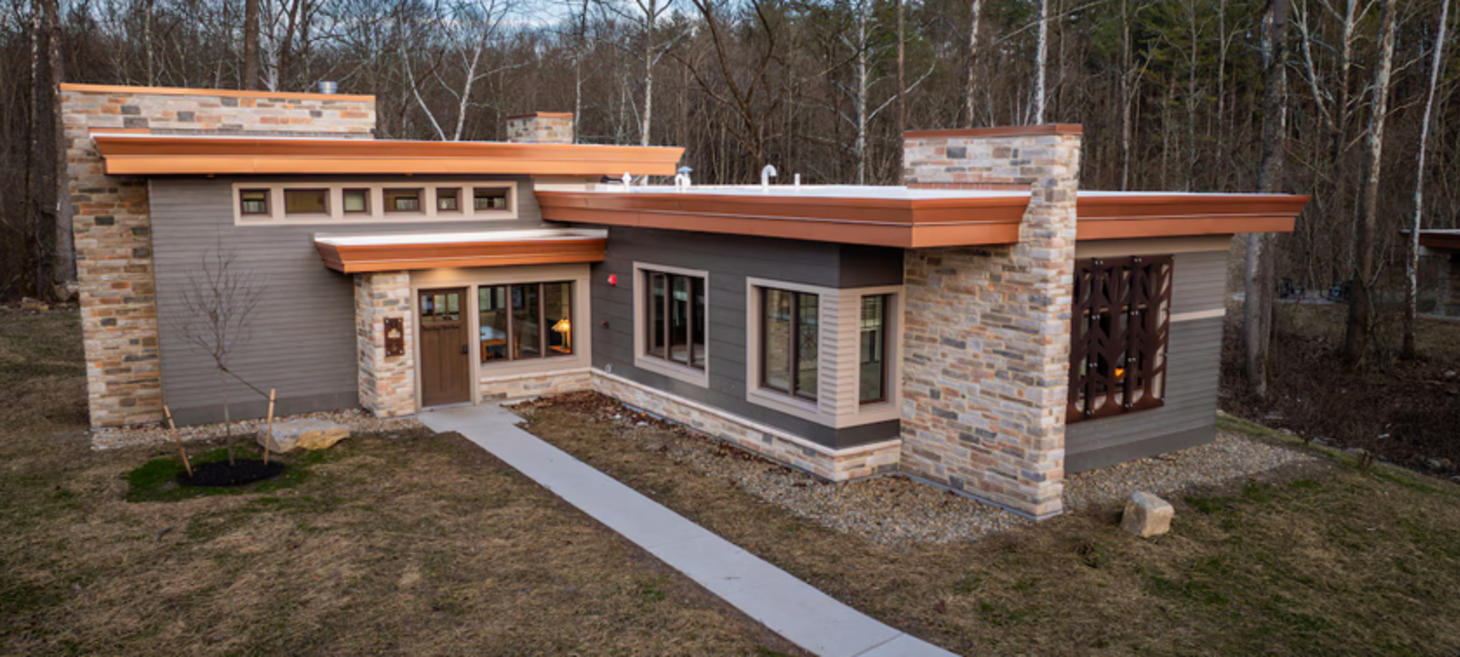
This Remote Ohio Park Just Got Frank Lloyd Wright-Inspired Cabins And A Herd Of Bison
A remote area of southeast Ohio—centered on Jesse Owens State Park—has been upgraded with a mix of modern lodging and wildlife attractions aimed at drawing more visitors.
The state recently opened about 10 new cabins inspired by Frank Lloyd Wright, designed with clean lines, natural materials, and a layout that blends into the surrounding landscape. Each cabin is relatively spacious (around 900 square feet), accommodates multiple guests, and includes amenities like full kitchens and fireplaces, offering a more comfortable alternative to traditional rustic camping.
Alongside the cabins, officials introduced a new visitor center overlooking a reestablished herd of bison in the nearby Appalachian Hills Wildlife Area. The center features large windows, exhibits, and a viewing area where visitors can safely observe the animals, tying the park’s redevelopment to conservation and regional history.
The broader project is part of a significant investment to transform land that was once heavily strip-mined into a destination for outdoor recreation. Today, the park and surrounding lands offer lakes, fishing, paddling, trails, and wildlife watching, with the addition of the cabins and bison intended to make the area a more distinctive and appealing getaway in Ohio.
Click for more details: cleveland.com
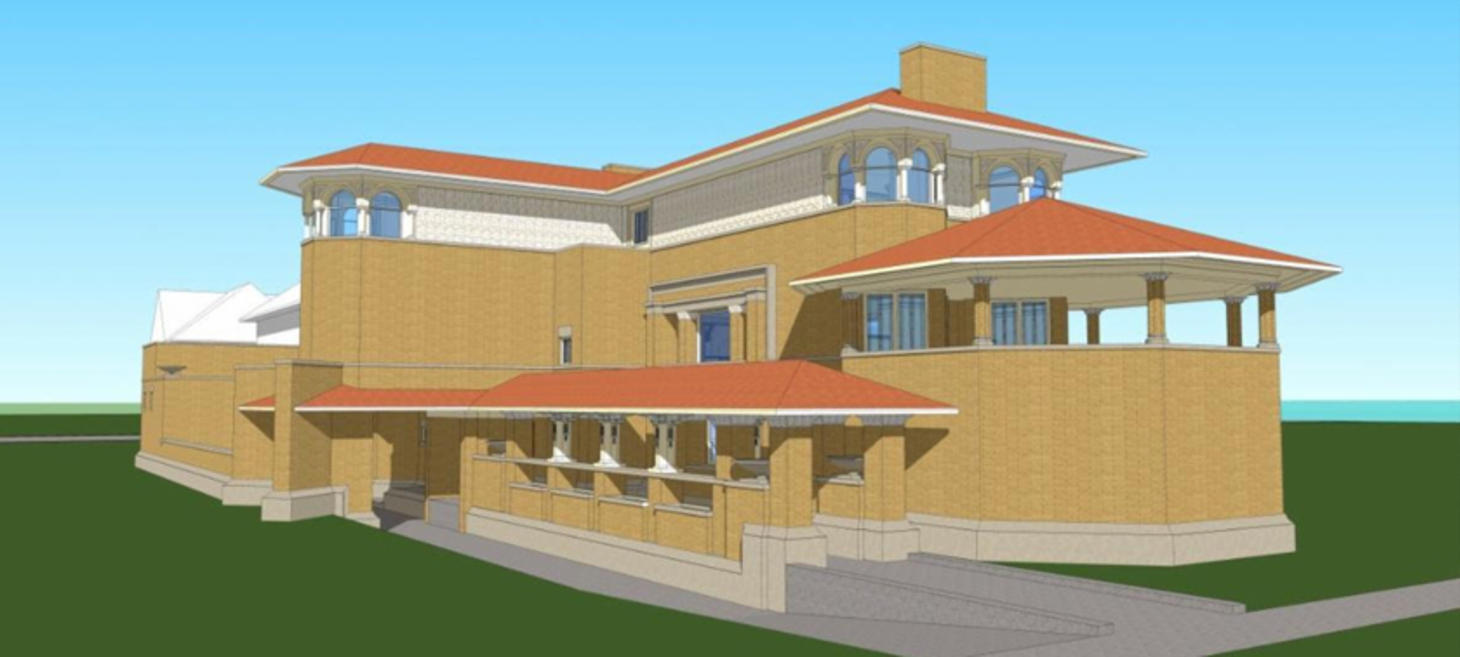
Frank Lloyd Wright’s Lost Husser House
In 1899, Frank Lloyd Wright designed the Husser House to be built near Lake Michigan on the North Side of Chicago. This design is considered a pivotal work, with connections both to Wright’s early work, influenced by the ideas of his mentor Louis Sullivan, and to his mature Prairie-period work of the next decade. Despite its importance, the Husser House was demolished in the 1920s and has been largely forgotten in the century since. Using digital recreations and other imagery, this talk will discuss the structure’s place in Wright’s work, as well as its place in the development of the neighborhood in which it stood.
Speaker: John H. Waters, AIA John is the Preservation Programs Director at the Frank Lloyd Wright Building Conservancy. He works with homeowners and building stewards of Wright buildings around the country to facilitate the preservation of the architect’s work. He resides in the neighborhood where the Husser House once stood. (John’s full bio is available here.)
This talk is sponsored by Rotary Historic Preservation Fellowship.
Tickets and registration: Advance registration is required. Tickets are $10 for the general public, or complimentary for Conservancy members. If you are not a member, click here to learn more about member benefits and join.
How this event works: Before the event starts you will receive an email with a Zoom access link. Please install and test Zoom in advance on the device on which you intend to view the event. A link to view the recording will be emailed to all registrants after the event, and the recording will be available to members in the Digital Member Lounge.
If you have questions or require registration assistance, please email events@savewright.org.
Click for more details: savewright.org
About
This weekly Wright Society update is brought to you by Eric O'Malley with Bryan and Lisa Kelly. If you enjoy these free, curated updates—please forward our sign-up page and/or share on Social Media.
If you’d like to submit content to be featured here, please reach out by emailing us at mail[at]wrightsociety.com.
Eric, Bryan & Lisa | Wright Society Publishers