
Announcements

Keep Organic Architecture Alive—Make Your Gift Today
As the year comes to a close, now is the moment to support the cultural organizations that matter most to you. If you believe in the preservation of Frank Lloyd Wright’s legacy and the broader world of organic architecture, we’re asking you to support the Organic Architecture + Design Archives this season.
In the past year alone, OA+D released new journals and books, preserved thousands of archival items, and brought our community together through an inspiring symposium and exhibition. A year-end contribution ensures that this progress does not slow—and that the stories, drawings, photographs, and ideas that shaped organic architecture remain accessible to all.
Your donation directly powers the OA+D mission to:
• Publish groundbreaking scholarship in the Journal of Organic Architecture + Design
• Digitize rare and important materials for public access
• Preserve the collections of pioneering organic designers
• Create new exhibitions and educational programs
Every gift—large or small—makes a real difference. Protect this history. Inspire the next generation. Make your tax-deductible donation today and help fuel the work ahead.
Click for more details: oadarchives.org
The Headlines
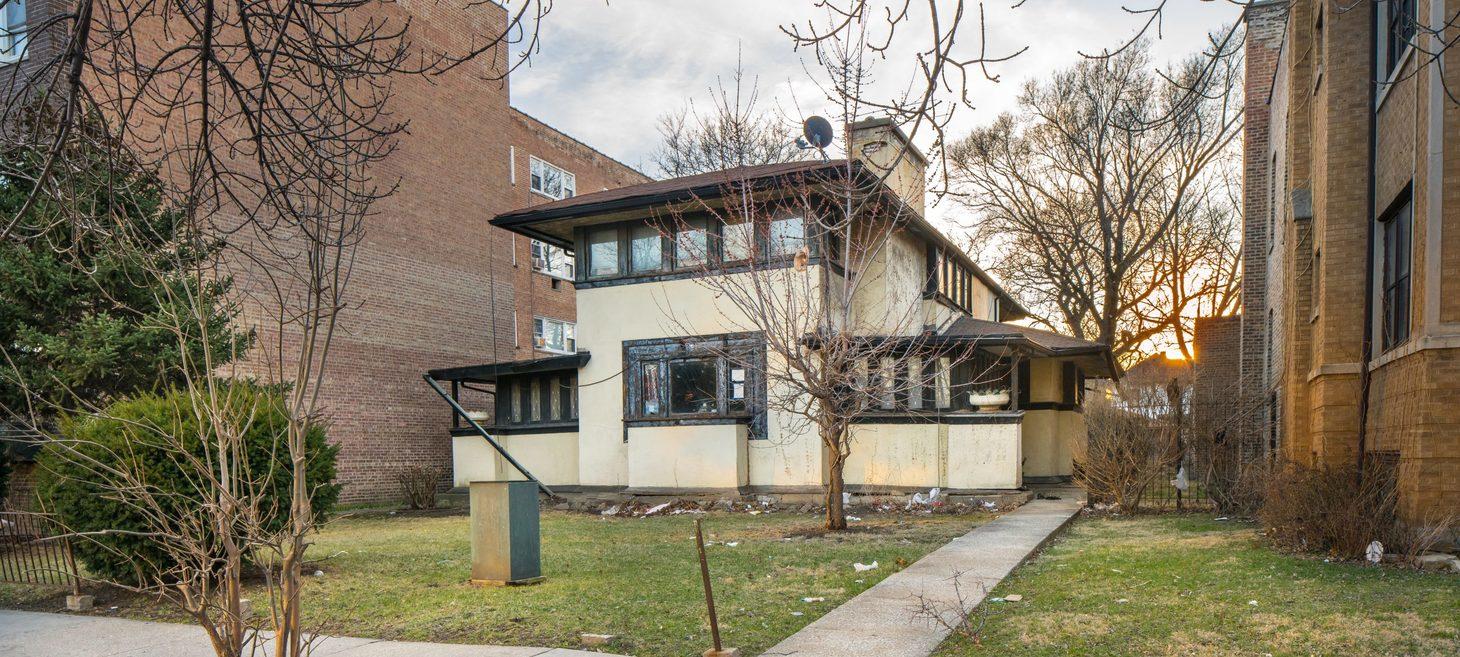
Wright's Walser House Now Owned By Lender
Austin Coming Together (ACT) still hopes the historic Frank Lloyd Wright–designed Joseph Jacob Walser House at 42 N. Central Ave. can be restored and eventually opened as a public site, despite the property going to its lender, PHH Mortgage, at a Dec. 1 foreclosure sale. The house — the only Wright home on Chicago’s West Side — has severely deteriorated since its longtime owners died, landing on both city and state endangered-building lists.
PHH Mortgage outbid ACT and other preservation-minded buyers with a $240,000 bid, a price ACT leaders say is far too high given the home’s extreme disrepair and $65,000 appraisal. The lender has not announced any rehabilitation plans, leaving the home’s fate uncertain. ACT hopes the lender might sell or donate the property at a more feasible cost so the community can steward its restoration and convert it into a public, community-serving site.
Executive director Darnell Shields argues that community ownership would protect the property, honor Frank Lloyd Wright’s legacy, and mirror the successful transformation of the nearby Aspire Center. Restoring the Walser House is expected to cost more than $2 million due to major structural and aesthetic damage. The Frank Lloyd Wright Building Conservancy continues to advocate for its preservation.
Click for more details: oakpark.com
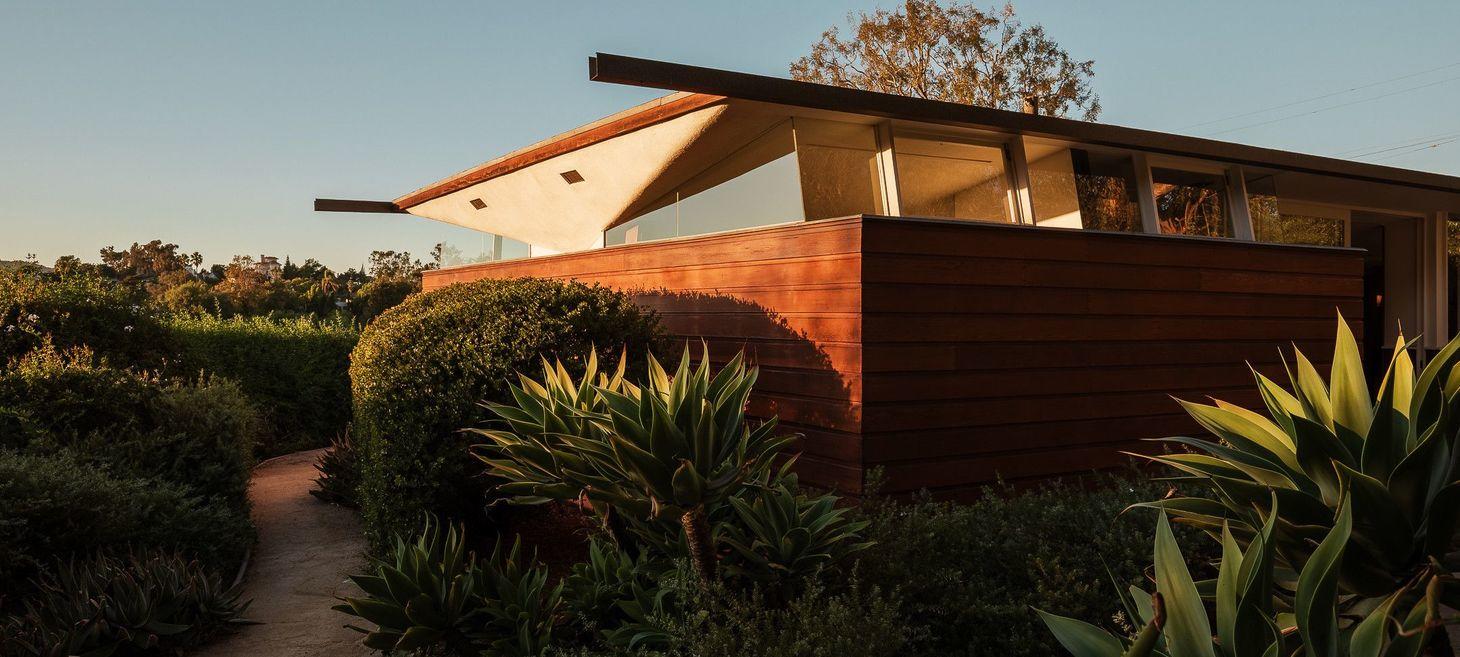
Tour An Early John Lautner House You Can Buy
The restored and updated Jules Salkin Residence by John Lautner is a unique piece of Californian design heritage – and it's for sale.
Best known for his work in Palm Springs and LA, Lautner (1911 to 1994) was the architect behind numerous idiosyncratically iconic contemporary houses, many of which perch on the edges of California’s urban canyons and serve as dramatic backdrops to the comings and goings of the State’s creative industries. Lautner’s work featured prominently as locations in the first season of Seth Rogan’s The Studio.
The Jules Salkin Residence on Avon Terrace in Los Angeles’s Echo Park is a rare early work. Completed in 1948, ten years into his own practice, it is markedly different to the emerging but relatively austere Case Study aesthetic and owes much to the six years Lautner spent as an apprentice to Frank Lloyd Wright. Following his move from Taliesin to set up on his own in LA in the 1930s, Lautner also helped oversee several of Wright’s projects in the city, including the Ennis House.
In comparison, the Salkin Residence was modest, with two bedrooms and one bathroom. Jules Salkin was something of a polymath; according to the realtors he worked as a concert violist, contractor, developer, architect, and attorney, and was also a keen fan of modern architecture. The stunning plot has views all the way to Santa Monica, with private terraces that catch the evening sun.
Inspired in part by Wright’s Usonian principles, single-storey affordable dwellings set behind carports with open plan living spaces and simple, low-cost materials, there’s still a hint of the visual extravagances to come in Lautner's later work. For example, the angled wooden beams that support the truss roof, with its oversailing eaves and neat rainwater channels, and the close relationship with the landscape.
The house, which is Los Angeles Historic-Cultural Monument No. 1111, was completely renovated in 2014 by the architect Barbara Bestor. Bestor had to remove decades of additions and changes that all but obliterated the architectural quality and character of the house. By restoring and updating the original layout, this 'lost Lautner' is now an important part of architect's legacy.
Now with three bedrooms and 1,361 square feet of living space (the renovation included removing later additions and actually reducing the floor size), the Jules Salkin House sits in a generous third of an acre plot. It is on the market for $2,395,000 via specialist realtor The Value of Architecture.
Click for more details: wallpaper.com
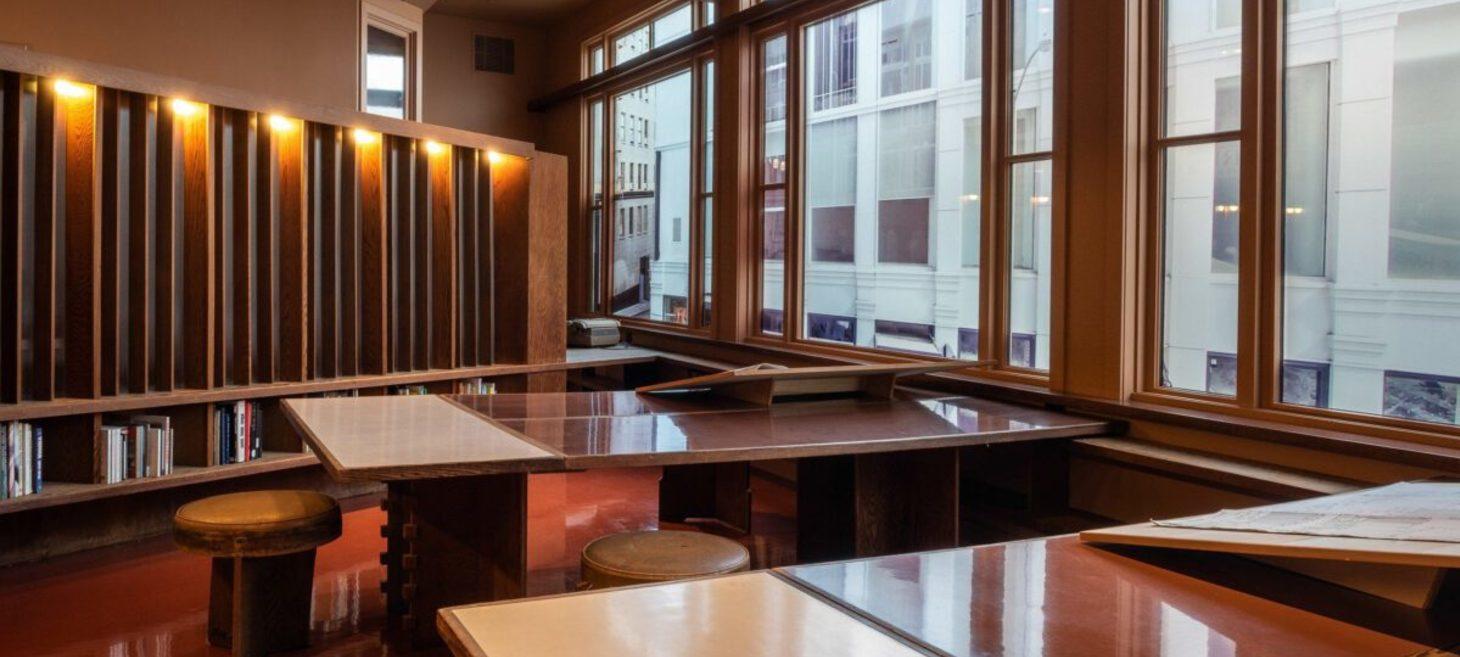
"Museum Within A Museum" Coming To Erie's Hagen History Center In 2026
Visitors to Erie’s Hagen History Center will get to know the nation’s greatest architect in 2026. The museum complex at 356 W. Sixth St. is creating a “museum within a museum” focusing on architect Frank Lloyd Wright and his work.
The new Frank Lloyd Wright Field Office Museum will be anchored by the architect’s San Francisco office, which was dismantled, brought to Erie and reassembled in the Hagen History Center’s Watson-Curtze Mansion in 2021.
“We’re doing a build-out using state-of-the-art exhibits all dedicated to Wright,” said Hagen History Center CEO Cal Pifer. “It’s a seven-figure project designed to fully conceptualize Wright as both a man and as an architect.”
Understanding Wright is necessary to fully appreciate his designs, Pifer said. “If you don’t understand the person, you’re not going to fully understand the office. Or for that matter, I don’t think any of the Wright sites would really really resonate if you don’t have some deep background about Wright.”
All of the Wright-designed homes and buildings open to the public provide some information about the architect “but nothing to the breadth and depth we’re going to have,” Pifer said. “Nothing like we’re planning exists.”
Wright set up shop at the California field office while designing San Francisco area projects from 1951 until his death in 1959.
The office is included in the Frank Lloyd Wright Trust list of Wright-designed sites open to the public. Visitors from across the country have come to see it, helping Hagen History Center break attendance records in 2025, Pifer said.
“We had a site that was bringing people in, but it was completely without context,” Pifer said. “We initially looked at adding context, and that ballooned into what we’re now doing.”
The Frank Lloyd Wright Field Office Museum is expected to open in late spring. Zebradog studio of Madison, Wisconsin, is helping to design the museum and its new interpretive exhibits.
Click for more details: keystonenewsroom.com
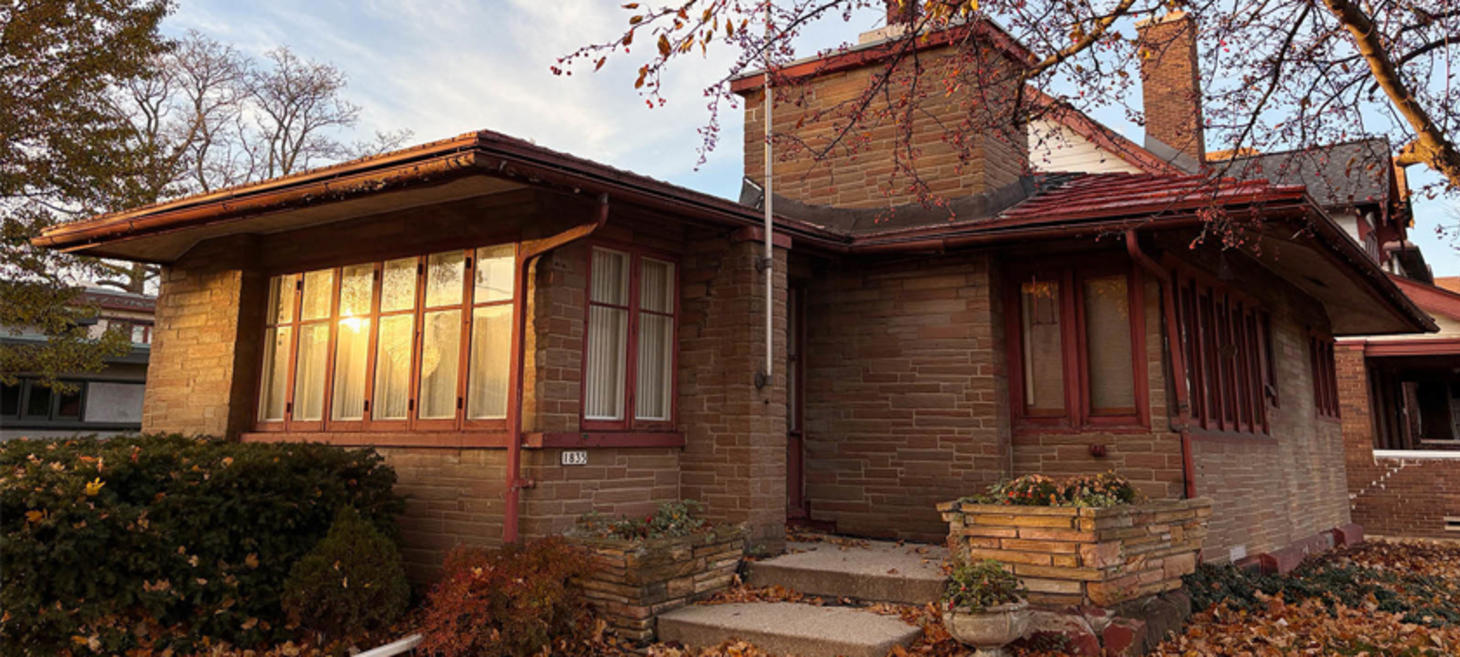
Restoring One Of Frank Lloyd Wright's Burnham Block Houses
A heavily altered Frank Lloyd Wright–designed American System-Built Home (ASBH) on the corner of Layton Boulevard and Burnham Street in Milwaukee is about to undergo a full historic restoration. The 1916 C3 model cottage—one of six Wright-designed ASBH homes on the block—has long been obscured by 1950s stone cladding, a replaced roof, and an enclosed porch. The nonprofit Wright in Milwaukee / Frank Lloyd Wright’s Burnham Block Inc., which owns five of the six homes, is spearheading the project.
The ASBH program was Wright’s early attempt at affordable, mass-produced yet customizable housing. Working with developer Arthur Richards, Wright designed 38 models with hundreds of variations. Production was cut short by World War I, material shortages, and disagreements between Wright and Richards; only a few dozen ASBH houses were ever built, mostly in the Midwest.
The C3 is one of only three known examples of its design. Originally featuring bands of casement windows, Prairie Style horizontality, built-ins, and flowing interior space, it was later altered by several owners. Wright in Milwaukee purchased the house in 2014 and plans to restore it to its 1916 appearance.
The restoration will remove the stone cladding, modern roofing, and a 1970s shed; reopen the porch; recreate missing windows, trim, and trellises; restore the interior built-ins and kitchen layout; and install new mechanical systems. Specialists and craftspeople will help rebuild original-style windows, fixtures, and furniture. Because the original stucco likely contains asbestos, extensive environmental testing and remediation will precede the work.
The project is expected to exceed $1 million. Funding includes a National Park Service Save America’s Treasures matching grant as well as donations from foundations and more than 100 individual donors. Work begins this winter, with full restoration anticipated in about a year. Once completed, the site is expected to significantly increase visitation to the historic Burnham Block, where several Wright homes already draw thousands of architecture enthusiasts annually.
Click for more details: onmilwaukee.com
About
This weekly Wright Society update is brought to you by Eric O'Malley with Bryan and Lisa Kelly. If you enjoy these free, curated updates—please forward our sign-up page and/or share on Social Media.
If you’d like to submit content to be featured here, please reach out by emailing us at mail[at]wrightsociety.com.
Eric, Bryan & Lisa | Wright Society Publishers