
Announcements
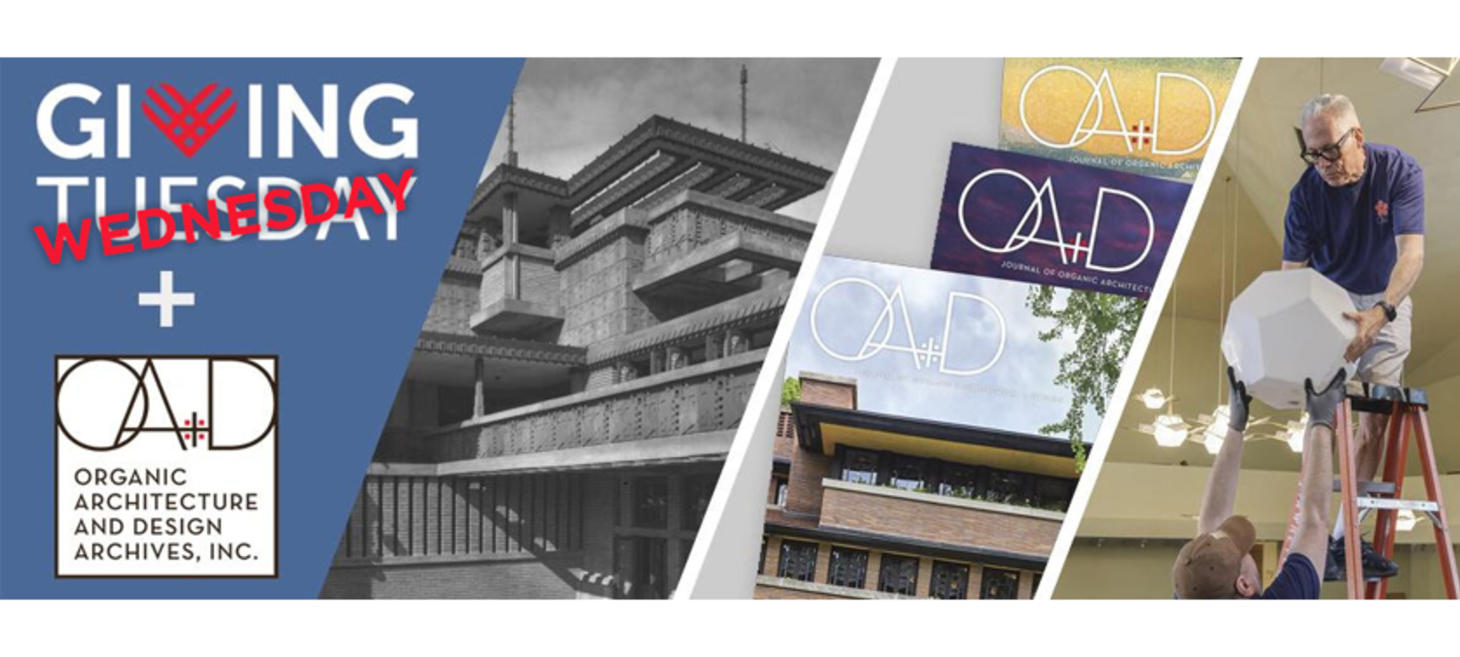
Giving Tuesday On A Wednesday
Even though yesterday was officially "Giving Tuesday," there is no reason you can’t make a meaningful impact on a Wednesday. Your gift this season helps sustain the work of the Organic Architecture + Design Archives and strengthens the legacy we are all committed to preserving.
This past year has been one of extraordinary progress for OA+D: new journals and books released, thousands of archival items preserved, and a vibrant symposium and exhibition that brought our community together. Your year-end contribution ensures OA+D can continue this momentum and keep the rich history of organic architecture accessible to all.
Your support directly fuels the OA+D mission:
• Publishing new scholarship in the Journal of Organic Architecture + Design
• Digitizing rare and important materials for public access
• Preserving the collections of pioneering organic designers
• Developing new exhibitions and educational programs
Every donation, large or small, helps protect this important history and inspires future generations. Please consider making your tax-deductible year-end gift today and help power the work ahead.
Thank you for supporting the living legacy of organic architecture.
Click for more details: oadarchives.org
The Headlines
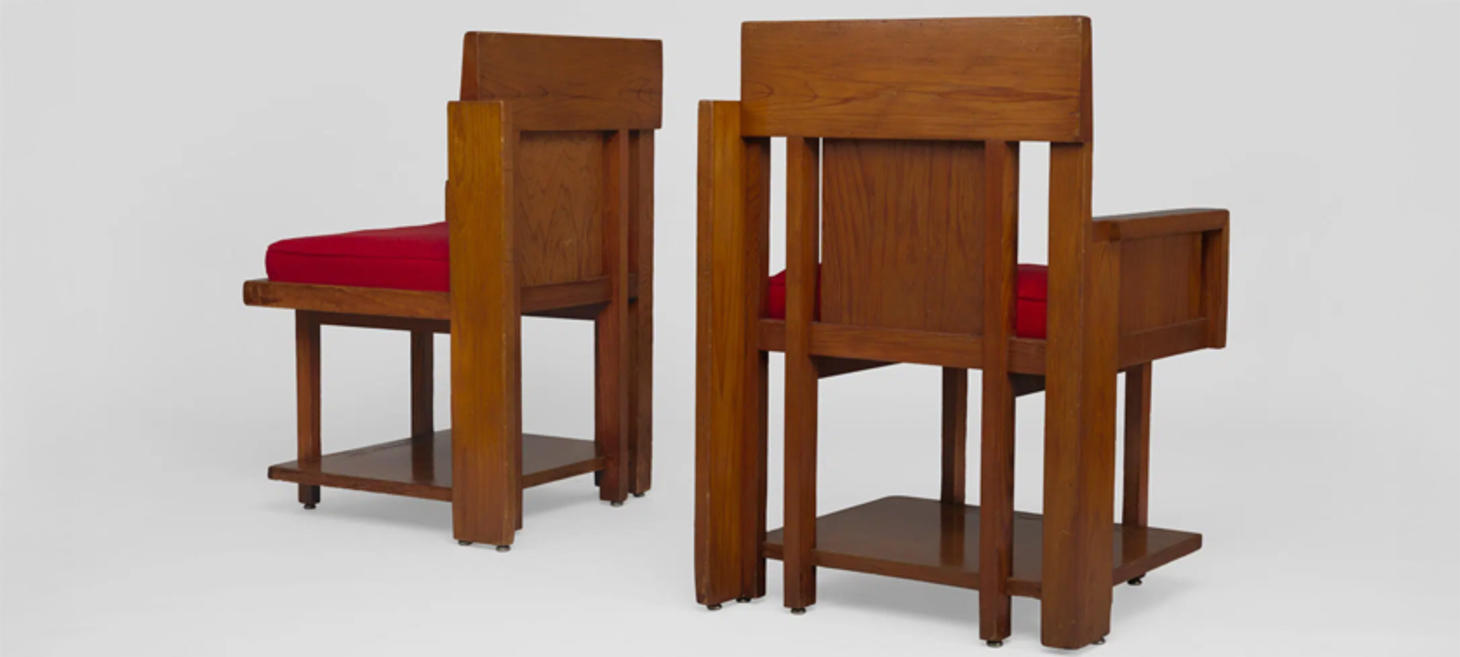
Exhibition Gives New Life To Frank Lloyd Wright’s Chair Designs
The exhibition Frank Lloyd Wright: Modern Chair Design at the Museum of Wisconsin Art explores the architect’s legacy through his often-overlooked furniture designs, especially chairs. Curators Thomas Szolwinski and Eric Vogel discovered many of Wright’s chair designs had never been built, prompting them to reconstruct these pieces using archival drawings, photos, and sketches.
Organized into five design periods from 1911 to 1959, the show reveals how Wright’s furniture evolved alongside his architecture—from early rectilinear forms to later, more experimental and organic designs, exemplified by the 1946 Origami Armchair. The exhibition emphasizes that Wright’s furniture wasn’t merely functional; it embodied the same principles of space, geometry, and material innovation seen in his buildings.
MOWA fabricated eight previously unbuilt chairs and reconstructed four lost ones, presenting them alongside 30 historic pieces to offer a fuller, more accurate view of Wright’s creative process. The curators frame fabrication as a form of research that uncovers Wright’s design philosophy. Ultimately, the exhibition positions Wright not only as a groundbreaking architect but also as a prolific and inventive furniture designer whose work was integral—not secondary—to his vision. The show runs through January 26, 2026.
Click for more details: mymodernmet.com
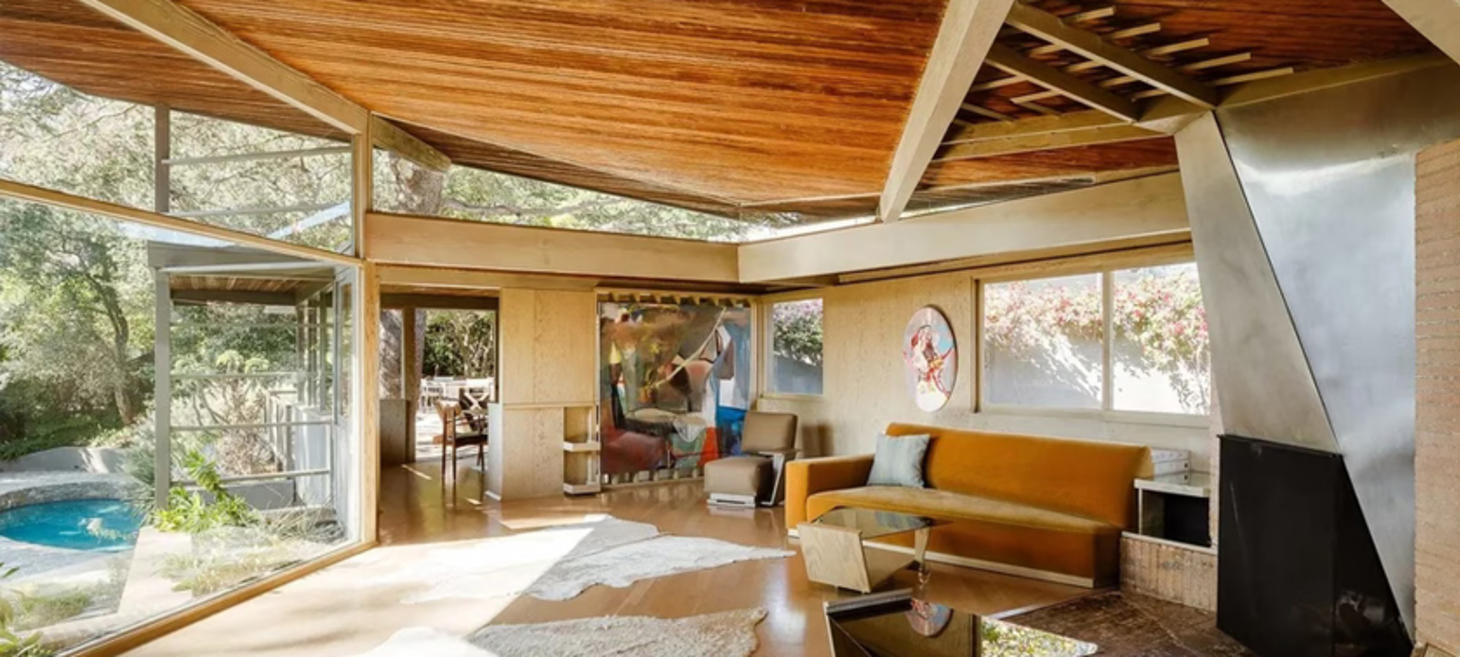
R.M. Schindler's Iconic Lechner House Hits The Market In L.A. For $6.5 Million
The historic Lechner House in Studio City—designed in 1949 by renowned modernist architect Rudolph M. Schindler—has returned to the market as a meticulously restored architectural landmark. Originally built for client Richard Lechner, the 4,000-square-foot residence exemplifies Schindler’s philosophy of blending structure with nature, featuring dramatic geometric forms, expansive glass walls, and organic materials.
Though it had deteriorated severely over the decades, AD100 designer Pamela Shamshiri undertook an extensive, multiyear restoration that both revived and enhanced Schindler’s original vision, reinstating key design details such as Douglas-fir ceilings, custom cabinetry, and the signature stainless-steel fireplace, while updating the kitchen, baths, gardens, and pool.
Now designated as Los Angeles Historic-Cultural Monument #1024 and benefiting from Mills Act tax savings, the secluded four-bedroom home is once again considered a masterpiece of California modernism—offering what its listing agent calls a rare chance to steward an architectural treasure.
Click for more details: realtor.com

Chicago Architecture: Bruce Goff Gets His Moment In The Spotlight
Bruce Goff, long considered an overlooked American architectural genius, is receiving renewed attention—especially in Chicago. Starting in December, the Art Institute of Chicago will hold an exhibition titled “Bruce Goff: Material Worlds,” which will feature more than 200 of his drawings, models and paintings taken from the museum’s extensive Goff collection and archive, donated in 1990, eight years after his death.
Often labeled an outsider, Goff designed more than 500 buildings marked by unconventional forms and materials, from ashtrays and feathers to sequins and coal. Born in Kansas in 1904 and raised in Tulsa, he entered architecture by accident as a child prodigy and became known for fiercely original, organic designs that resisted comparison—even to figures like Frank Lloyd Wright and Louis Sullivan, both of whom encouraged him not to pursue formal schooling.
Goff’s early career flourished in Tulsa with projects such as the Boston Avenue United Methodist Church, though a credit dispute with collaborator Adah Robinson caused lasting tension. After the Depression, he moved to Chicago, designing several notable homes and teaching at Ruth Ford’s academy, while maintaining his democratic approach to materials and clients.
His postwar years at the University of Oklahoma were prolific and influential, though his career there ended after a scandalous misdemeanor charge—widely believed to have been tied to homophobic persecution in 1950s Oklahoma. He continued practicing elsewhere and formed a lifelong friendship and collaboration with architect Bart Prince.
Though some of his most iconic works have been lost, Goff’s influence has grown through recent festivals, documentaries, scholarship, and renewed public interest. Admirers emphasize his imaginative, client-centered architecture and his refusal to conform. He died in 1982, and fittingly, his distinctive glass-topped grave in Chicago’s Graceland Cemetery stands apart from the modernist giants buried beside him—just as his work stood apart during his lifetime.
Click for more details: chicagotribune.com
About
This weekly Wright Society update is brought to you by Eric O'Malley with Bryan and Lisa Kelly. If you enjoy these free, curated updates—please forward our sign-up page and/or share on Social Media.
If you’d like to submit content to be featured here, please reach out by emailing us at mail[at]wrightsociety.com.
Eric, Bryan & Lisa | Wright Society Publishers