
Announcements
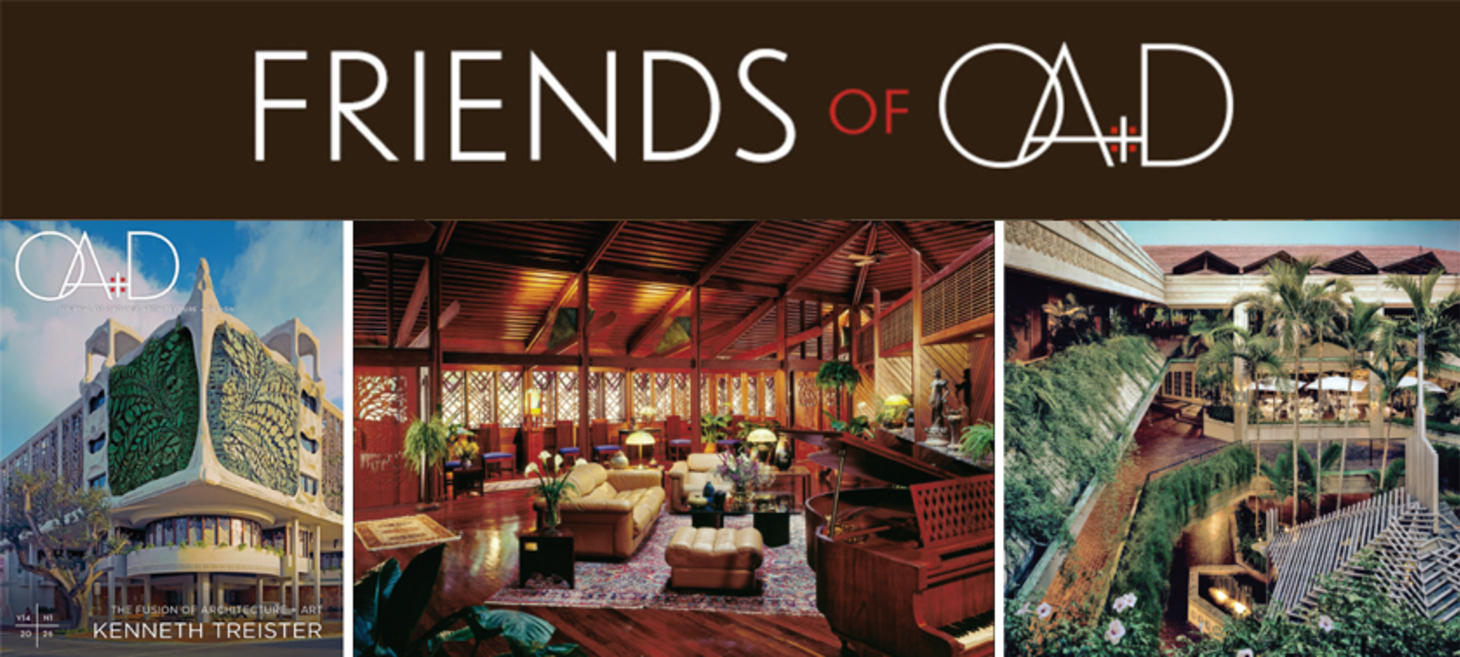
Friends of OA+D Spring Membership Drive
The Organic Architecture + Design Archives depends on a community of supporters who believe the history and ideas of organic architecture deserve to be preserved and shared. This spring, we invite you to participate in the Friends of OA+D Membership Drive and become part of that sustaining community.
Friends of OA+D provide ongoing support that allows the Archives to preserve collections, publish new scholarship, and continue producing the Journal of Organic Architecture + Design. Sustaining members also automatically receive every new issue of the Journal for as long as their membership remains active, ensuring they never miss an issue.
The upcoming Spring 2026 issue of the Journal of Organic Architecture + Design is devoted to the remarkable life and work of Florida architect Kenneth Treister. Richly illustrated, the volume explores Treister’s unique fusion of architecture and art—from sculptural courtyard houses and experimental schools to religious spaces and the landmark Mayfair developments in Coconut Grove—revealing an organic vision shaped by craft, symbolism, and a deep connection to nature and community.
Printed copies will mail in April. By becoming a Friend of OA+D, you help sustain the Journal and the broader archival work that makes this scholarship possible, while ensuring every future issue arrives automatically.
Learn more and become a Friend today!
Click for more details: oadarchives.org
The Headlines
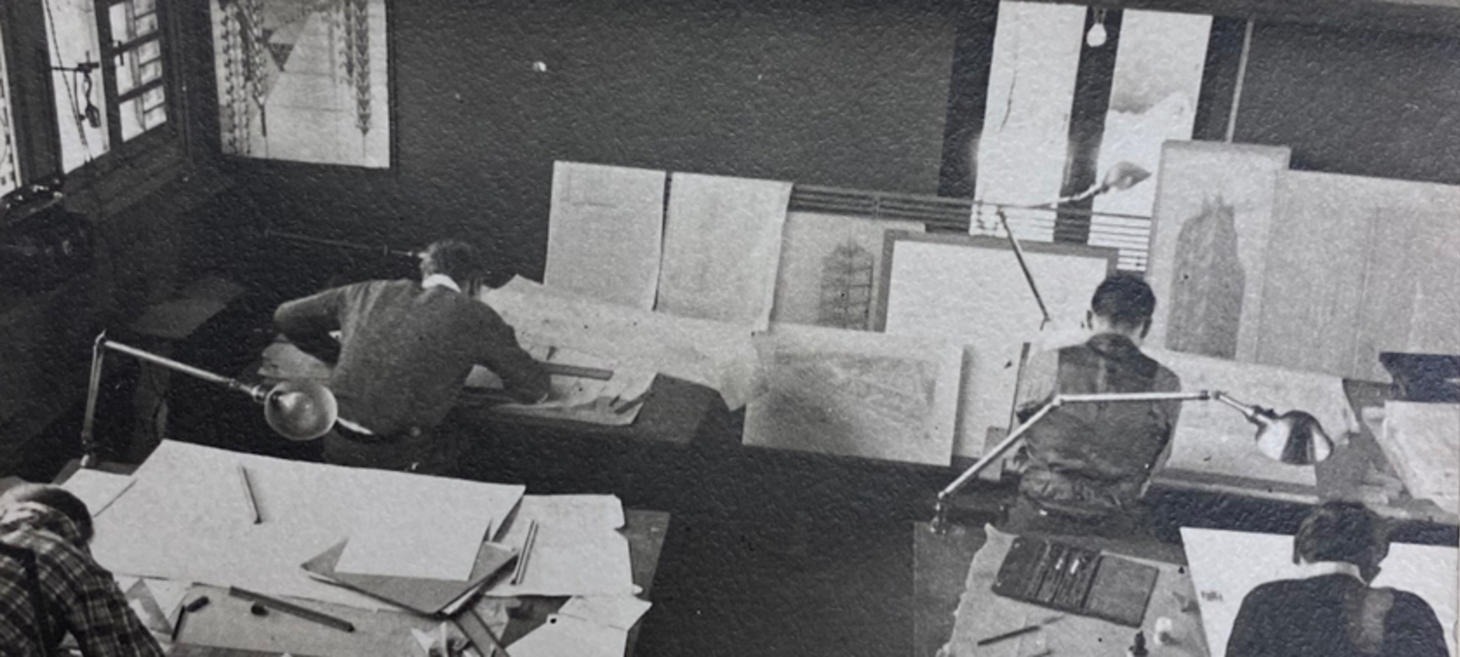
The Bernoudy Collection: Materials From Frank Lloyd Wright's Taliesin
The WashU Libraries introduces the newly organized William and Gertrude Bernoudy Collection in the Julian Edison Department of Special Collections, which provides firsthand insight into life at Frank Lloyd Wright’s Taliesin Fellowship through items such as promotional materials, correspondence, photographs, writings and the diary William Bernoudy kept as a student there.
Wright’s Taliesin Fellowship was a hands-on apprenticeship on a 200-acre Wisconsin farm where apprentices worked, lived and engaged in tasks from construction to gardening as part of learning his philosophy of organic architecture—the idea that buildings should harmonize with their natural environment. Bernoudy, who joined the first Taliesin class in 1932 and paid his tuition with his inheritance, candidly wrote about self-improvement and the demands of Wright’s environment, while letters from fellow apprentices reveal aspects of everyday life and activities like the Taliesin Playhouse. T
The collection also shows that Bernoudy stayed in contact with Wright well after his apprenticeship ended and that Wright’s principles influenced Bernoudy’s own architectural work, seen in elements such as deep roof overhangs and the use of natural materials. The archive spans thirty linear feet and includes architectural drawings and artifacts; while digitization is planned for 2026, researchers can view the physical materials with advance notice by contacting the Special Collections department.
Click for more details: washu.edu
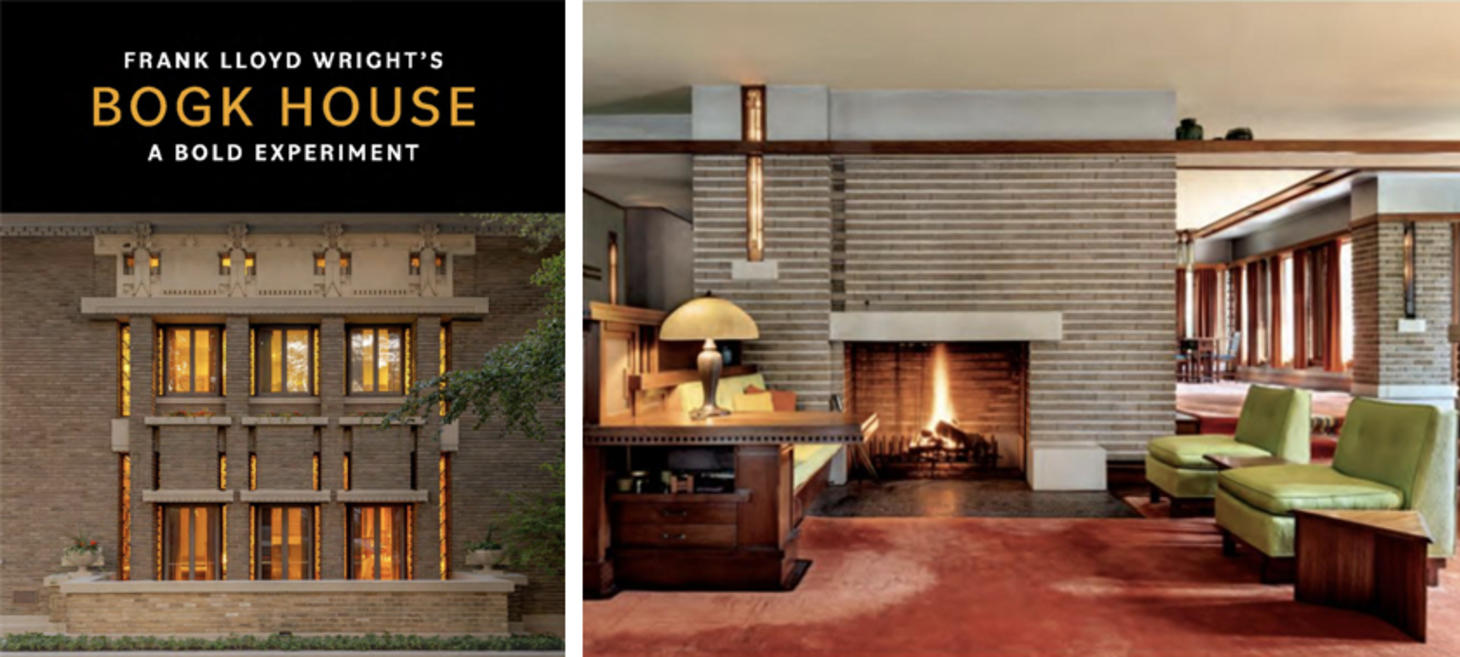
Frank Lloyd Wright's Bogk House: A Bold Experiment
A trove of insights into and images of an important, little-known Frank Lloyd Wright building.
The house that Frank Lloyd Wright designed for Frederick C. and Katherine G. Bogk in Milwaukee, Wisconsin, in 1916 occupies a unique position in Wright’s career: it is the only fully realized house designed in the teens that demonstrates his fascination with Primitivism, the use of non-Western sources as an inspiration for modern design. This book traces Wright’s exploration alongside the stories of an immigrant family’s rise and Milwaukee’s emergence as a vibrant city. It also documents the interiors, relatively unchanged for over a century, that represent Wright’s approach to total design.
Written by two eminent architectural historians and Wright scholars, Anthony Alofsin and Richard L. Cleary, this book offers new insight into the evolution of Wright’s design process during the least understood decade of his career. The book draws on a fascinating cache of unpublished letters, photographs, drawings, and documents in the private archive of the Elsner family, who owned the house from 1955 to 2023. The book also features new photography of the Bogk House by Alexander Vertikoff, renowned for his use of natural light.
Distributed for Frank Lloyd Wright’s Burnham Block, Inc.
Click for more details: yale.edu
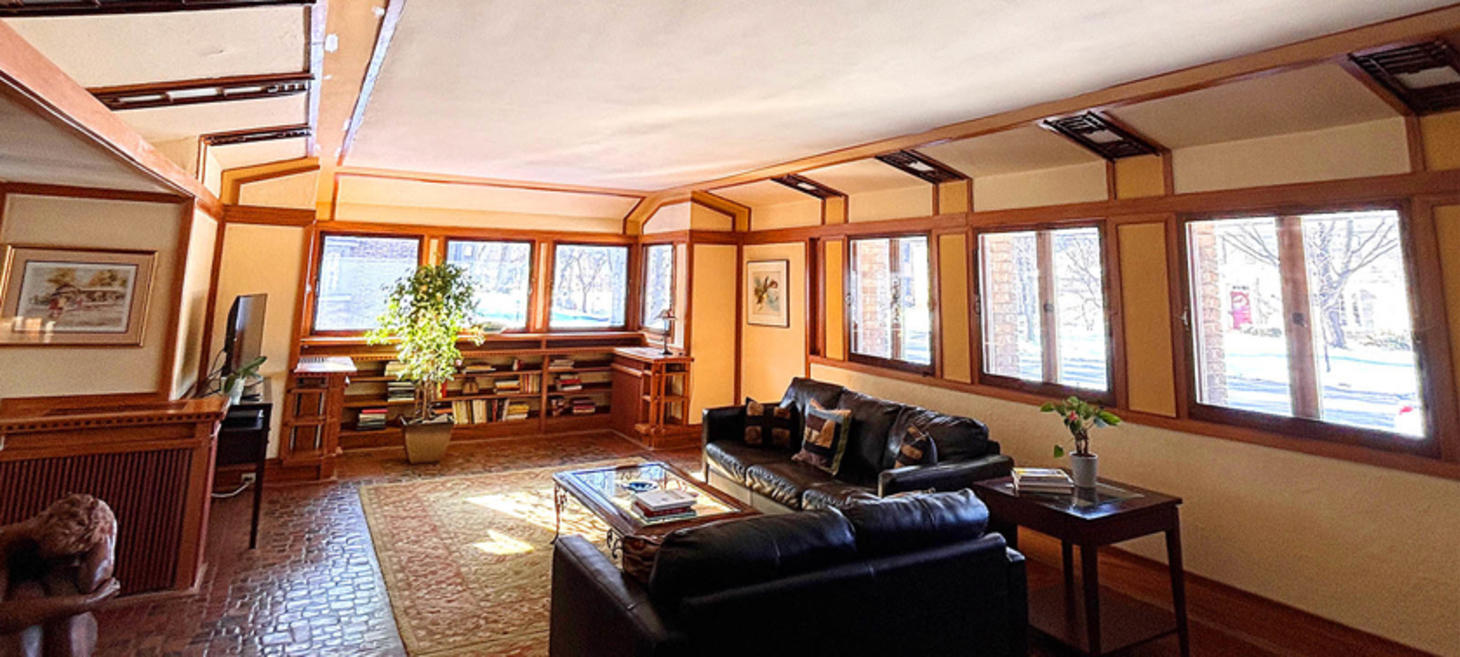
Russell Barr Williamson's Whitefish Bay Home & Studio
At the dawn of the 1920s, a few years after parting company with his employer and inspiration, Frank Lloyd Wright, architect Russell Barr Williamson was back in Milwaukee creating homes that are strikingly similar to works attributed to Wright.
Williamson’s 1921 home and studio on Oakland Avenue in Whitefish Bay, closely resembles a house he worked on while employed by Frank Lloyd Wright. Williamson left Wright’s employ and soon designed a number of Milwaukee-area homes in a style very similar to Wright’s Prairie School aesthetic, but his own house is so like the Henry Allen House in Wichita, Kansas—attributed to Wright—that many scholars see it as essentially a smaller version with identical room arrangements and details, though simplified and cost-reduced.
Some architectural historians argue this raises questions about authorship: whether Williamson was merely copying his former mentor or whether he, having executed much of the work on the original projects, deserves greater credit for the designs.
The current owner, Robin Pickering-Iazzi, who has lived there since 1997, treasures the light-filled interior, built-in millwork and leaded glass, and recounts stories from when Williamson’s son grew up in the house, while also noting the challenges of maintaining such an old structure without modern comforts like air conditioning.
Click for more details: onmilwaukee.com
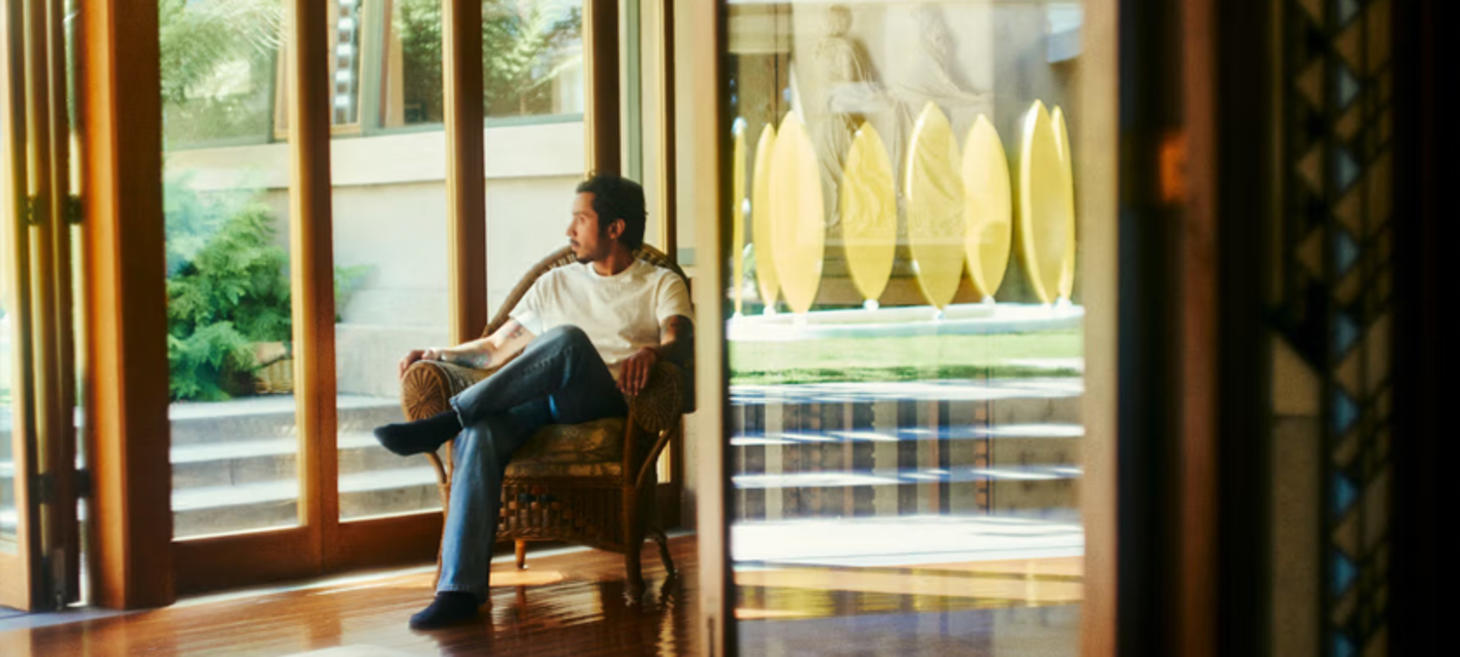
Ryan Preciado On Show At Hollyhock House In Los Angeles
In the current exhibition at Frank Lloyd Wright’s Hollyhock House, Diary of a Fly, Los Angeles–based artist Ryan Preciado brings his signature blend of craft and sculpture into Frank Lloyd Wright’s historic UNESCO World Heritage site, placing high-gloss steel forms, woven tapestries and Memphis-influenced furniture within the house’s carefully orchestrated spaces so they feel less like intrusions and more like collaborators with the architecture’s play of light and shadow.
Building on recent shows including his first institutional solo at the Palm Springs Art Museum and work in the Hammer Museum’s Made in L.A. biennial, Preciado frames what he calls his “insecure sculptures” around questions of utility and aesthetics, rooted in his background as a carpenter and his belief that functional objects can disarm viewers and invite them into deeper engagement.
Drawing inspiration from everyday encounters—whether materials found around Los Angeles or conversations with people he meets—he combines pieces that range from furniture-like forms to works in his first experimentation with textiles, made in collaboration with weavers in Oaxaca whom he visited after friends encouraged him to explore the medium.
Preciado also emphasizes collaboration within the exhibition, which includes works by other artists, and speaks of how his experience navigating materials and spaces around the city feeds into his practice. Though he wondered how Hollyhock House’s strong architectural character might dominate the works, he says the building surprisingly absorbed and welcomed the interventions, making for a visually rich encounter that he hopes will continue evolving in future projects.
Click for more details: theartnewspaper.com
About
This weekly Wright Society update is brought to you by Eric O'Malley with Bryan and Lisa Kelly. If you enjoy these free, curated updates—please forward our sign-up page and/or share on Social Media.
If you’d like to submit content to be featured here, please reach out by emailing us at mail[at]wrightsociety.com.
Eric, Bryan & Lisa | Wright Society Publishers