
Announcements
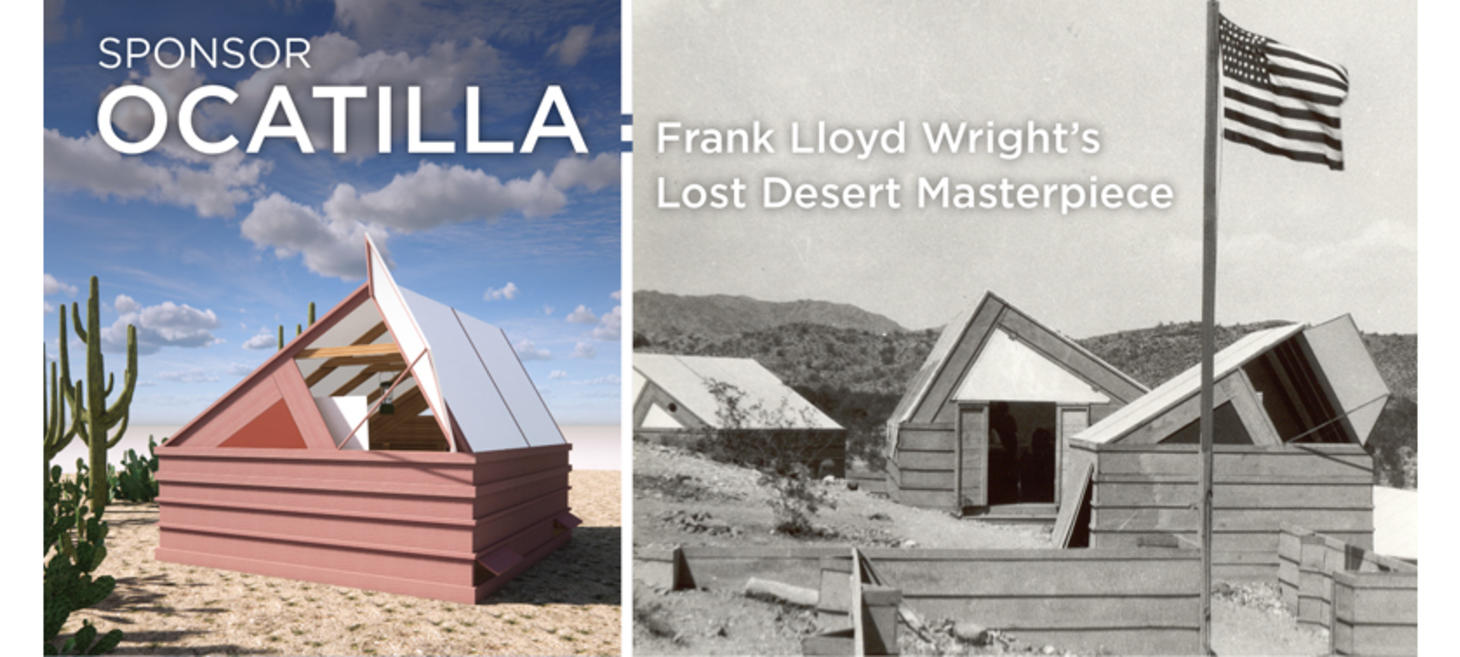
Become Part of the Ocatilla Legacy
The Organic Architecture + Design Archives is working to bring one of Frank Lloyd Wright’s most important lost experiments back into public view. In fall 2026, OA+D, in partnership with the Chandler Museum and aligned with the international gathering of the Frank Lloyd Wright Building Conservancy, will present Ocatilla: Frank Lloyd Wright’s Lost Desert Masterpiece an ambitious exhibition centered around a full-scale reconstruction of Wright’s 1929 desert camp structure.
Ocatilla existed for only a brief moment in time, yet it profoundly shaped Wright’s ideas about architecture, landscape, shelter, and desert living. Through rare archival materials, original objects, photographs, film footage, and immersive exhibition design, OA+D will reintroduce this pivotal chapter of architectural history to an international audience of architects, scholars, students, and enthusiasts.
This is a rare opportunity to be part of something historic. Exhibition sponsors will help make possible the research, fabrication, and construction required to bring Ocatilla back to life while ensuring their support becomes permanently connected to a landmark cultural project.
Partner | $10,000+ Supports the exhibition centerpiece with primary recognition across the exhibition, catalog, and communications.
Patron | $5,000 Underwrites the official exhibition catalog with prominent recognition in print and within the gallery.
Supporter | $1,000 Advances research and construction of the reconstructed Ocatilla structure with recognition on the exhibition display and catalog.
Friend | $500 Helps fund essential exhibition design and fabrication with recognition on the exhibition display.
Help preserve architectural history, inspire future generations, and be remembered as part of the effort that brought Ocatilla back to life. Make a tax-deductible sponsorship commitment and support OA+D’s mission to preserve, interpret, and share the legacy of organic architecture.
Credit: 3D Model by Steven Vinzani - VinzanimationS and 3D Visualizations by Razin Khan - Redon Studio. Photo courtesy OA+D Archives.
Click for more details: oadarchives.org
The Headlines
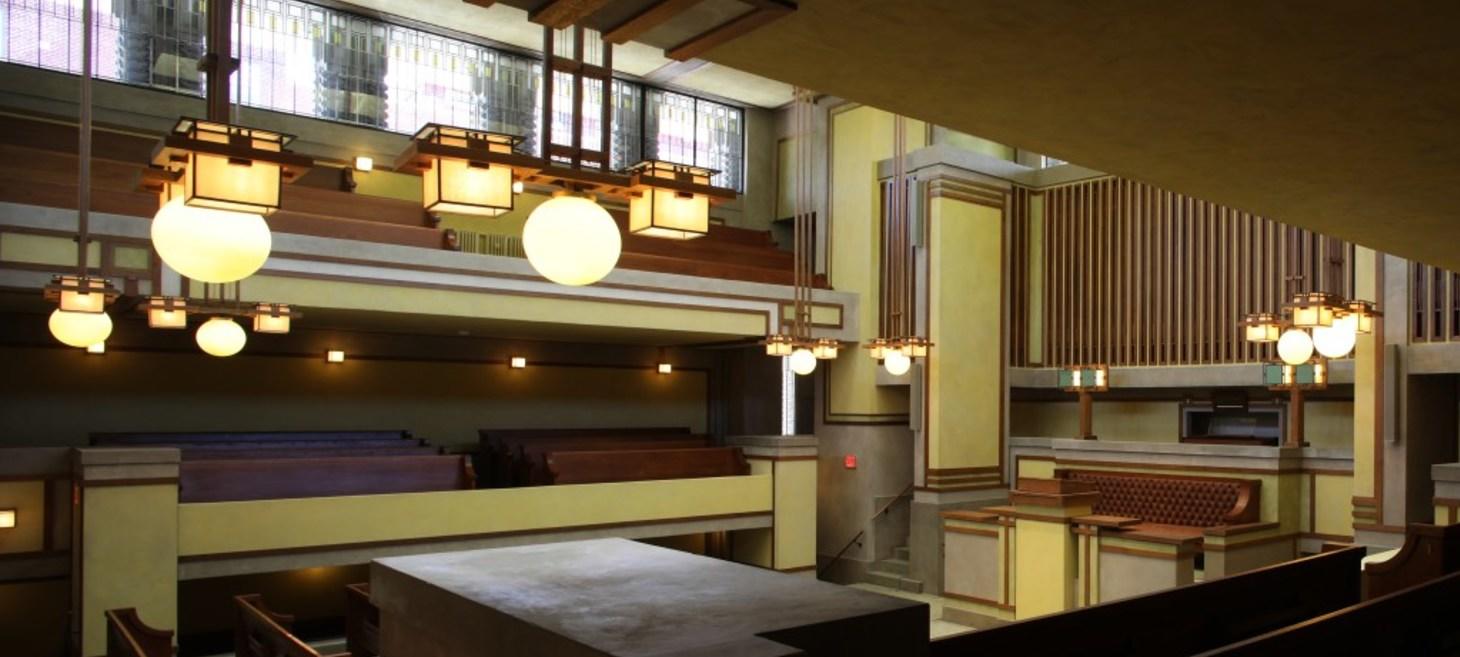
Frank Lloyd Wright's Buildings Are Always Worth Revisiting
Frank Lloyd Wright’s architectural legacy continues to captivate more than six decades after his death, with his work celebrated for its timelessness, blending historical reference with forward-looking innovation. Over 400 of his buildings remain across 35 states and in Japan, many visible from public streets or open to tours, while Chicago, Illinois serves as the epicenter of Wright’s enduring influence, particularly in Oak Park and River Forest.
Iconic structures such as Unity Temple, completed in 1908, showcase his masterful use of space, materials, and light, recently enhanced by renovations while remaining a functioning Unitarian congregation and UNESCO World Heritage Site.
The Wright-focused industry is vast, including nonprofit organizations, public tours, and events like the annual Wright Plus tour, which grants rare access to private homes, and sites like the S.C. Johnson Administrative Complex in Racine and the Unitarian Meeting House in Madison continue to attract visitors.
Wright’s personal life was marked by scandal and tragedy, including fleeing Oak Park with Mamah Borthwick Cheney and the 1914 Taliesin murders, and his later professional environment was criticized for exploitative practices toward apprentices.
His work has inspired hundreds of books, with recent publications extending his legacy, including Robie House: A Frank Lloyd Wright Masterpiece by Patrick F. Cannon, which chronicles the Prairie-period crowning achievement and its preservation, and Frank Lloyd Wright’s Bogk House: A Bold Experiment by Anthony Alofsin and Richard L. Cleary, documenting a rarely seen Milwaukee home from his post-Taliesin period. Both books highlight collaborations with interior designer George Mann Niedecken, emphasizing Wright’s innovative spatial designs that extend into the surrounding landscape.
Wright’s continued relevance underscores the enduring power of exceptional architecture, rewarding repeated exploration and interpretation across Chicago, its suburbs, and southern Wisconsin.
Click for more details: chicagotribune.com
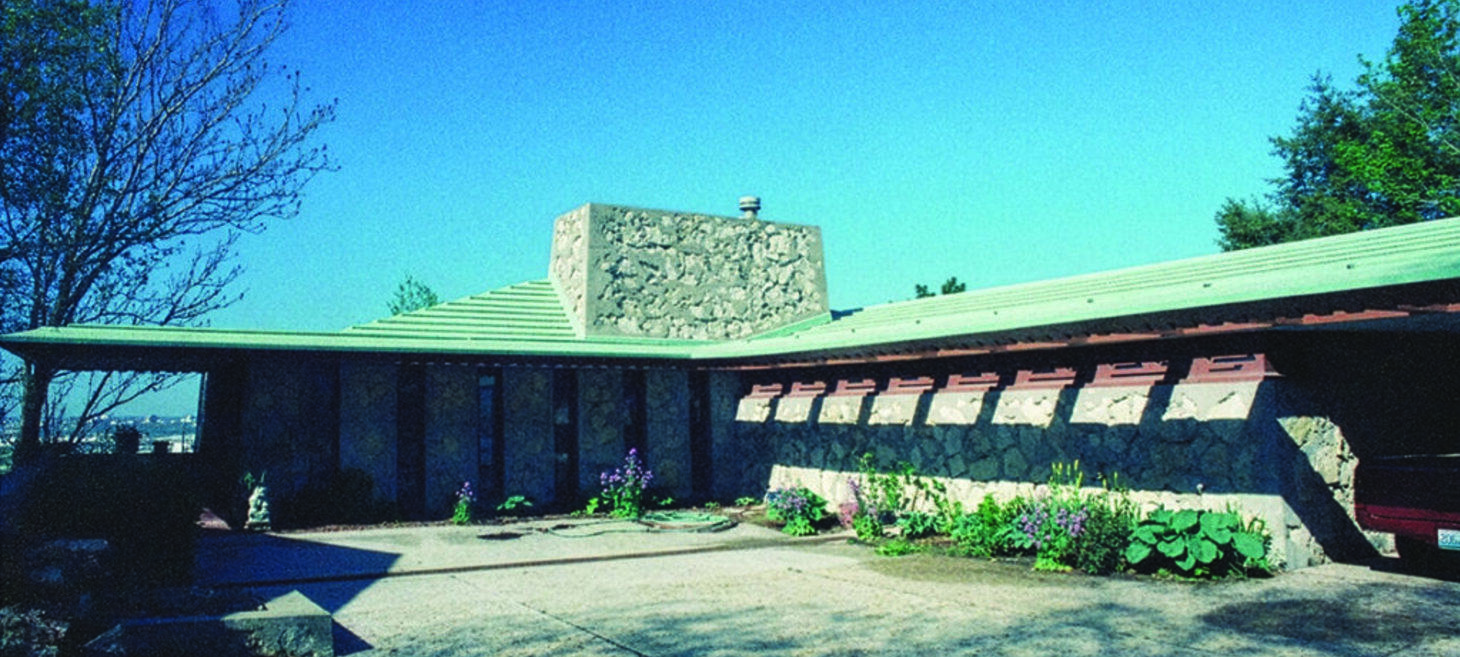
The Bott House Stands As One Of Frank Lloyd Wright’s Final Residential Designs
The Bott House reflects Wright’s philosophy of “organic architecture,” blending seamlessly into the landscape rather than sitting atop it. The structure descends into the hillside, appearing to emerge naturally from the bluff. Current owner Homer Williams, who has lived there for nearly 40 years, says Wright believed homes should be built “of the hill,” not merely on it.
The house features sweeping views of the Kansas City, Missouri skyline and the Missouri River from its cantilevered terrace. Its distinctive stonework, inspired by Wright’s desert aesthetic at Taliesin West, was created using stones salvaged from old Flint Hills farm fences in Kansas. Inside, the home is lined with rich mahogany woodwork, much of it original, and illuminated by Wright’s signature mitered glass corners that fill the spaces with natural light.
Wright also incorporated personal touches inspired by the Botts’ love of Arizona, including decorative wood panels and a roof influenced by Bermuda-style architecture. The roof’s custom green appearance was achieved with painted terne metal, though its original seams caused leaks over time. Williams later restored it using a waterproof membrane that preserved Wright’s intended look.
Much of the original furniture, fabrics, built-ins, and memorabilia remain intact, including Wright’s sketches and letters to the Botts. The home also contains artwork and travel mementos collected by Williams after several original oriental screens disappeared into private collections. Today, the Bott House stands as both a preserved architectural treasure and a deeply personal reflection of Wright’s design philosophy.
Click for more details: kansascitymag.com
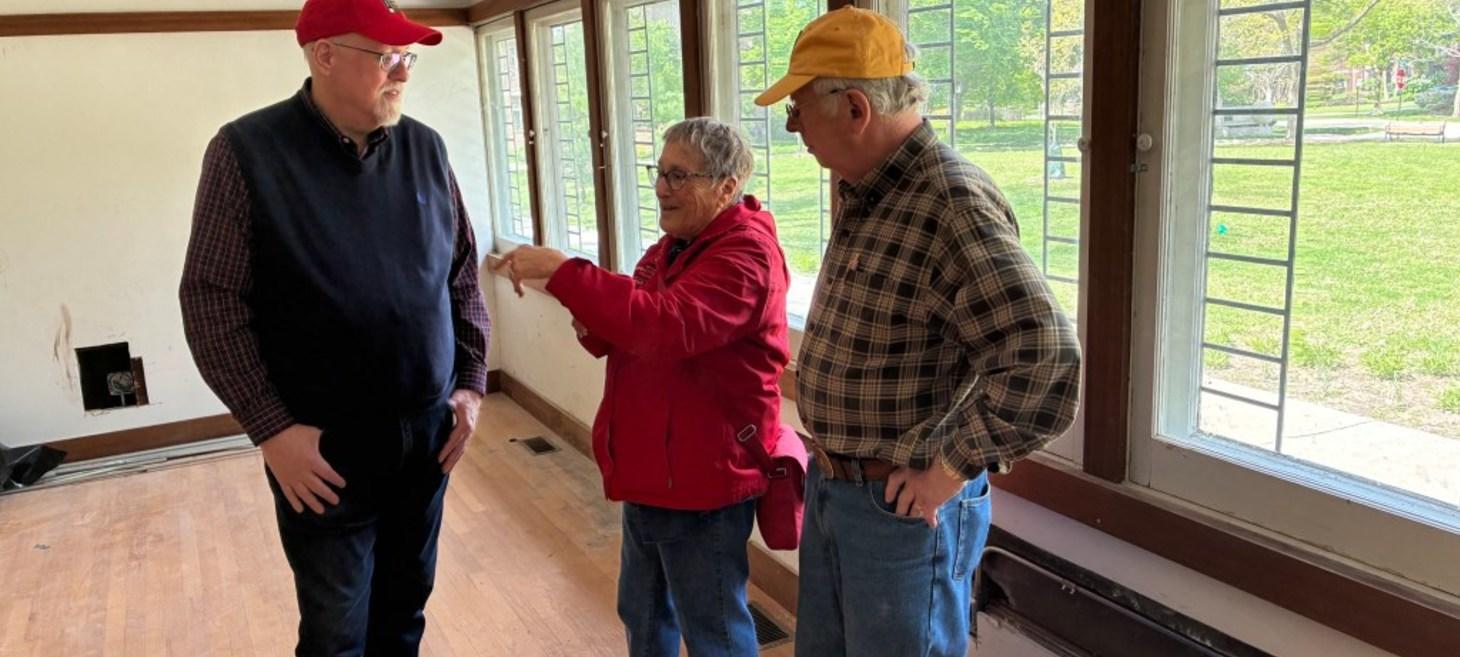
Glencoe's Frank Lloyd Wright Cottage May Open To Public
Starting Sunday, the public can tour the Frank Lloyd Wright-designed Ravine Bluffs Cottage in Glencoe, Illinois, originally built in 1913 for Wright’s attorney, Sherman Booth, who later became notorious for enforcing racist housing covenants.
The Glencoe Historical Society, which owns and maintains the cottage, is using the tours to fund ongoing restoration and transform the property into a museum, research facility, and education center.
After sitting idle for nearly six years, the cottage is undergoing interior renovations, with work on electrical systems, floors, wall finishes, entryways, handrails, and future plans to restore its banded windows.
The project also acknowledges Elizabeth Booth, a local suffragist, and addresses the legacy of Sherman Booth’s racist actions, prompting the renaming of the cottage. Relocated in 2020 to a Park District-owned parcel after preservation efforts prevented its demolition, the cottage has already undergone a $350,000 exterior rehabilitation, and fundraising continues to support interior work and future maintenance.
Plans for public access will be limited by lease restrictions, but tours and potential exhibits aim to celebrate Wright’s architectural contributions, particularly his Usonian homes, Prairie-style architecture, and designs in the Ravine Bluffs subdivision, while engaging the local community and Wright enthusiasts.
Click for more details: chicagotribune.com

Internationally Acclaimed Cellist To Perform In Two Rivers
A world-renowned cellist is bringing his talents to Two Rivers, Wisconsin.
Grammy® Award-Winning multi-style cellist, Mike Block, will be at Still Bend, the home designed by Frank Lloyd Wright, on Tuesday, May 26th.
The one-night-only event promises to blend “music, architecture, and artistry in a setting designed to inspire.”
Mike Block’s solo show offers a rich mixture of classical repertoire, folk music, original compositions, and songs that draw inspiration from his diverse collaborations.
An admirer of Frank Lloyd Wright’s architecture since childhood, this performance will include works directly inspired by his experiences spending time in Frank Lloyd Wright structures.
The event will begin with a welcome reception 6:00 p.m., where snacks and drinks will be provided, followed by the concert at 7:00 p.m.
Availability is limited to 60 people, and admission to the event is $50.
Tickets are available by visiting manitowocsymphony.org/mike-block.
Click for more details: seehafernews.com
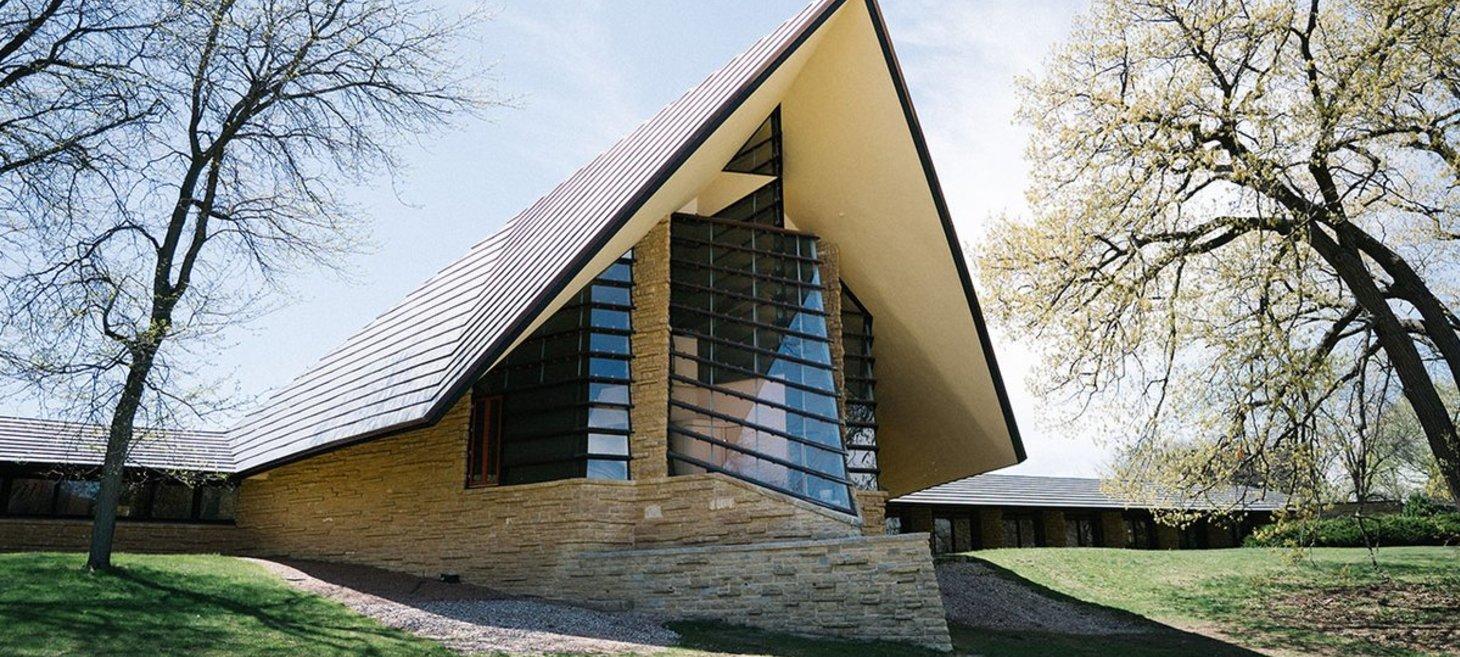
Happy 75th, Unitarian Meeting House!
On Feb. 4, 1951, Max Otto delivered the inaugural sermon at the new Frank Lloyd Wright-designed Unitarian Meeting House. The UW-Madison philosophy professor and congregation member said that the striking building on Madison, Wisconsin’s near west side, distinguished by a soaring glass and wood “prow,” “will truly be our own if our religious undertaking, ennobled by the beauty of its new home, has vitality and meaning enough to transcend the fame of the building in which it is housed.”
Today, on the cusp of the Meeting House’s 75th anniversary celebration June 5-7, the structure, partially constructed by congregants, is considered one of the most remarkable buildings in American religious architecture. Designated as a National Historic Landmark in 2004 by the National Park Service, the building has become a destination for visitors from all over the world.
“It really is the best kept secret in Madison,” says March Schweitzer, president of the Friends of the Meeting House Inc., a volunteer-run nonprofit dedicated to preservation of the building, located at 900 University Bay Drive in the village of Shorewood Hills.
The Friends of the Meeting House is letting Madison-area residents in on the secret by hosting a series of weekend events designed to celebrate the building. The first, on June 5, from 4-5:30 p.m., will be a 1.5-mile walking tour of the Sunset Hills neighborhood, not far from the Meeting House, highlighting exteriors of 13 homes designed by Wright’s apprentices and local contemporaries. That will be followed by a 7 p.m. presentation at the Meeting House by Emily Butler of the Arizona-based Frank Lloyd Wright Foundation titled “Beyond the Built: Frank Lloyd Wright’s Unrealized Vision for Madison.”
“Behind the Scenes at the Meeting House” tours will take place June 6, at 9:30 a.m. and 1 p.m., and offer two-and-a-half-hour deep dives into the Meeting House’s hidden history — including private spots not shown on public tours. The weekend will wrap up with a free lecture on June 7, at 11:30 a.m., about rehabilitation and preservation processes at the Meeting House, followed by a free open house from 1-4 p.m. More details and ticket information are available on the Meeting House’s website, unitarianmeetinghouse.org.
Click for more details: isthmus.com
About
This weekly Wright Society update is brought to you by Eric O'Malley with Bryan and Lisa Kelly. If you enjoy these free, curated updates—please forward our sign-up page and/or share on Social Media.
If you’d like to submit content to be featured here, please reach out by emailing us at mail[at]wrightsociety.com.
Eric, Bryan & Lisa | Wright Society Publishers