
Announcements
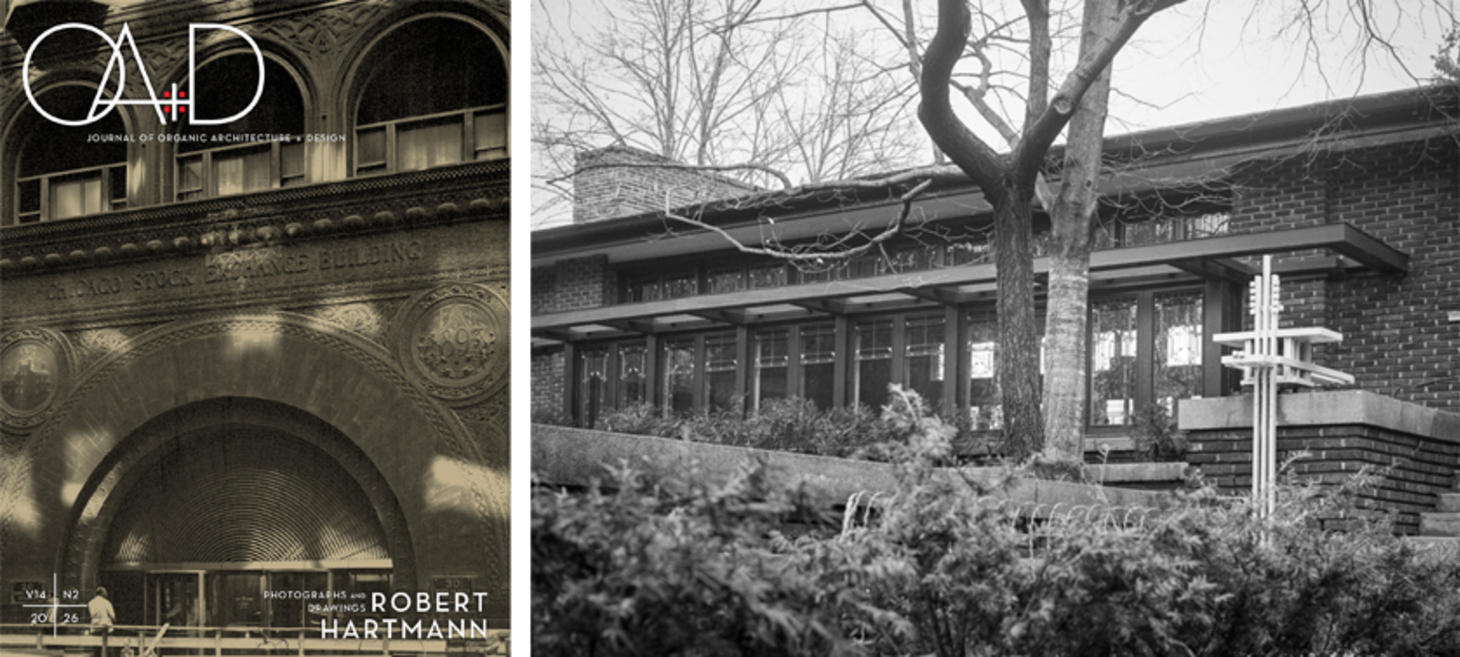
Pre-Order the Summer 2026 Journal of Organic Architecture + Design
The summer 2026 issue of the Journal of Organic Architecture + Design is now available for pre-order.
Volume 14, Number 2 presents a powerful and deeply personal body of work by photographer and designer Robert Hartmann. Spanning decades of observation, this issue captures organic architecture at a pivotal moment in time, documenting buildings, details, and environments that have since been altered, restored, or lost.
Through striking black and white and color photography taken primarily between the 1960s and 1970s, Hartmann records the work of Frank Lloyd Wright, Louis Sullivan, Taliesin Associated Architects, and a broader circle of organic architects including Bruce Goff and Herb Greene. These images serve as lasting records of architecture experienced firsthand, preserving the atmosphere, material richness, and spatial character of these works.
This issue also includes a compelling collection of drawings. Highlights include rare documentation of Louis Sullivan sketches alongside Hartmann’s own interpretive works and architectural renderings. Together, the photographs and drawings reflect a lifelong engagement with organic principles through light, structure, and time.
Printed copies are scheduled to ship in late July to early August to all subscribers and pre-order customers. Subscribers and sustaining members receive every issue automatically. Become a Friend of OA+D member to support the Archives and ensure uninterrupted delivery of the Journal.
Or you can pre-order your copy today and secure your copy of this remarkable issue.
For questions, contact info@oadarchives.org
Click for more details: bigcartel.com
The Headlines
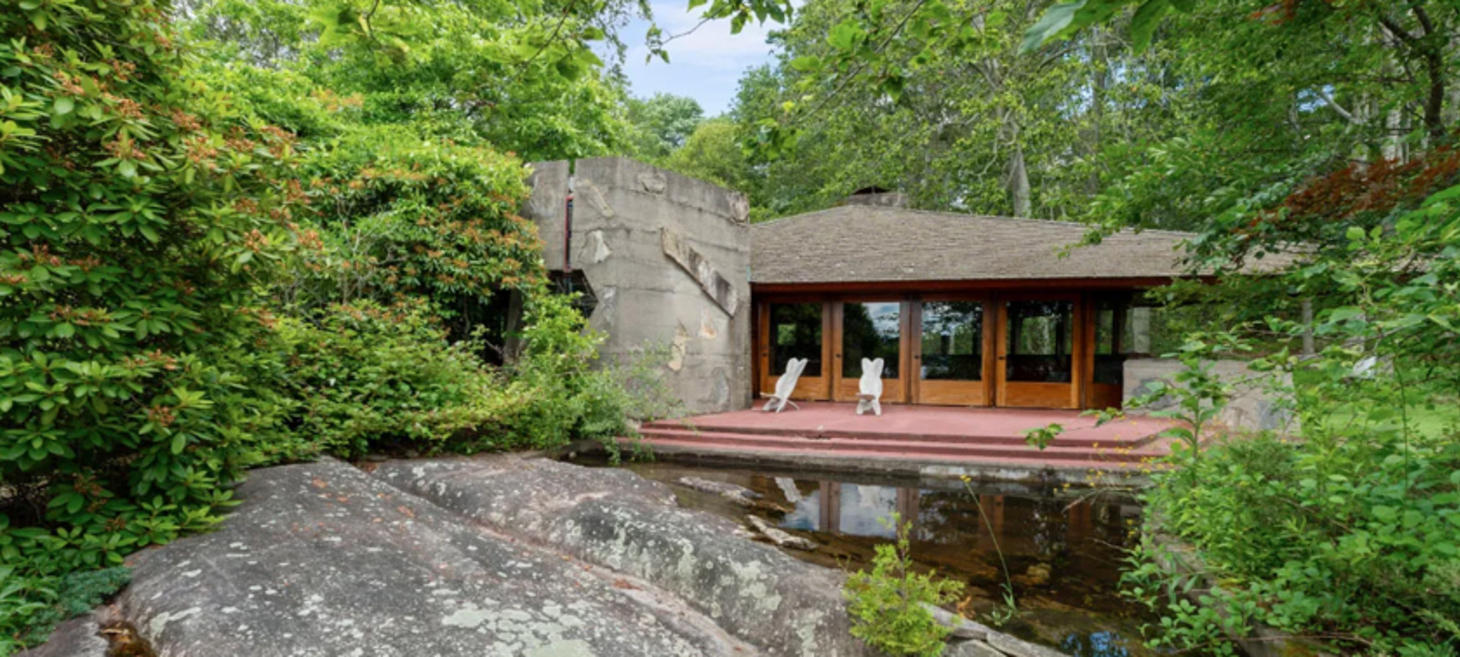
Inside Petra Island: Touring Frank Lloyd Wright’s Hidden Hudson Valley House
Chronogram explores the unusual experience of visiting Petra Island, a private island on Lake Mahopac in New York that features a rare Frank Lloyd Wright-designed property open to the public through limited seasonal tours.
Accessible only by boat, the island contains two homes: the Chahroudi Cottage, completed during Wright’s lifetime, and the larger Massaro House, constructed in 2008 using Wright’s original plans decades after his death. The tours are intentionally intimate, with small groups transported across the lake for an immersive visit where guests can freely move through the houses, sit on furniture, and experience the architecture without barriers or ropes. Owner Joe Massaro describes the tours as more like visiting a friend’s home than attending a formal museum tour.
There was a complicated history behind the Massaro House. Wright originally designed an ambitious residence for engineer A.K. Chahroudi in the late 1940s, but only the smaller cottage was completed before Wright died. Years later, Massaro acquired the island and built the larger home based on Wright’s drawings, sparking debate among preservationists and the Frank Lloyd Wright Foundation about authenticity and interpretation.
A major theme is the idea of “living architecture.” Unlike many famous Wright sites that are heavily restricted, Petra Island allows visitors to experience the homes in a more personal and tactile way. There is an emotional effect of approaching the island by water, exploring the geometric interiors, and seeing Wright’s philosophy of organic architecture integrated with the natural landscape.
The tours have grown steadily in popularity, attracting architecture enthusiasts from around the world. They operate seasonally from late spring through fall, with limited-capacity groups and reservations required.
Click for more details: chronogram.com
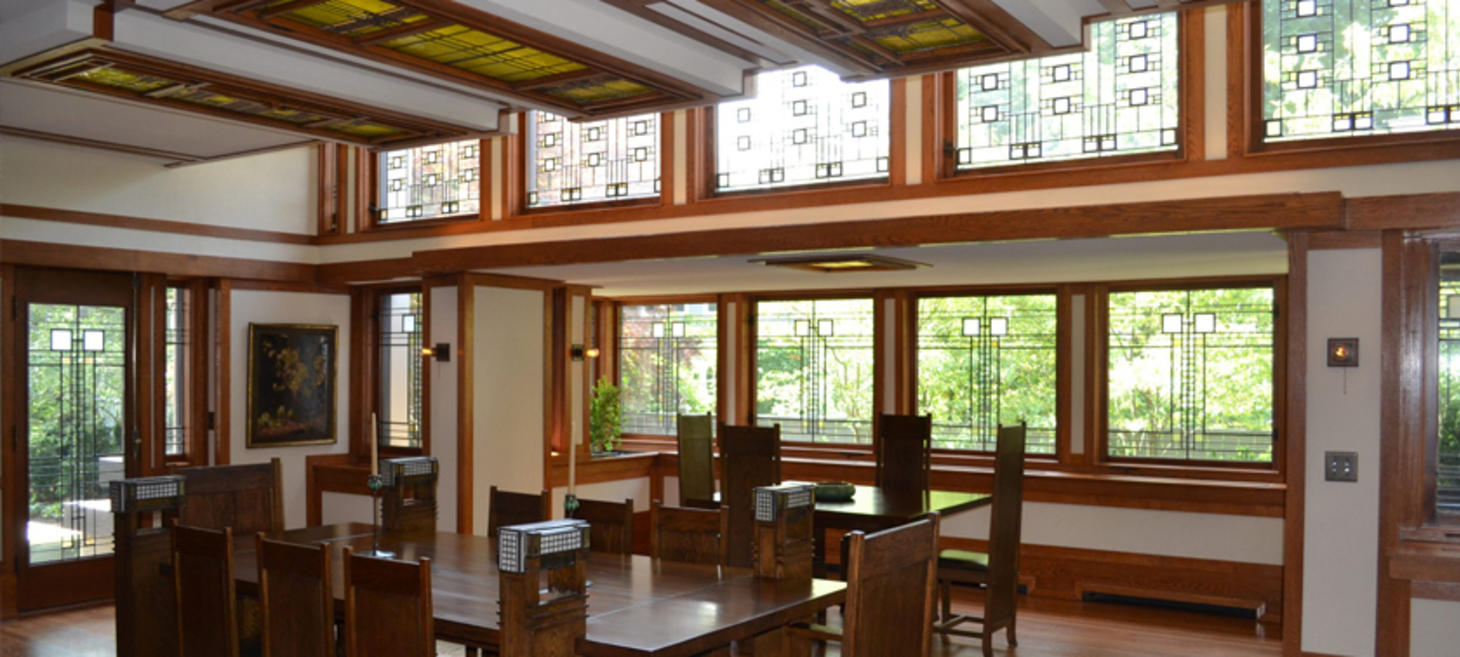
An Evening With Kim Bixler: Growing Up In A Frank Lloyd Wright House
Join NPR for a multi-media presentation with Kim Bixler as she presents "Growing Up in a Frank Lloyd Wright House" - live in the Buffalo Toronto Public Media studio on Monday, June 22 at 6pm!
Did you ever wonder what it would be like to live in a home designed by Frank Lloyd Wright? Here’s a chance to find out. Don't miss this chance to spend a fun and inspiring night in person with Kim Bixler. It's the perfect way to unwind and enjoy a memorable evening.
Kim Bixler’s family owned Frank Lloyd Wright’s 1908 Edward E. Boynton House in Rochester, New York, from 1977 to 1994. She is the author of the book Growing Up in a Frank Lloyd Wright House, and is also featured in the PBS documentary Frank Lloyd Wright’s Boynton House: The Next Hundred Years.
In her multi-media presentation, Kim recounts the joys and pitfalls of owning and living in a Wright-designed home. Living with the public’s curiosity, playing hide-and seek, coping with the habitually leaky roof and managing constant renovations make this an unforgettable story. If you love reality home-renovating projects, architectural tours and historical homes, you’ll love this event.
Also included with your $40 in-person admission ticket is a Frank Lloyd Wright "Tree of Life" metal bookmark based on a window created for the Darwin D. Martin main house in Buffalo.
Inspired? Continue your Wright journey at Frank Lloyd Wright's Graycliff in nearby Derby, NY. All in-person attendees will receive a discount code after this event for 10% off a one-hour Standard, or two-hour Extended Guided Tour.
If you are unable to attend the event in person, there is a $10 virtual webinar-only option upon checkout.
Click for more details: btpm.org
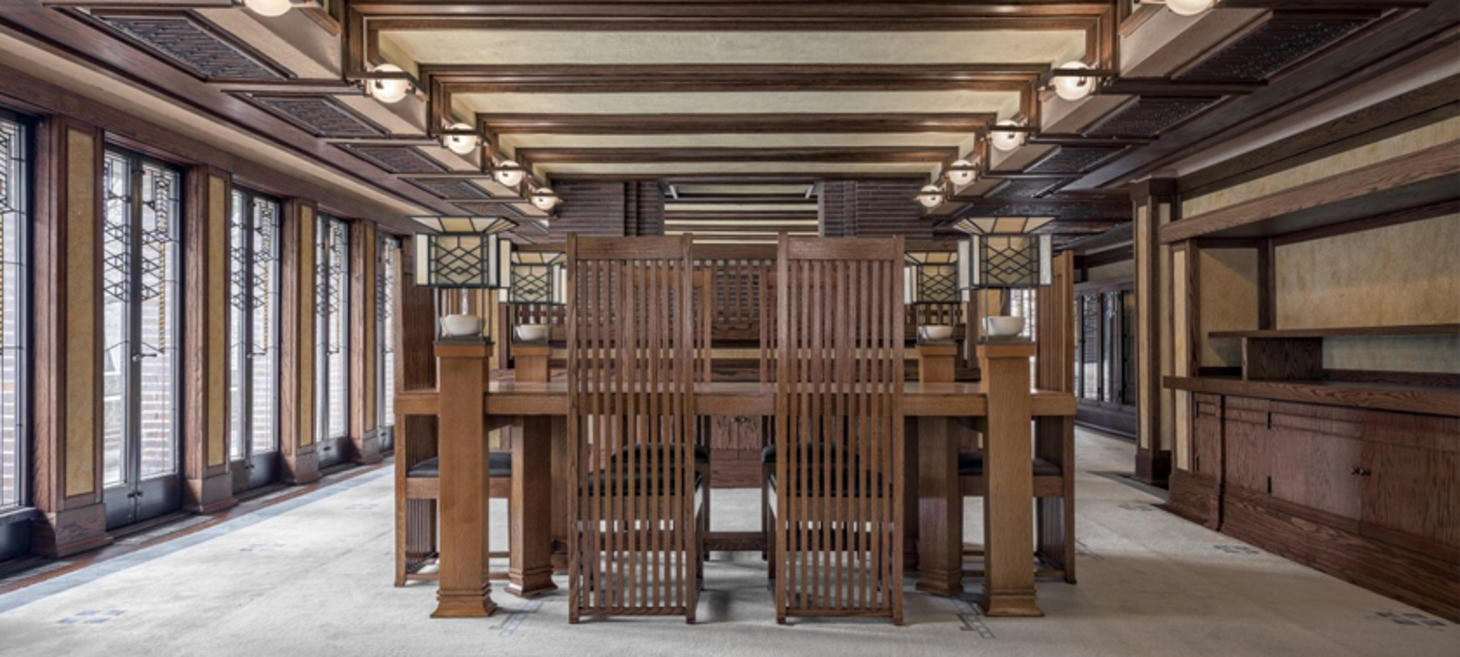
A Fresh Look At Frank Lloyd Wright’s Iconic Robie House
Widely considered one of America’s greatest architects, Midwest native Frank Lloyd Wright had a prolific career, designing 1,114 architectural works—532 of which were realized. One of his most important residential buildings, the Robie House in Chicago, Illinois, is emblematic of his signature Prairie-style architecture, characterized as “a long, low, open plan structure that eschewed the typical high, straight-sided box in order to emphasize the horizontal line of the prairie and domesticity,” according to the Frank Lloyd Wright Foundation.
Fans of the famed architect can now explore this game-changing home in the new book “Robie House: A Frank Lloyd Wright Masterpiece” penned by Patrick F. Cannon with photo- graphy by James Caulfield.
The iconic home was originally completed in 1910 then meticulously restored and reintroduced to the world in 2019. The book details the history of the Robie House—a UNESCO World Heritage Site, and one of eight buildings by Wright to be designated as such—and its groundbreaking design. It also includes all-new photography of the restoration, which illuminates Wright’s original vision.
“The Robie House, where I gave guided tours for many years, is often considered the finest example of the architect’s Prairie period, which was the first purely American domestic architectural style,” Cannon explains. “Although the ubiquitous ranch and even split-level houses of today owe much to Wright, more faithful Prairie designs have also had a revival, and still look as modern as ever.”
This new book is the tenth Cannon and Caulfield have worked on together, and which explore Chicago area architects and architecture, including four exclusively on Frank Lloyd Wright. The duo has also been awarded four Gold Medal in Architecture honors at the Independent Publisher Book Awards.
“Robie House: A Frank Lloyd Wright Masterpiece” is distributed by University of Minnesota press and can be purchased at upress.umn.edu.
Click for more details: midwestdesignmag.com
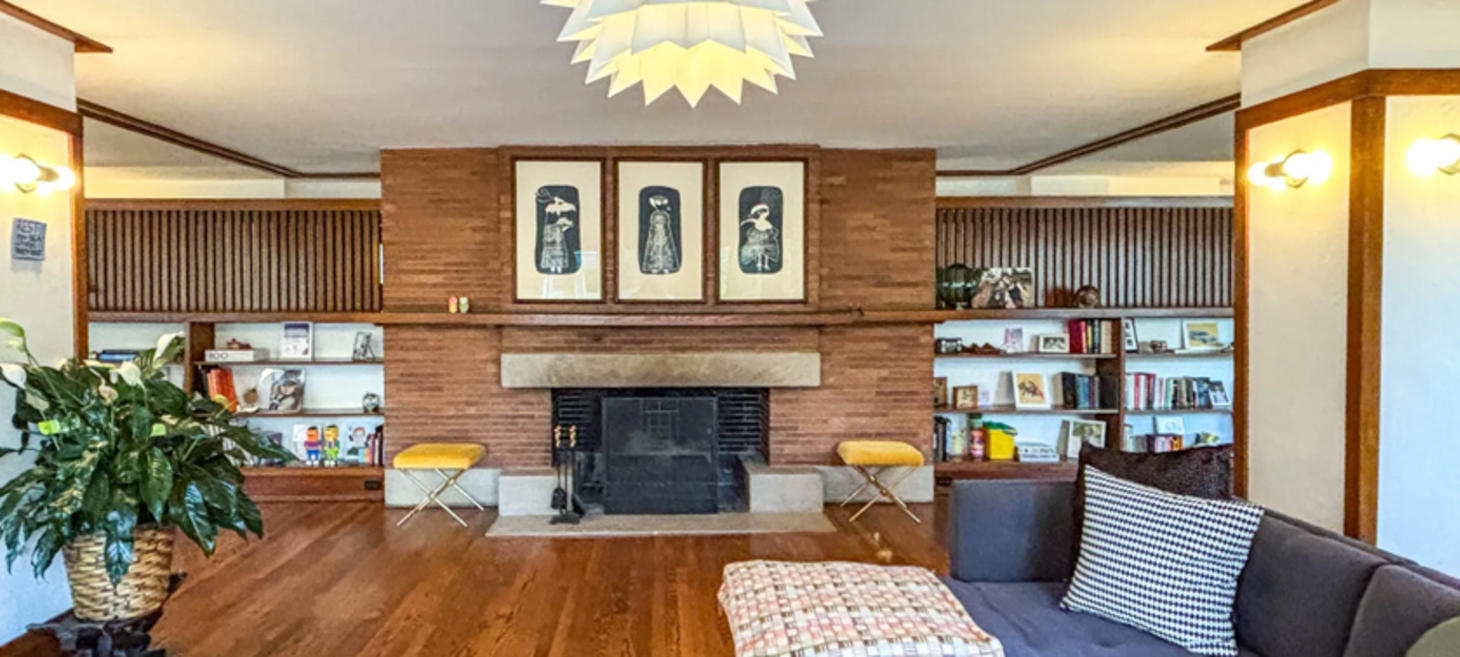
Oscar And Nonie Balch House Showcases Historic And Modern
In 1911, during a turbulent period in his personal life, Frank Lloyd Wright returned to the Midwest after traveling through Europe with Mamah Cheney while simultaneously creating a new life with her in Wisconsin and remodeling his Oak Park Home & Studio for his wife Catherine and their children. Despite the controversy surrounding Wright at the time, Oscar Balch commissioned him to design a new home on Kenilworth Avenue in Oak Park, Illinois, one of only three local Wright projects completed that year, reflecting the strong professional relationship between the two men. Balch had previously worked with Wright in 1906 when he and partner Alonzo Pebbles hired him to design their Oak Park interior design and wallpaper shop, Pebbles & Balch, which later was demolished but featured recognizable Wright elements.
The Balch House displays many hallmarks of Wright’s Prairie Style, including stucco walls, a flat roof, dark wood trim, concealed entrances, and leaded glass windows. Researchers believe the home’s hidden and protective design elements may reflect Wright’s emotional state during this difficult period of his life. House researcher Ken Simpson uncovered numerous stories connected to the property’s past owners, including ties to Dr. Clarence Hemingway, who treated one of the Balch sons after a fire injury, and a later family who survived the 1906 San Francisco earthquake and preserved photographs and written memories in an old steamer trunk.
Over the decades, the house passed through several notable owners, including Dr. William and Mary Jacobs, who raised 11 children there, and Oak Park’s first village manager, Mark Keane. From 1999 to 2016, Tim and Charlene Pearson restored much of the home and added a modern kitchen and family room while preserving much of the original first floor. They also donated two original leaded glass light fixtures to the Frank Lloyd Wright Building Conservancy to help preserve them. Later owners introduced sustainable upgrades such as geothermal heating, insulation, and storm windows, while the current owners have remodeled parts of the home, including the kitchen and a new primary suite bathroom. According to Christine Trevino of the Wright Trust, visitors will be excited to see the modern updates blended into the historic home.
Click for more details: oakpark.com
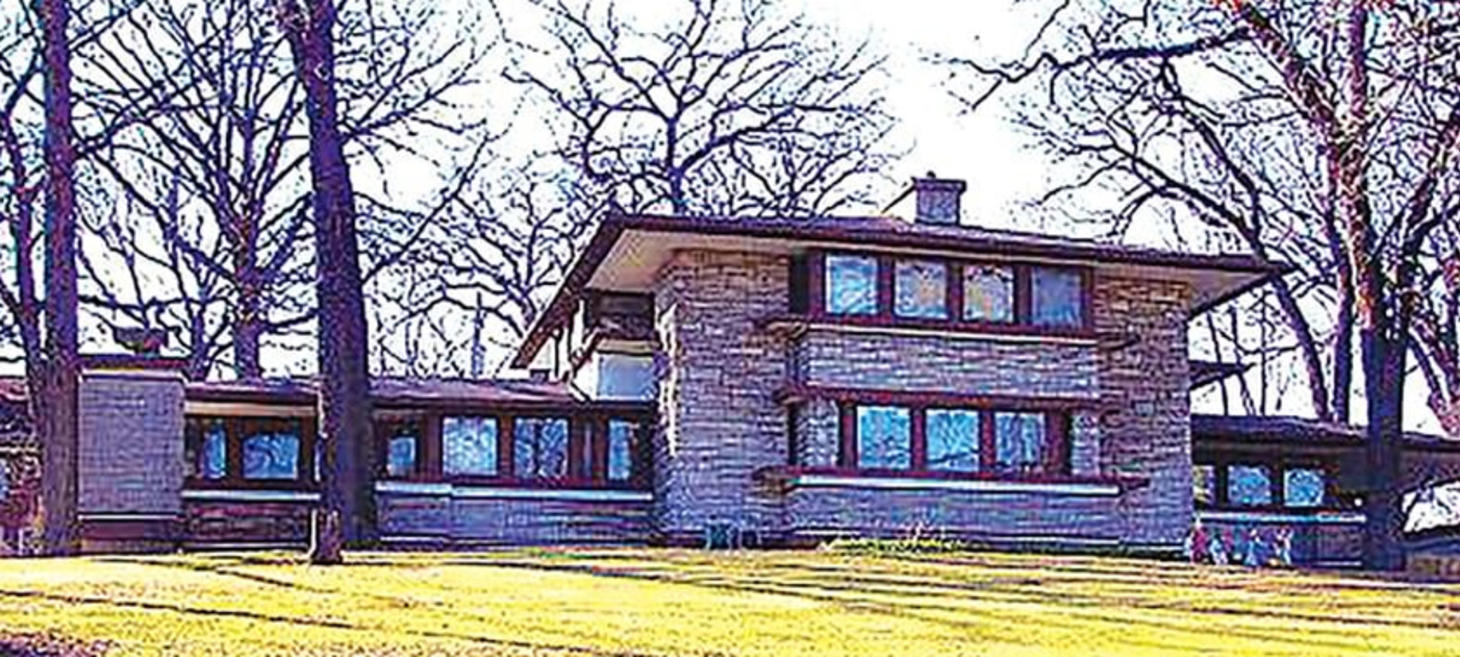
Lee Bey Presents The Ridge Historical Society Talk On Architecture
The Ridge Historical Society recently hosted Chicago Sun-Times architecture critic Lee Bey at the Beverly Arts Center as part of its efforts to preserve and promote the architectural history of Chicago’s Beverly/Morgan Park neighborhood. The event also marked the 50th anniversary of the Ridge Historic District, one of the nation’s largest urban historic districts, containing more than 3,000 buildings built primarily between 1870 and 1930. Society leaders said they hope to engage younger generations by creating new conversations around local history, architecture, and preservation.
Bey described Beverly/Morgan Park as an “outdoor museum of architecture,” where homes reflect the area’s history, geography, and identity. Historian Tim Blackburn emphasized that preserving historic homes helps maintain a community’s sense of place and memory, especially compared with suburbs where older homes are frequently replaced with new construction. The Ridge Historical Society and the Beverly Area Planning Association recently introduced commemorative street banners to highlight the district and promote its upcoming home tour.
During his presentation, Bey discussed several important local buildings and architects, including the R.W. Evans House designed by Frank Lloyd Wright. He explained Wright’s philosophy of organic architecture, which sought harmony between buildings and their natural surroundings through thoughtful landscaping, windows, and overhanging eaves. Bey noted that the Evans House has often been overlooked because renovations altered its original exterior, but he plans to feature it in his upcoming book “Southern Exposure” to bring greater attention to South Side architecture.
Bey also highlighted architects John Todd and Murray Hetherington, whose homes in North Beverly were designed to fit the area’s winding streets and natural landscape rather than Chicago’s traditional grid. Their work became so admired that similar designs were later known as “Hetherington Style.” Another important building discussed was the Eugene Pike House, designed by architect Harry Hale Waterman for businessman and horticulturist Eugene Pike. Waterman, who once worked with Wright, became known as Morgan Park’s unofficial “village architect” because of the many buildings he designed there.
The Pike House later housed officials from the Forest Preserve District of Cook County before falling into severe disrepair after years of abandonment. The Ridge Historical Society and Beverly Area Planning Association are now working to restore it as an arts and cultural center, though the project is expected to take years because of fundraising and restoration challenges.
Bey concluded by discussing endangered historic buildings such as the Barnard House, one of the oldest homes in the area, once owned by early settlers Erastus Barnard and Mary Barnard. He explained that preservation efforts are often complicated by broader inequalities involving lending, insurance, and property values in less affluent neighborhoods. According to Bey, architecture can reveal larger issues of race, class, urban planning, and neighborhood disinvestment by showing how communities evolved differently and why some require greater support to preserve their historic character.
Click for more details: beverlyreview.net
About
This weekly Wright Society update is brought to you by Eric O'Malley with Bryan and Lisa Kelly. If you enjoy these free, curated updates—please forward our sign-up page and/or share on Social Media.
If you’d like to submit content to be featured here, please reach out by emailing us at mail[at]wrightsociety.com.
Eric, Bryan & Lisa | Wright Society Publishers