
The Headlines
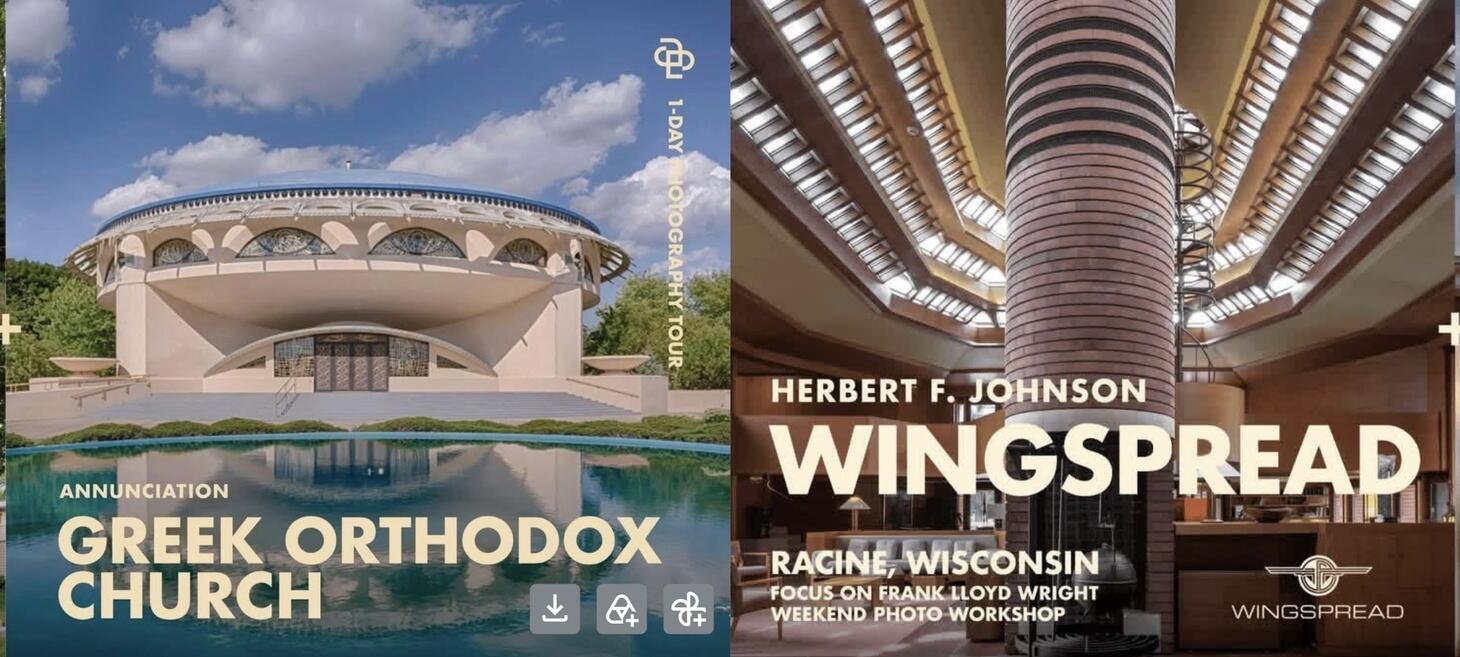
Wright Wisconsin Photography Tours Qith Andrew Pielage
Step behind the scenes of Frank Lloyd Wright’s Milwaukee masterpieces on October 22, 2026. This exclusive photography tour offers rare access to three of the city's most architecturally significant Wright-designed sites:
Arthur L. Richards Burnham Block – A visionary experiment in affordable housing, Wright’s American System-Built Homes reflect his revolutionary thinking on functional, beautiful living spaces for everyday families. Photography + Tour.
Annunciation Greek Orthodox Church – One of Wright’s final works, this sacred space blends Byzantine influences with his signature organic architecture, creating a serene and striking atmosphere unlike any other. Photography + Tour.
Frederick C. Bogk House – The only single-family Wright home in Milwaukee, this Prairie-style residence from 1917 features bold symmetry, leaded glass windows, custom furnishings, and a powerful horizontal presence. Rarely open to the public, it’s a must-see for Wright enthusiasts. NOTE: This is a private residence, tour only, no interior photography allowed.
Let your lens uncover the geometry, rhythm, and quiet intricacies of Wright’s timeless designs. Reserve your spot now—spaces are limited!
PHOTOGRAPHY WEEKEND WORKSHOP - FRANK LLOYD WRIGHT IN RACINE
October 23–25, 2026 • Racine, Wisconsin
Join an immersive photography workshop centered around three remarkable Frank Lloyd Wright designs in Racine.
Herbert F. Johnson House — Wingspread - Stay + Tour + Photography Instead of a hotel, you’ll stay at Wingspread — one of the largest residences Wright ever designed and widely considered the final masterpiece of his Prairie style. We’ll have dedicated time to tour, study, and photograph the house throughout the workshop.
Thomas P. Hardy House - Private Tour + Photography Photograph one of Wright’s most dramatic residential interiors during a private session with access not normally available to the public.
SC Johnson Administration Building + Research Tower- Special Exterior Photography Access We’ll also have special access to photograph the SC Johnson campus during prime light and outside regular tour hours. This opportunity required extensive coordination and approvals and is not typically available to the public.
Spaces are limited
Click for more details: apizm.com
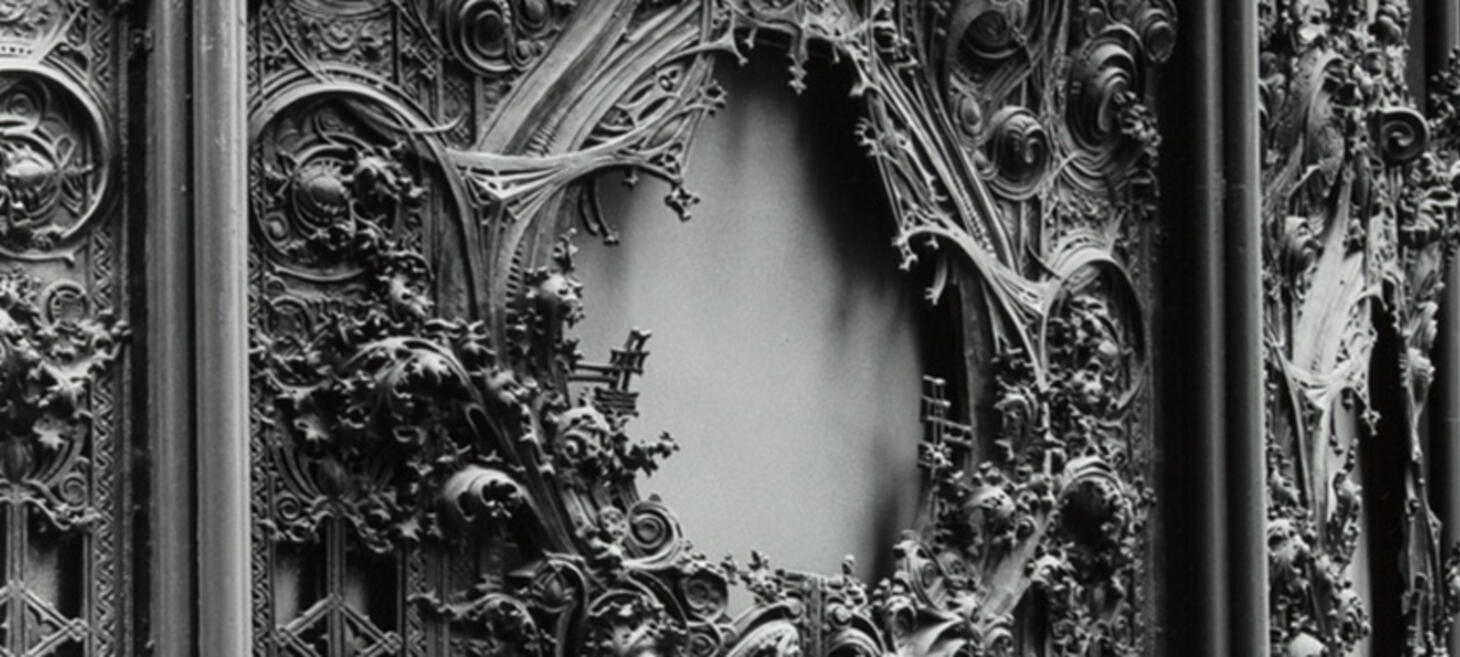
The Many Lives Of Sullivan’s Ornament
Lecture: The Many Lives of Sullivan’s Ornament
Thurs, Dec 10 | 6:00–7:00 | Fullerton Hall - The Art Institute of Chicago
As Louis Sullivan’s extraordinary book, A System of Architectural Ornament According with a Philosophy of Man’s Powers, passes its 100th anniversary, join curator Alison Fisher for a talk tracing the long and, at times, unexpected history of critical reception for the architect’s original ornament.
Fisher discusses Sullivan’s work in light of his contemporaries in the late 19th century, the modernist historians who shunned his decorated surfaces, and the American photographers who helped stage a revival of his architecture in the 1950s, arguing for his ornament as the ultimate expression of creative freedom.
Alison Fisher is the Harold and Margot Schiff Curator of Architecture and Design at the Art Institute of Chicago. Fisher specializes in alternative histories of modern architecture, urbanism, and design and has curated many exhibitions in these areas, including The City Lost and Found: Capturing New York, Chicago, and Los Angeles, 1960–1980, Bauhaus Chicago: Design in the City, Dan Friedman: Stay Radical, and Bruce Goff: Material Worlds. Her work has received grants and recognition from the Art Libraries Society of North America, the Embassy of France, the Graham Foundation for Advanced Studies in the Fine Arts, and the Society of Architectural Historians.
If you have any questions about programming, please reach out to museum-programs@artic.edu.
Click for more details: artic.edu
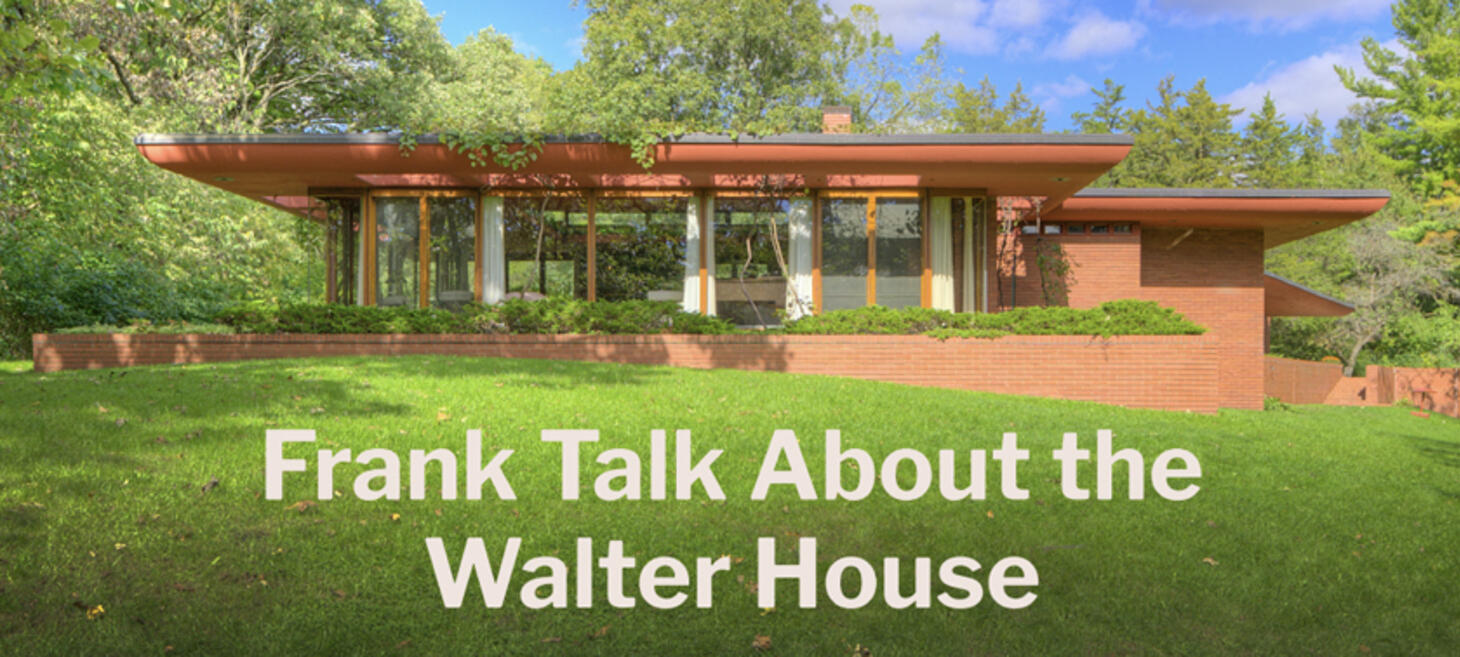
Wright’s Red Signature Tile At The Walter House: Some Clarity Amid Controversy
The Frank Lloyd Wright Red Signature Tile controversy centers on the meaning and significance of a red ceramic tile bearing Wright’s initials, which was awarded to a limited number of buildings. Although historians and docents offer different interpretations, these varying perspectives can enrich visitors’ understanding of Wright’s work and reflect the complexities of his life and career. In 1950, Wright commissioned approximately 25 tiles to identify buildings that had been completed according to his specifications and received his personal approval. However, the tiles were not intended to rank buildings according to their artistic excellence or indicate which works Wright considered his greatest masterpieces.
Drawing on research and Thomas de Monchaux’s 2017 article in the Frank Lloyd Wright Quarterly, Rodney Dieser, president of Friends of Cedar Rock, argues that the tile should be understood as Wright’s seal of approval rather than a measure of a building’s overall architectural importance. The tile signified that the design had been faithfully executed without significant alterations by the client or compromises during construction. At the Walter House, Wright exercised considerable creative control, designing not only the building but also its furniture and many interior details. Lowell and Agnes Walter allowed relatively few changes to Wright’s plans, distinguishing their project from buildings such as the Solomon R. Guggenheim Museum and the Allen House, where Wright accommodated various client requests. Importantly, celebrated works such as Fallingwater and the Guggenheim Museum do not have red signature tiles, demonstrating that the absence of a tile does not diminish a building’s architectural significance.
Dieser also challenges the argument that the tiles have little value because Wright did not use standardized criteria to award them. Instead, he suggests that Wright relied on professional judgment, a subjective form of evaluation comparable to the expert assessments used in fields such as mental health counseling and education. Although the precise number of tiles distributed and the exact selection process remain uncertain, archival evidence supports Wright’s involvement in awarding the Walter House tile. A letter dated July 30, 1958, preserved in the Walter file at the State Historical Society of Iowa, records Lowell Walter personally thanking Wright for the tile.
The red signature tile at the Walter House confirms the building’s significance as a project completed in accordance with Wright’s specifications and under his extensive creative direction. It does not establish that the house was one of Wright’s proudest achievements or most accomplished designs. Rather, the tile represents a particular distinction among the more than 500 buildings Wright created, with only an estimated 25 to 50 receiving this recognition. For the Walter House, it serves as evidence of Wright’s personal approval and the unusually comprehensive influence he exercised over the property’s design, making the tile an important part of the house’s historical story.
Click for more details: google.com
Arts And Museums Seeks $218K To Fix Rosenbaum House Roof
Water continues to seep through the roof of the Frank Lloyd Wright Rosenbaum House, leaving stains on ceilings and causing parts of the historic home's interior to sag. The city is seeking $218,000 to address persistent roof leaks at the Frank Lloyd Wright Rosenbaum House in Florence, Alabama.
Director Brian Murphy said the proposed project would replace the deteriorating underlayment, waterproof membrane, drip edge and fascia, providing an estimated 30 to 35 years of protection. The existing roof was installed during a major restoration in 2000, but movement in the roof structure may have damaged the underlying materials, allowing water to penetrate the membrane.
The city is consulting architects involved in the previous restoration and the Frank Lloyd Wright Building Conservancy to ensure repairs preserve the home’s original design while balancing cost and durability. Officials say addressing the roof problems is essential to preventing further interior damage and preserving the historic structure.
The Rosenbaum House, an example of Wright’s Usonian residential architecture, attracts approximately 10,000 visitors annually and remains an important source of community pride and cultural identity.
Click for more details: timesdaily.com
About
This weekly Wright Society update is brought to you by Eric O'Malley with Bryan and Lisa Kelly. If you enjoy these free, curated updates—please forward our sign-up page and/or share on Social Media.
If you’d like to submit content to be featured here, please reach out by emailing us at mail[at]wrightsociety.com.
Eric, Bryan & Lisa | Wright Society Publishers