
Announcements
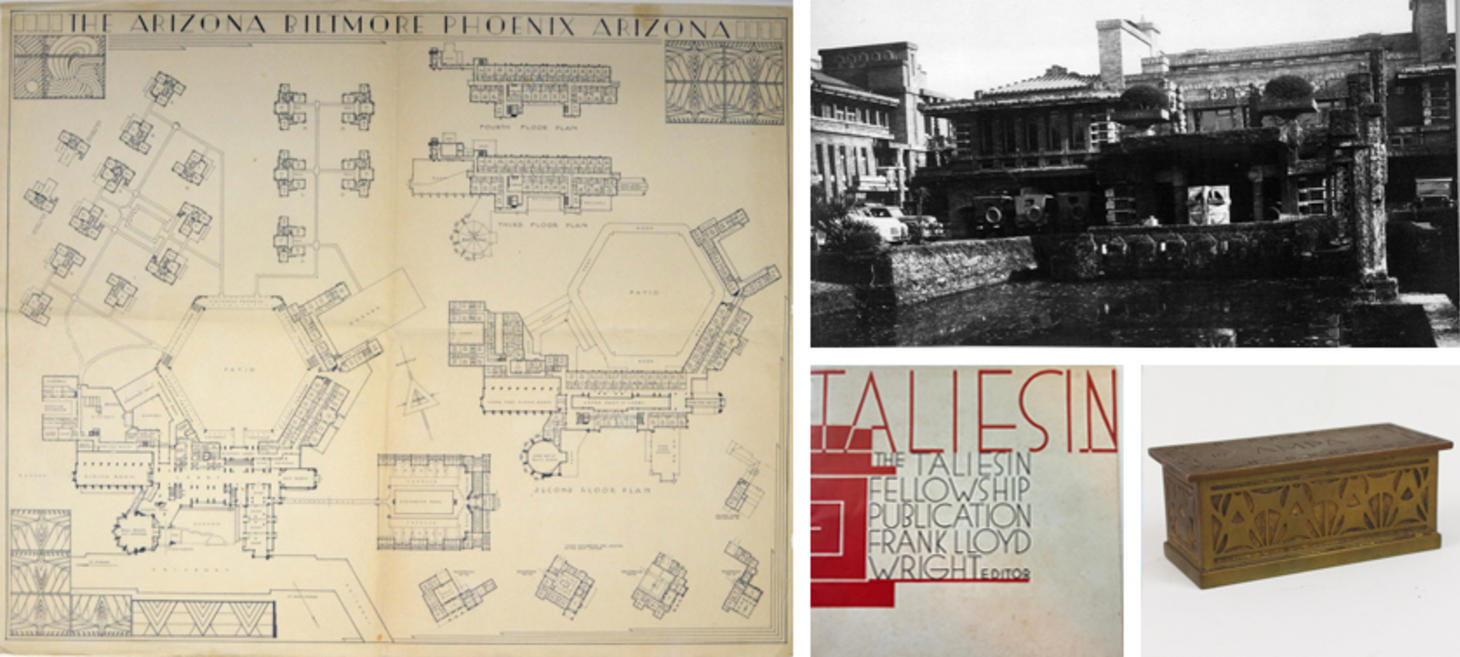
Call for Archival Donations :: Preserve the Legacy of Organic Architecture
As we reach the end of the year, the Organic Architecture + Design Archives invites donations of materials related to Frank Lloyd Wright, the Taliesin Fellowship, and the wider community of organic architects and designers. As the largest repository dedicated to this movement, OA+D is committed not only to preserving this history but to making it accessible to researchers, students, practitioners, and the public so the ideas and creative work of this legacy remain alive and available to all.
Our collections already include significant holdings such as the William Wesley Peters Box Projects, two original 1910 Wasmuth Portfolios, extensive Taliesin Fellowship archives, original Frank Lloyd Wright drawings, thousands of blueprints, and hundreds of thousands of rare photographs, along with furniture, lamps, artworks, and other historic materials. Each donation we receive strengthens our ability to share these stories through exhibitions, publications, and our growing digital catalog.
For more than a decade, OA+D has been the leading publisher on organic architecture, producing scholarship and educational resources made possible only through the materials entrusted to our care. To continue building an accessible record of this design tradition, we are seeking drawings, photographs, documents, correspondence, models, and other materials connected to Wright, Taliesin, Taliesin Associated Architects, or other organic designers. As a 501(c)(3) nonprofit, OA+D may provide tax-deductible acknowledgments for material and financial donations.
Your contribution ensures that these irreplaceable materials are preserved responsibly and made accessible for research, study, and future generations of designers and scholars. To discuss a potential donation, please contact us at info@oadarchives.org or visit www.oadarchives.org.
Click for more details: oadarchives.org
The Headlines
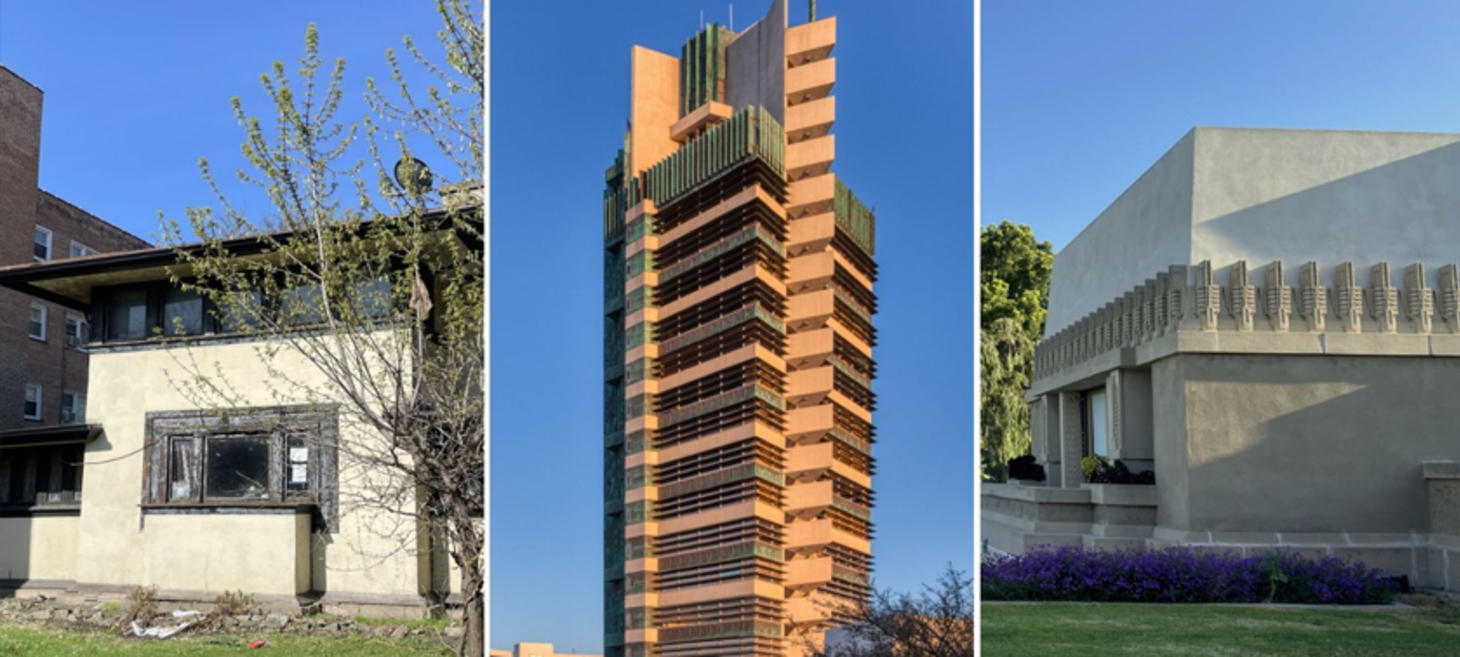
Support The FLWBC 2025 Annual Appeal
This year underscored a simple truth. Frank Lloyd Wright’s legacy does not protect itself. It is protected by committed supporters and by the work of the Frank Lloyd Wright Building Conservancy, which stands ready to act when Wright’s buildings face serious threats. Across the country, preservation challenges emerged, and the Conservancy responded decisively because donors made that response possible.
Support for the Conservancy led directly to meaningful results. At Price Tower in Bartlesville, Oklahoma, donor support helped defend a preservation easement and recover eleven Wright-designed objects that had been sold, ensuring their return and long-term protection. In Chicago, the Conservancy alerted officials and spoke in court about the dire condition of the Walser House, funded exterior cleanup, and advocated for its sale to a preservation-minded buyer. In Los Angeles, advocacy supported by donors successfully challenged proposed city staffing cuts at Hollyhock House, preserving public access and ongoing conservation.
These outcomes highlight both progress and an ongoing reality. Wright’s buildings require constant vigilance, and new threats can arise at any moment. Continued philanthropic support ensures that the Conservancy can act swiftly and effectively wherever Wright’s legacy is at risk. As the year comes to a close, a tax-deductible gift to the Frank Lloyd Wright Building Conservancy is an investment in the protection of an irreplaceable architectural legacy, now and for generations to come.
Click for more details: savewright.org
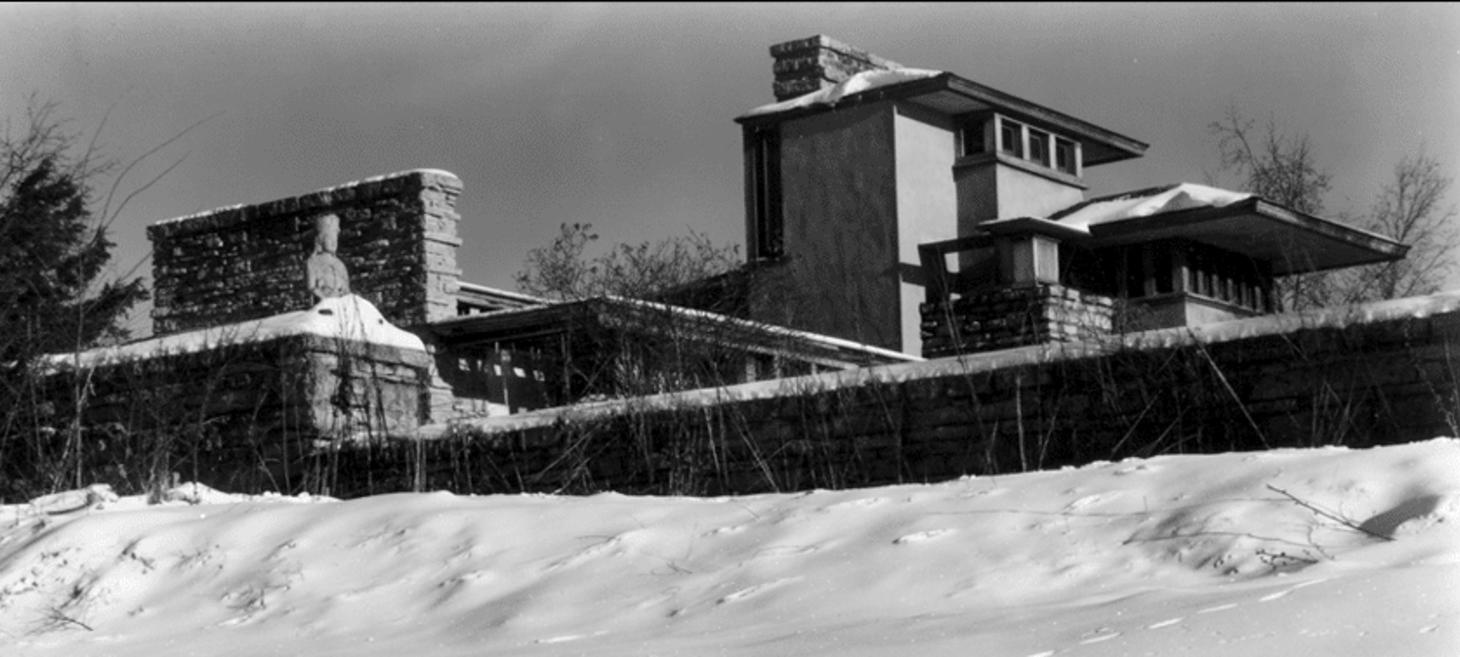
Winter At Taliesin
Winter can be a challenging part of the year for Taliesin in Spring Green, Wisconsin, says Rebecca Hagen. The process of preparing for winter may have changed somewhat since Wright lived here, but staff take many of the same steps the apprentices did to keep the place safe from the harsh elements.
All the major buildings at Taliesin were originally intended to be used during the winter and were built with relatively robust heating systems. The Hillside Home School ran throughout the winter, and Wright spent large portions of the winters from 1912-1936 at his Wisconsin home. Wright claimed that Taliesin continued to be cozy and warm despite its many windows and exposed position on the brow of the hill.
Winter nights- all in the white, outside- we love to build a wood fire in the big stone bedroom fireplace, close the inside wood shutters of the whole house, and lie story-telling [sic] or reading until we fall asleep. We sometimes take turns reading aloud, Iovanna’s fairy-tales [sic] coming first. Carl [Sandburg]’s “The White-Horse Girl and the Blue Wind-Boy” is her favorite at the moment. And ours.” (Frank Lloyd Wright, An Autobiography, 1932.)
By choice, the winter of 1936-1937 was Wright’s in Wisconsin and construction began on his new home and studio, Taliesin West, in early 1938.
With Taliesin West, Wright began implementing changes to Taliesin that made it more appropriate for the summer months. These alterations included the addition of more windows and doorways to outdoor terraces. In the following years, the Fellowship settled into a regular rhythm of usually leaving Wisconsin around Thanksgiving and returning in early May, with only a small group left behind to care for the site.
To protect the items in Frank Lloyd Wright Foundation Collections from snow and ice, we take steps to protect them from the elements, including covering furniture in cotton sheets like the Fellowship did historically. We also cover or move inside outdoor objects.
Several of our historic buildings are not heated during the winter and do not have winterized pipes, so the water service must be shut off every November. Many of our drains are fitted with heat tape to ensure that ice dams do not create flooding hazards when the snow melts. We install additional stretchers in the Hillside Drafting Studio to ensure the roof can safely handle a heavy snow load.
Due to its damaging nature, we cannot use salt to melt ice. Instead, we use sand to provide traction in slippery areas and do our best to shovel the snow as it comes. For all its challenges, winter has its unique beauties which Taliesin wears with pride, as described best by Wright himself in his autobiography:
Click for more details: franklloydwright.orgI wanted a home where icicles by invitation might beautify the eaves. So there were no gutters. And when the snow piled deep on the roofs and lay drifted in the courts, icicles came to hang staccato from the eaves. Prismatic crystal pendants sometimes six feet long, glittered between the landscape and the eyes inside. Taliesin in winter was a frosted palace roofed and walled with snow, hung with iridescent fringes, the plate-glass of the windows shone bright and warm through it all as the light of the huge fire-places [sic] lit them from the firesides within, and streams of wood-smoke from a dozen such places went straight up to the stars.” (Frank Lloyd Wright, An Autobiography, 1932.)
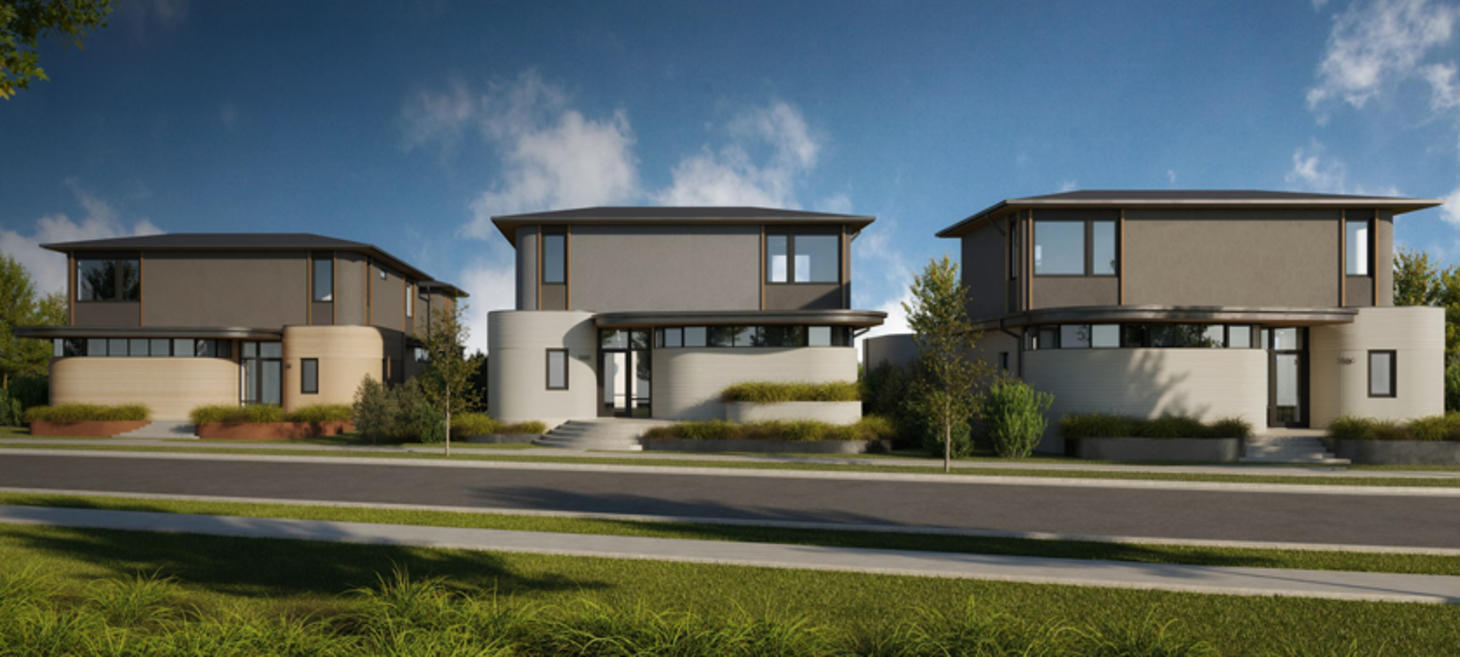
3D-Printed Homes In Austin, Texas
From reader Tom Watson: A new building technology has been developed by a company in Austin, Texas that could be a new way to build organically. I think Wright, were he here today, would embrace this tech and exploit its advantages.
Jason Ballard / ICON Co-Founder & CEO...To address the global housing crisis, something radical and courageous needs to happen. Construction-scale 3D printing is designed to not only deliver high-quality homes faster and more affordably, but fleets of printers can change the way entire communities are built for the better.
In 2018, we told people we were going to 3D print a house and unveil it during SXSW in Austin, TX before we knew how to do it. Innovation is synonymous with risk and somebody had to take a risk. In partnership with housing non-profit New Story, we successfully delivered the world's first permitted, 3D-printed home in the world.
Fast forward to today, ICON has 3D-printed nearly 200 homes and structures across the U.S. and Mexico. We recently unveiled a new suite of technologies and products to further automate construction including a radical new robotic printer that enables multi-story construction, a new low-carbon building material, a digital catalog for residential architecture, and an AI Architect for home design and construction. Together, these technologies make our construction technology platform a faster, more sustainable way to build high-quality housing affordably around the world.
World-class home designs brought to life through robotic construction. ICON’s innovative homes exemplify the architectural capabilities made possible when you break the bounds of traditional construction capabilities and step into design that optimizes for our future.
By partnering with world-renowned architects, like Bjarke Ingels Group, we’re committed to designing beautiful homes both inside and out.
Click for more details: iconbuild.com
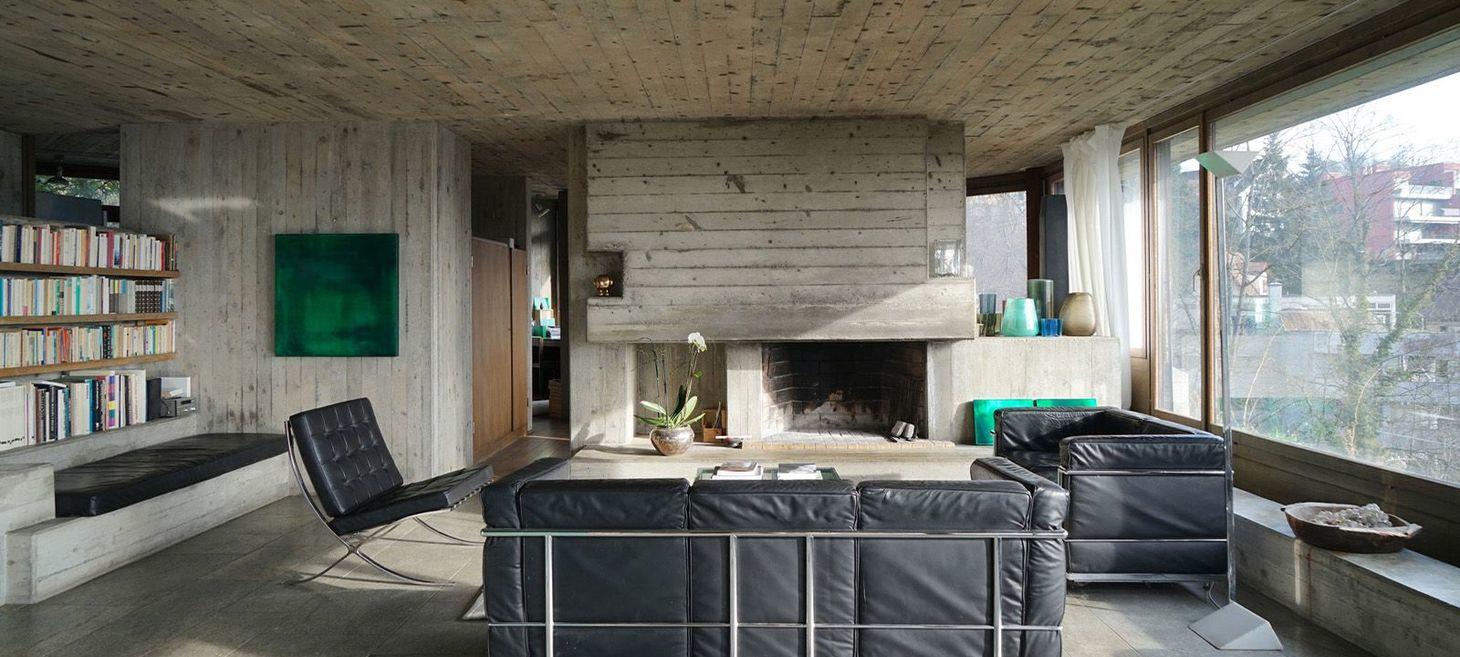
Inside Architect Andrés Liesch's Swiss Modernist Home
After World War II, Frank Lloyd Wright’s organic architecture strongly influenced Swiss modernism, inspiring architects to move beyond strict rationalism toward more nature-responsive designs. Andrés Liesch, a key figure in Graubünden from the late 1950s to the 1980s, exemplified this shift. Though deeply engaged with concrete architecture and Swiss brutalism, Liesch was profoundly influenced by a 1952 Frank Lloyd Wright exhibition in Zurich.
Along with peers like Peppo Brivio and Tita Carloni, Liesch embraced Wright’s organic sensibility, adapting it to Switzerland’s mountainous landscape. Educated at ETH Zurich under Hans Hofmann, Liesch sought to break from minimalist traditions while remaining rooted in local context. His prolific career focused largely on public infrastructure, especially schools, reflecting his ambition to modernize Graubünden while showcasing its vernacular identity.
Liesch’s work blended Wright’s organic ideas with Le Corbusier’s geometry and Swiss brutalist austerity, producing dramatic, sculptural concrete forms. This synthesis culminated in his own Zurich home (1971), a terraced apartment building based on complex hexagonal geometry. The house features flowing, semi-open interiors influenced by Wright’s Prairie and Usonian houses, combining functional clarity with geometric sophistication.
Today, the house is inhabited by Liesch’s family, with his stepdaughter Seraina Feuerstein continuing to use it as a creative space. The building stands as a lasting example of Swiss modernism shaped by Wright’s influence—balancing modern expression, local identity, and timeless architectural ambition.
Click for more details: wallpaper.com
About
This weekly Wright Society update is brought to you by Eric O'Malley with Bryan and Lisa Kelly. If you enjoy these free, curated updates—please forward our sign-up page and/or share on Social Media.
If you’d like to submit content to be featured here, please reach out by emailing us at mail[at]wrightsociety.com.
Eric, Bryan & Lisa | Wright Society Publishers