
The Headlines
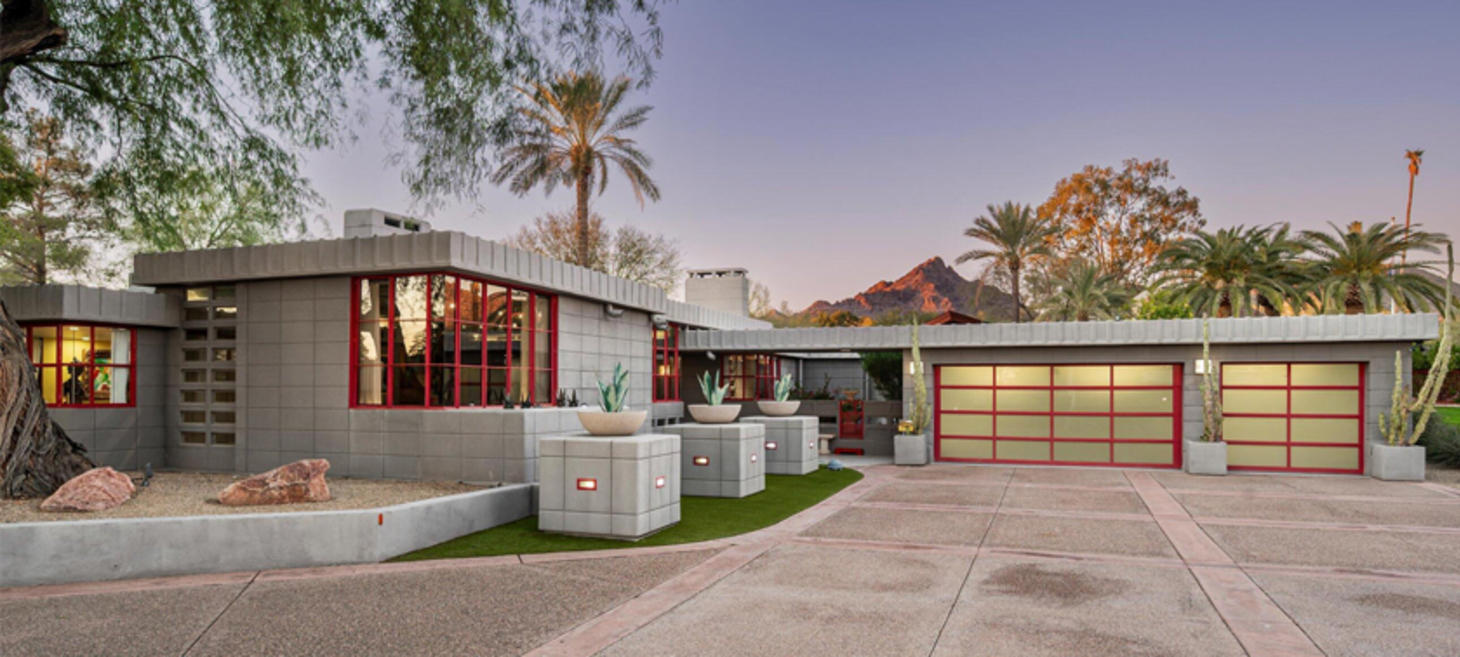
Wright's Adelman House In Phoenix For Sale For $4.95 Million
The Benjamin Adelman House, designed and built in 1951 by Frank Lloyd Wright, sits on 1.67 acres at the 18th hole of the Arizona Biltmore LINKS Golf Course in Phoenix, Arizona. It is an intact example of Wright’s late-period desert architecture, integrating building, landscape, and horizon into a unified composition. The property includes the main house, two guest houses, and a six-car garage, with views across the fairway to the surrounding desert mountains. It is currently offered for sale at $4.95 million.
The residence is constructed using Wright’s Usonian Automatic system of precast concrete blocks, in which structure and ornament are combined into a single architectural fabric. The patterned blocks create shifting light and shadow throughout the interior and exterior. The house contains four bedrooms and four and a half baths, organized through Wright’s characteristic low ceilings, long horizontal lines, and carefully framed sightlines. Extensive glazing and natural materials reinforce the relationship between interior spaces and the desert setting.
As one of the few Usonian Automatic houses designed by Wright himself, the Adelman House represents a significant moment in his exploration of modular, climate-responsive architecture within the historic Arizona Biltmore district.
Click for more details: osterpropertiesaz.com
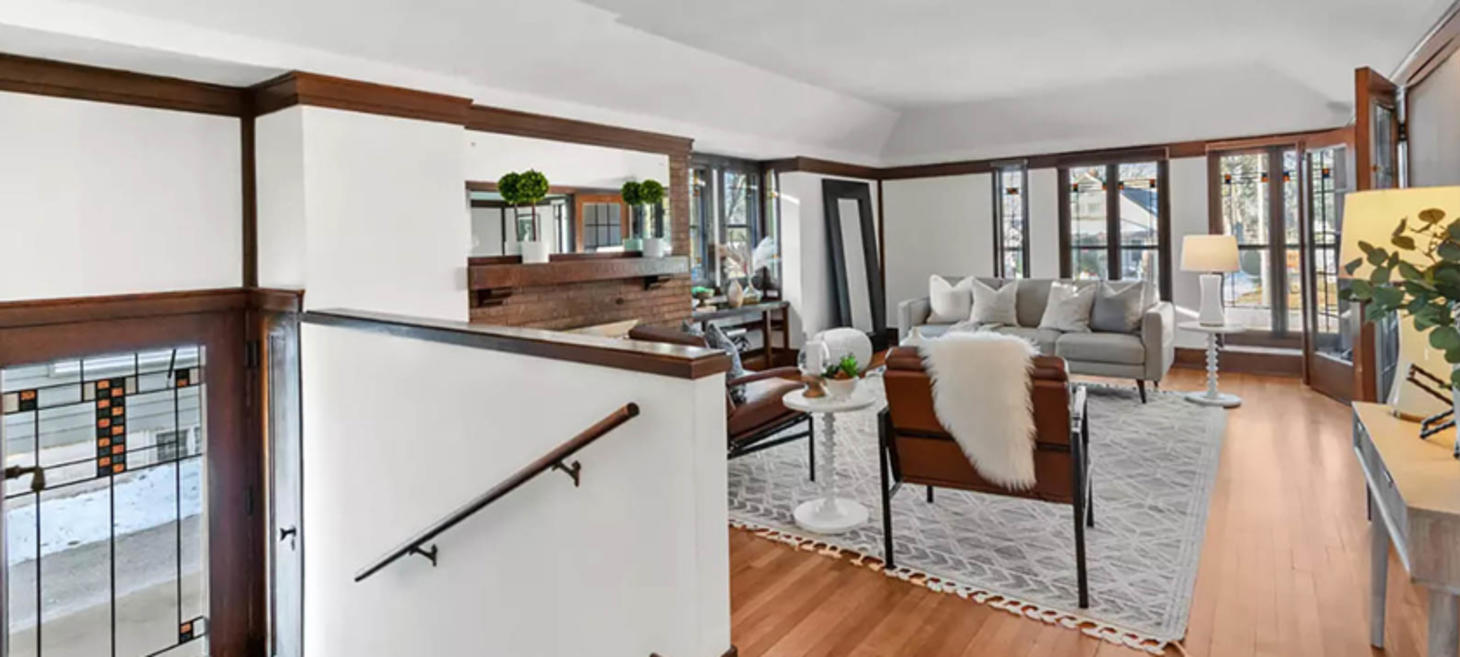
One Of Russell Barr Williamson's Prairie Style Bungalows Is For Sale In Wauwatosa
Indiana-born architect Russell Barr Williamson began working with Frank Lloyd Wright in 1914 and was entrusted with major projects like the Bogk House and American System Built Homes while Wright was in Japan.
After striking out on his own in 1918, Williamson settled in Milwaukee, where he initially focused on Prairie Style designs before later becoming known for Midcentury Modern work. Between 1920 and 1923, he developed a bungalow plan inspired by the Bogk House, resulting in at least nine similar homes in the Milwaukee-area suburbs and one expanded version in Missouri, with variations in layout, materials, and roof styles.
Some of these homes were built with Arthur Richards Realty Co., which had partnered with Wright, and featured high-quality craftsmanship such as leaded glass, fine woodwork, hardwood floors, and central fireplaces.
Williamson believed in compact, efficient living, advocating for fewer rooms thoughtfully arranged for light, ventilation, and privacy. One example at 2014 N. 83rd St. in Wauwatosa, Wisconsin — a two-bedroom, 1.5-bath bungalow built on this plan—is currently listed for $399,000, by listing realtor Jay Schmidt of HIGHMARK Real Estate - Jay Schmidt Group - Keller Williams Realty-Milwaukee North Shore.
Click for more details: onmilwaukee.com
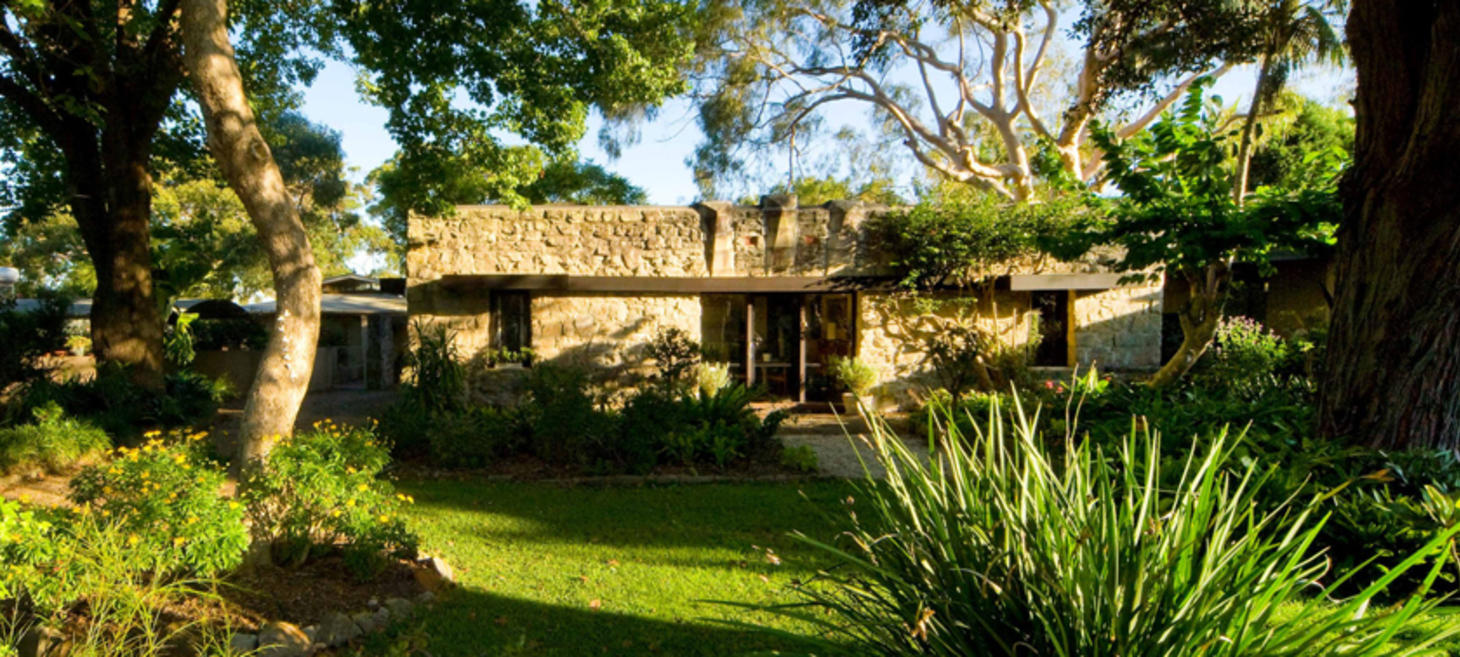
Celebrating 150 Years of Walter Burley Griffin in 2026
In 2026, the 150th anniversary of the birth of Walter Burley Griffin will be marked by the Australia-based organization Walter Burley Griffin Society Inc. with a year-long program of special events recognizing his lasting influence on Australian and international architecture and planning. From Canberra to Castlecrag and Melbourne, these programs will highlight Griffin’s visionary approach to cities, landscapes, and community design.
The anniversary year will begin in Canberra on Friday March 6 and Saturday 7, 2026 with a two-day guided tour presented in partnership with Canberra Modern. Participants will visit key Griffin and Mahony Griffin sites, including Marion’s Lookout on Mount Ainslie, the historic Cork Oak Plantation planted in 1913, the Surveyors’ Hut and Federation Mall, and the Nicholls-designed Yarralumla Incinerator. The tour will also include an exclusive viewing of Griffin materials held at the National Library of Australia. Bookings for the Canberra tour will open on 1 December 2025 via the event webpage and TryBooking. On Sunday 3 May 2026, Griffin Open Houses at Castlecrag will offer a rare opportunity to explore the interiors, gardens, and distinctive design features of several Griffin-designed houses built in the 1920s and early 1930s. Castlecrag, conceived by Walter and Marion Mahony Griffin as an “ideal suburb,” remains one of their most complete expressions of community-based planning. Tickets for this event will be available from 1 February 2026.
The Melbourne program will follow from Friday October 16 to Sunday the 18, 2026 with a three-day guided tour, again in partnership with Canberra Modern. The itinerary includes the Capitol Theatre, Newman College at the University of Melbourne, Griffin residences in Toorak, and the Essendon Incinerator.
Additional highlights include visits to the Griffin-designed Eaglemont Estate, including Pholiota and the Lippincott House, and a presentation by Professor Philip Goad at the Robin Boyd House. Bookings for the Melbourne tour will open on April 1, 2026.
An online Hermann Junge photo exhibition will be presented during the anniversary year, featuring more than 60 photographs taken at Castlecrag in the 1930s by Hermann Junge, a local resident and Leica camera representative. The exhibition offers a rare visual record of daily life and architecture within the Griffins’ planned community.
The anniversary will also be marked by the 150 Trees Project, a national initiative involving Griffin-related sites in New South Wales, the ACT, Victoria, Queensland, and South Australia. A total of 150 eucalypt trees will be planted in recognition of Walter Burley Griffin’s enduring contribution to Australia’s built and natural environments.
Together, these initiatives provide multiple ways to engage with and celebrate the legacy of one of Australia’s most important architectural figures.
Click for more details: griffinsociety.org
About
This weekly Wright Society update is brought to you by Eric O'Malley with Bryan and Lisa Kelly. If you enjoy these free, curated updates—please forward our sign-up page and/or share on Social Media.
If you’d like to submit content to be featured here, please reach out by emailing us at mail[at]wrightsociety.com.
Eric, Bryan & Lisa | Wright Society Publishers