
The Headlines
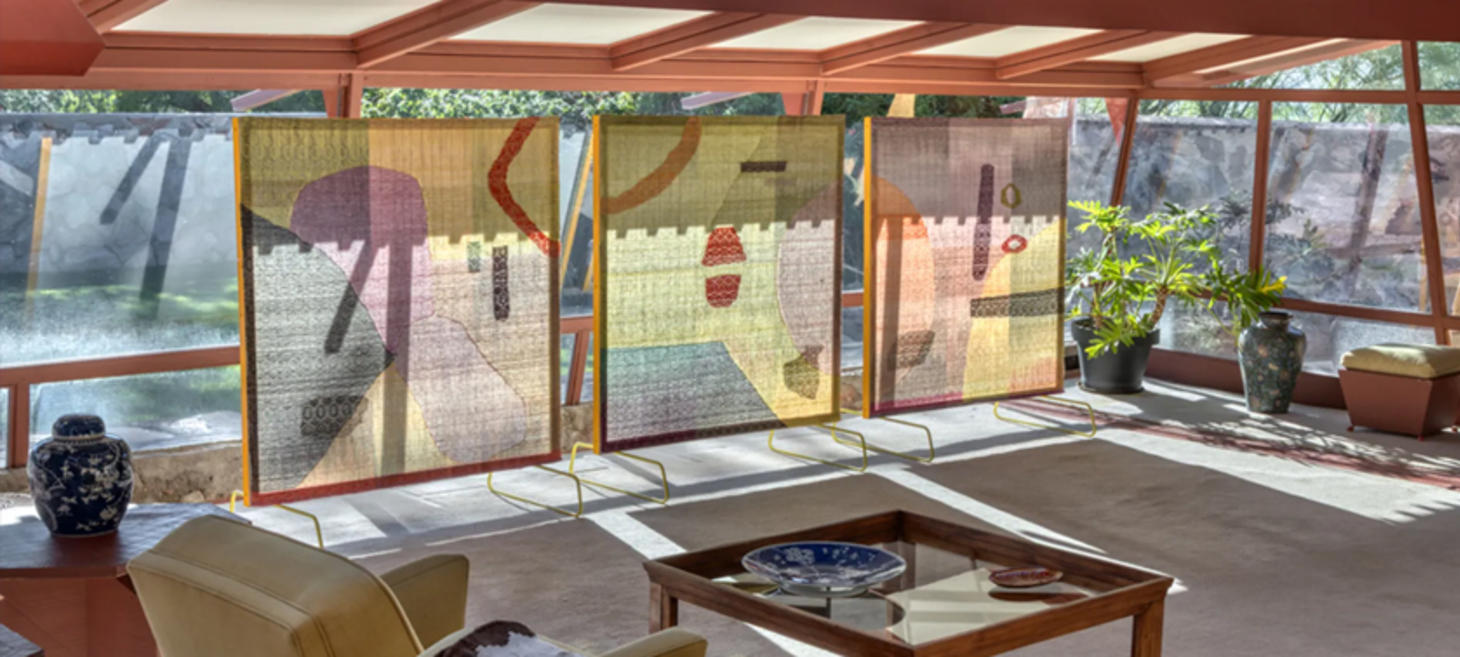
New Exhibit Brings Fresh Creativity To Frank Lloyd Wright's Taliesin West
A new temporary exhibit at Taliesin West in Scottsdale, Arizona, titled Desert Mirror, brings contemporary art into dialogue with Frank Lloyd Wright’s iconic desert home while reviving its original spirit of experimentation and learning.
On view through the end of May, the exhibition serves as a pilot for a new artist-in-residence program that echoes Taliesin West’s early days, when apprentices lived and worked on site. Created by interdisciplinary artist Erika Lynne Hanson, the show features weavings, sculptures, mirrors, and video works inspired by the property’s geology, architecture, and Wright’s principle of organic design, encouraging visitors to reconsider how built environments interact with nature.
Integrated into the standard tour and carefully installed to preserve the UNESCO World Heritage site, the exhibition unfolds gradually across the estate and emphasizes reflection on humanity’s impact on natural spaces. Foundation leaders hope the program underscores that Taliesin West is not just a historic landmark, but a living place that continues to inspire new creative work.
Click for more details: axios.com

Third Coast Percussion's "Bruce Goff—Rolls And Reimaginations" At The Art Institute
Bruce Goff is celebrated for visionary architecture that blends Frank Lloyd Wright’s organic naturalism with the exuberance of postwar Googie style, shaped by his own radical imagination and deep command of materials and form. Less known is that Goff was also a composer, creating highly complex works for player piano—an early, machine-driven technology that enabled dense, virtuosic music beyond human performance. These piano rolls, preserved by the Art Institute of Chicago, are the only surviving record of his musical output.
Goff’s music is now being realized in Rolls and Reimaginations, a sold-out January 29 performance at the Art Institute, presented alongside the retrospective Material Worlds. Chicago’s Grammy-nominated Third Coast Percussion painstakingly transcribed the player-piano rolls and reimagined them for live performers using keyboards and a wide array of percussion instruments.
Influenced by Debussy and driven by visual thinking, Goff’s compositions shift between traditional harmony and abstract, shape-based experimentation. Some works are complete, while others were expanded from sketches, resulting in a program that mirrors Goff’s architecture: bold, unconventional, and structurally coherent. Together, the project reveals Goff as a fully integrated artist whose architectural and musical visions sprang from the same daring, cross-disciplinary creativity.
Click for more details: newcity.com
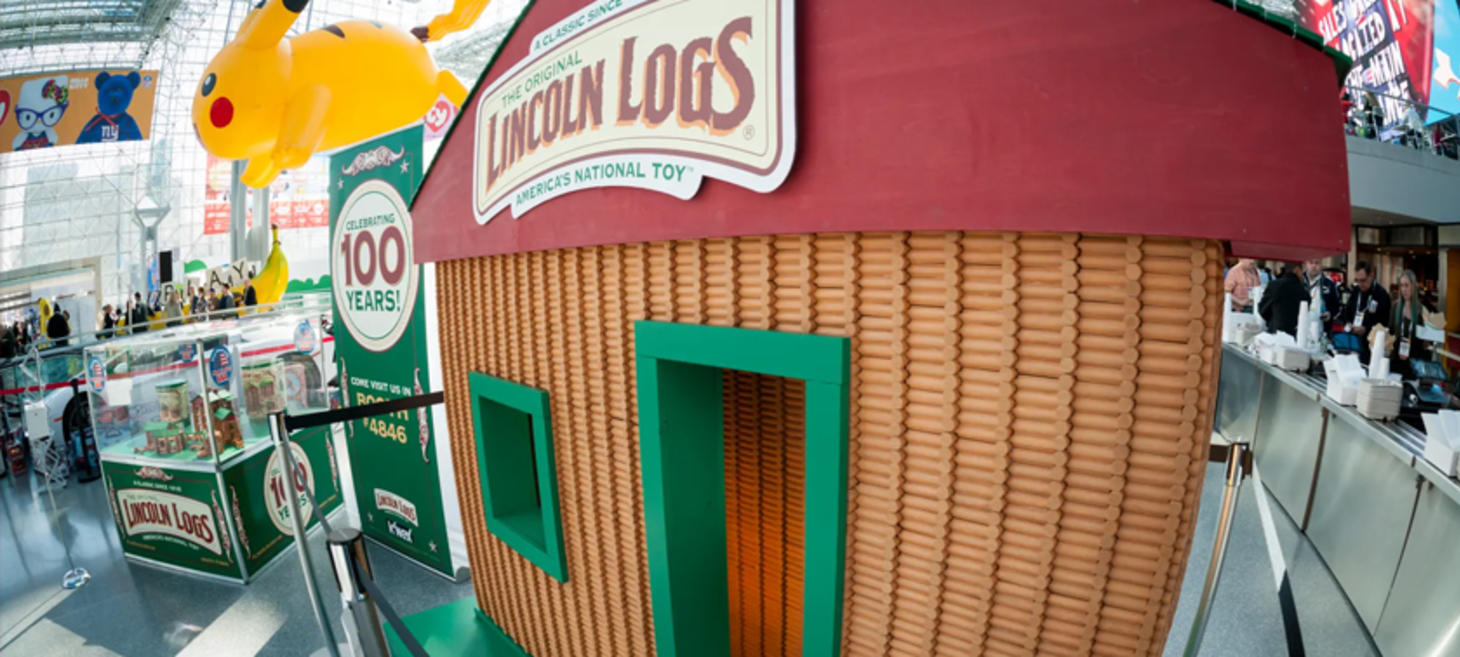
Lincoln Logs distributor begins "desperate" search for new manufacturer
Lincoln Logs are among a handful of classic toys made in the USA using American trees, but that’s likely to change in a matter of months.
Pride Manufacturing — the Maine factory that has made Lincoln Logs since 2014 — is closing in April, but Basic Fun, the company that licensed with Hasbro to produce the iconic toy, has initiated a 45-day search for a U.S. supplier. If that effort fails, Basic Fun is developing a backup plan to move manufacturing back to China.
The New York Post was able to interview company chief executive, Jay Foreman, who said the company is scrambling to find a new factory to manufacture the century-old brand that was founded by Frank Lloyd Wright’s son, John.
The Post reported that production ]of the $10 million brand will likely move overseas and, as a result, cost consumers about 10% more, according to Foreman. The sets will likely cost $5 to $7 more this year because of US tariffs on Chinese-made products, Foreman said.
"We are desperately looking for a vendor here that manufactures custom wood parts,” he told The Post. “We are hoping that someone will purchase the factory or buy the equipment, but we are not counting on it for this year.”
This isn't the first time a U.S.-based manufacturer has been sought to produce the classic American toy on U.S. soil, using wood from American trees.
Until the 1990s, Lincoln Logs were made in the US, but production moved to China because it cost less to make them there, Foreman said. Plastic parts were added to sets around that time, he added. Around 2014, the distribution was looking to return production of the toy to the U.S. This after the failed attempt to convert the logs from real wood to plastic. The market rejected the plastic version and the toy-maker K'Nex Brands, which had the license to produce Lincoln Logs began the search for a U.S. manufacturer.
In 2015, Lincoln Logs announced that it was reshoring production of its tiny logs to the U.S., after contracting with PrideSports, corporate owner of Burnham, Maine-based Pride Manufacturing.
Click for more details: woodworkingnetwork.com
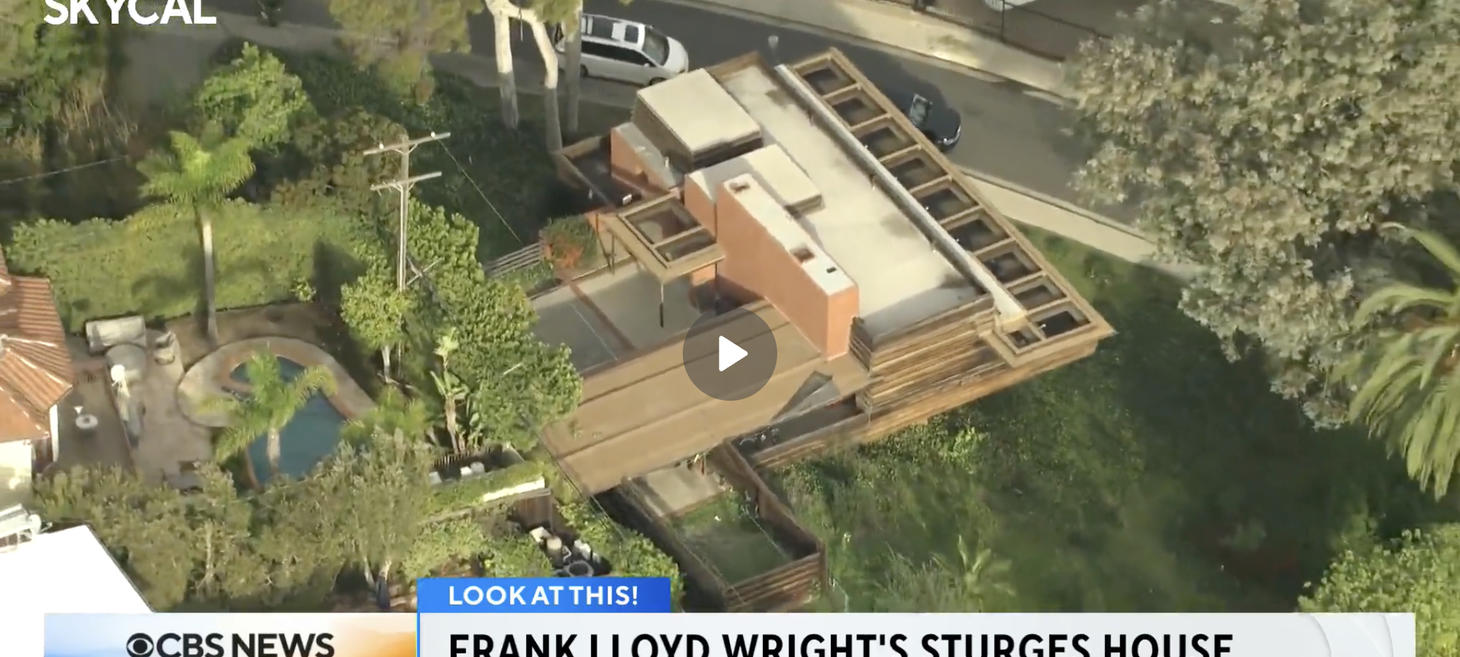
A Bird's Eye View Of Frank Lloyd Wright's Sturges House
An aerial view of Frank Lloyd Wright’s Sturges House featured on CBS Los Angeles “Look At This!" takes viewers to the Sturges House in the Brentwood neighborhood of Los Angeles, designed by famed architect Frank Lloyd Wright.
It’s a noteworthy example of Wright’s Usonian residential style — a modern, affordable, single-story home built in 1939 for George D. Sturges. The house features a compact 1,200-square-foot layout with strong horizontal lines, a dramatic cantilevered deck, large windows, and an open connection between indoor and outdoor spaces — all hallmarks of Wright’s design philosophy.
Located on a hillside lot, it integrates with its site and stands out as one of the few Usonian designs on the West Coast. The home was designated as a Los Angeles Historic-Cultural Monument and remains privately owned and visible from the street.
Click for more details: cbsnews.com
About
This weekly Wright Society update is brought to you by Eric O'Malley with Bryan and Lisa Kelly. If you enjoy these free, curated updates—please forward our sign-up page and/or share on Social Media.
If you’d like to submit content to be featured here, please reach out by emailing us at mail[at]wrightsociety.com.
Eric, Bryan & Lisa | Wright Society Publishers