
The Headlines
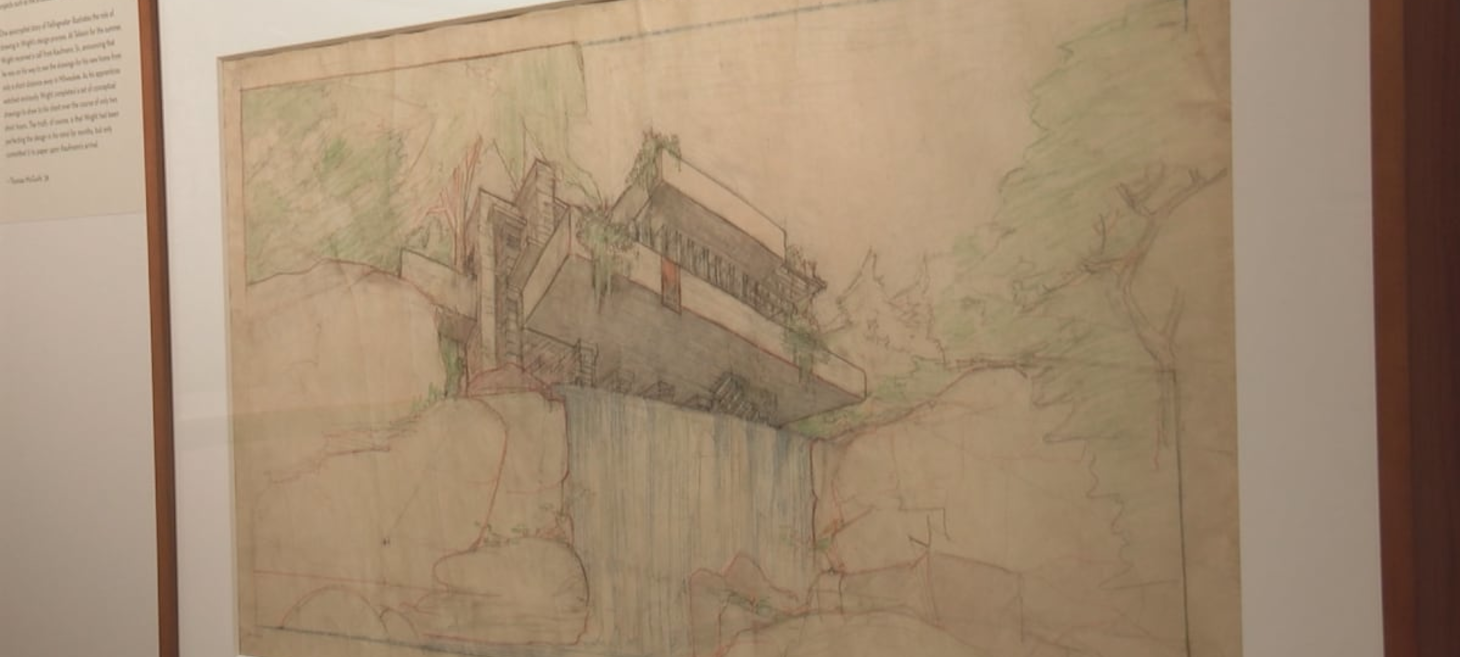
Binghamton University Art Museum Showcases Frank Lloyd Wright Drawings
The Binghamton University Art Museum in Binghampton, N.Y. is hosting a new exhibit titled “Drawing Connections: Frank Lloyd Wright.”
The exhibition consists of several drawings produced by Frank Lloyd Wright’s office, many of which were made by Wright’s draftsmen. The drawings depict designs his company created, some of which are quite familiar.
“We have a really beautiful one of Falling Water, which is a house that Wright designed in the 1930s, and it’s probably the most famous residence in America,” said Julia Walker, curator of the exhibition. “We also have these wonderful images of the Guggenheim that are behind me as it was under development, as Wright and his draftsmen were sort of figuring out what it was going to be with the curator and the director of that museum.”
The work is accompanied by another exhibit titled “Line, Color Contrast: Japanese Prints,” which focuses on Japanese woodblock print designs by Arthur Wesley Dow that influenced the Arts and Crafts movement in New York.
The exhibition is open from 5 to 7 p.m. and will run until May 16.
Click for more details: wbng.com
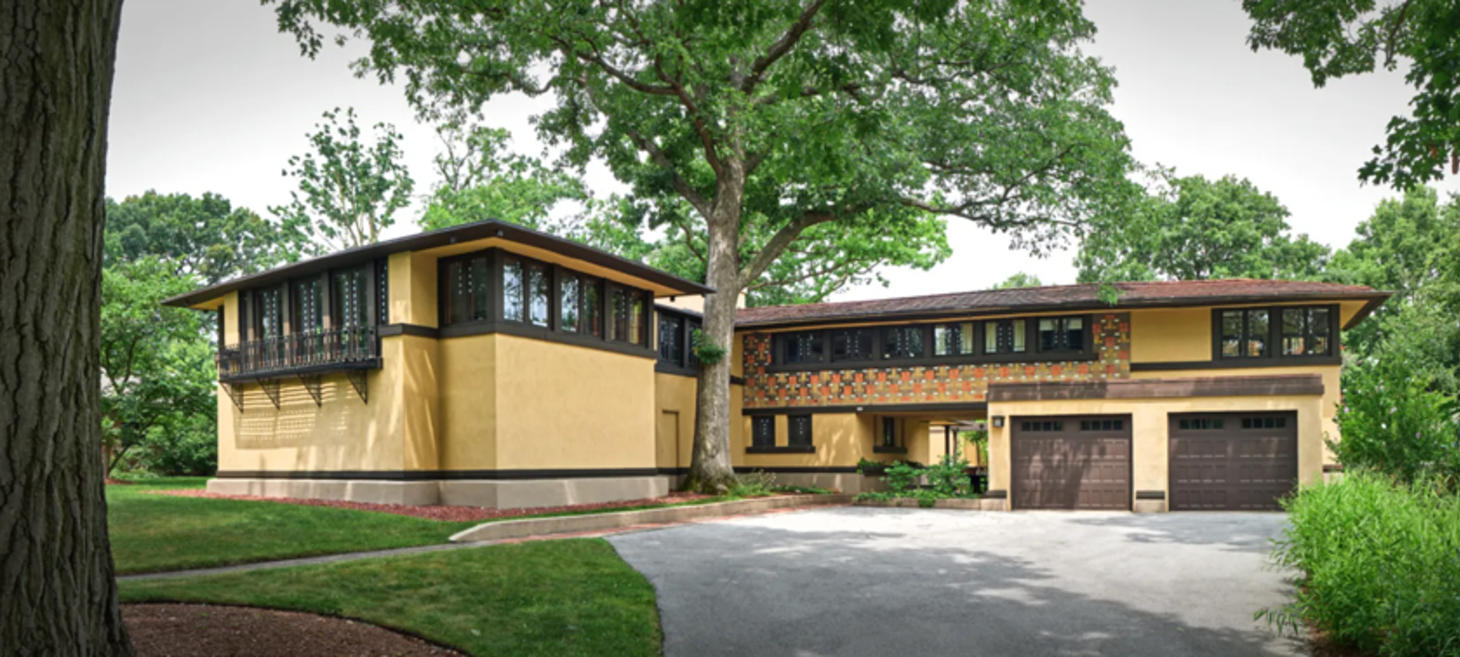
Wright's Coonley Estate Is The Heart Of Riverside
Frank Lloyd Wright designed Riverside’s Avery Coonley House, commonly known as the Coonley Estate, between 1908 and 1912 as a comprehensive architectural work that extended from the overall structure down to the rugs and textiles. Commissioned by industrialist Avery Coonley and his wife, Queene Ferry, heir to Detroit’s Ferry Seed Company fortune, the sprawling 10,000-square-foot Prairie-style residence embodied Wright’s philosophy of total design, integrating architecture, interiors, and landscape into a unified vision.
Avery Coonley sold the property in 1921, and over the following decades it underwent numerous alterations under subsequent owners. By the mid-1950s, the estate faced a serious threat when a developer purchased the multi-acre property intending to demolish the existing structures and replace them with ranch-style homes. Preservation was made possible largely through the efforts of Carolyn Howlett, a Riverside resident and professor at the School of the Art Institute of Chicago, who persuaded the developer to subdivide the estate instead of razing it. She and her husband ultimately bought the coach house and transformed it into their residence. As a result of this intervention, the original estate was divided into multiple homes, including the coach house, the gardener’s cottage, and separate public and family wings of the main house.
In 2015, Stephanus “Fanie” Greeff and his late husband, John Farneda, purchased the family wing in a short sale. The house was in severe disrepair, with a leaking roof and evidence of neglect that had reduced it, in Greeff’s words, to a “teenager party house.” Greeff initially felt overwhelmed, having only been familiar with Wright’s work through New York City’s Solomon R. Guggenheim Museum. Farneda, however, who had grown up nearby and appreciated Wright’s legacy, recognized the home’s significance and potential. After four years of intensive restoration, their work was honored by the Frederick Law Olmsted Society and the Frank Lloyd Wright Building Conservancy, affirming the care and historical sensitivity of their efforts.
Similarly, Richard Marritt and Steven Oldham came to the estate unexpectedly. In 2019, while actually searching for a Chicago condominium, they toured the public wing of the Coonley House on a whim. It was being sold by Ella Mae Eastman and her husband Dean, who had painstakingly restored their portion of the property. Despite having no prior ties to Riverside and little intention of owning a historic home, Marritt and Oldham decided to “take the dive.” They quickly learned that stewardship of a landmark property brings ongoing challenges, from roof leaks and ice dams to bursting pipes and the meticulous care required for the home’s 270 art glass windows. Contractors, Marritt observes, tend to fall into two camps: those thrilled to work on an architectural treasure and those too intimidated to proceed.
Yet both Greeff and Marritt emphasize that the rewards outweigh the burdens. They view themselves not simply as homeowners but as custodians of a cultural landmark. The house continues to function as a living part of the community, hosting fundraisers, estate-wide dinners, and events such as the annual Wright Plus Housewalk. Visitors often leave notes addressed not just to the owners but to the house itself, a tradition the current stewards intend to continue. Despite the constant maintenance and responsibility, they express pride and gratitude in preserving and sharing Wright’s architectural masterpiece, embracing their role in sustaining its legacy for future generations.
Click for more details: rblandmark.com
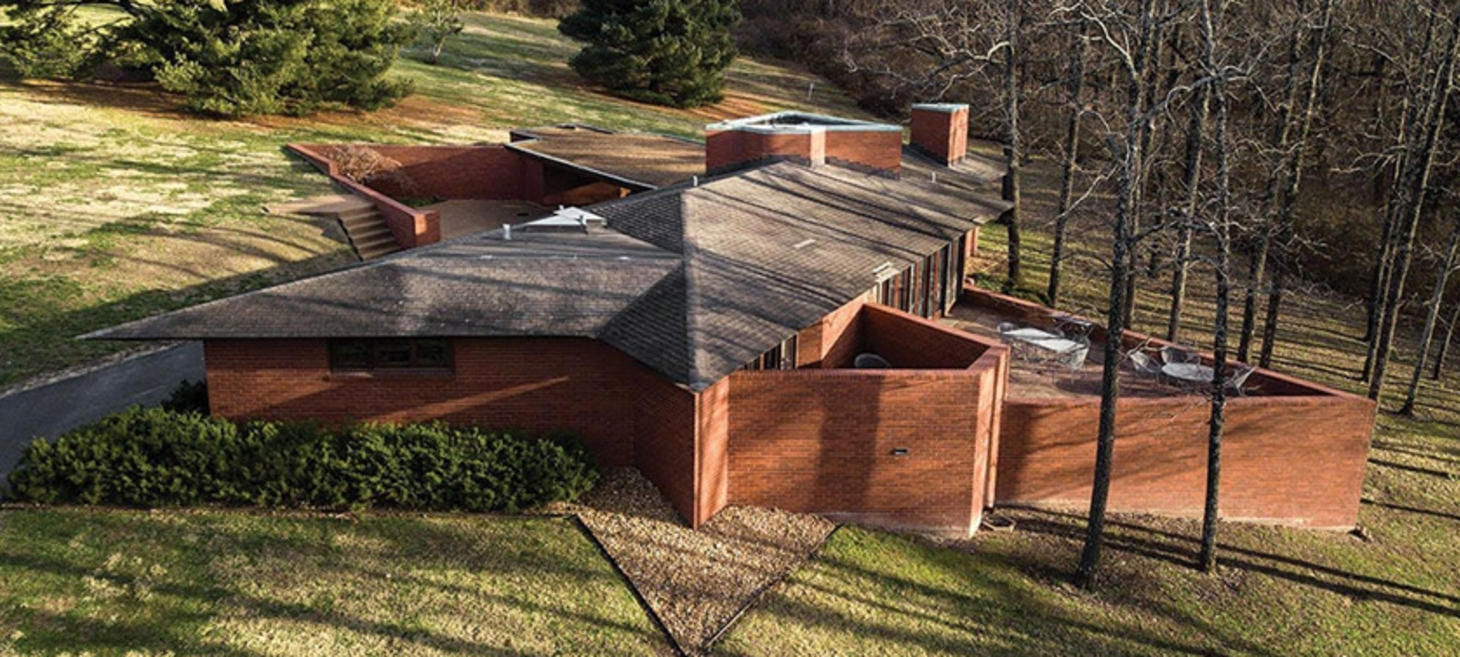
Landmark Year For Frank Lloyd Wright House In Ebsworth Park
In 2026, the Frank Lloyd Wright House in Ebsworth Park (Kraus House) enters a milestone year. It marks 75 years since construction began in 1951, and 25 years since the house first opened its doors to the public.
This spring will be a highly anticipated reopening of the house, located in Kirkwood, Missouri , following a six‑month preservation project to protect some of the home’s most distinctive architectural features.
Chief among them is the complete replacement of the roof, executed to Frank Lloyd Wright’s original cedar shingle specification and signature modified hip design — an essential element of the home’s dramatic horizontal profile, according to Kathryn Feldt, executive director of The Frank Lloyd Wright House In Ebsworth Park.
“This work, supported by a team of craftsman, safeguards the integrity of this Usonian masterpiece for generations to come,” she said.
With the house newly renewed, this year will see expanded tour offerings. A special anniversary membership will also debut, inviting supporters to engage more deeply with the site and share the momentum of this celebratory year.
“Since opening to the public in 2001, the Frank Lloyd Wright House in Ebsworth Park has served not only as an architectural landmark, but also as a living classroom and a welcoming gathering place,” said Feldt. “In 2026, as it commemorates both its groundbreaking and a quarter century of public stewardship, it looks ahead with renewed purpose to the next chapter of preserving and sharing Wright’s legacy.”
Click for more details: timesnewspapers.com
About
This weekly Wright Society update is brought to you by Eric O'Malley with Bryan and Lisa Kelly. If you enjoy these free, curated updates—please forward our sign-up page and/or share on Social Media.
If you’d like to submit content to be featured here, please reach out by emailing us at mail[at]wrightsociety.com.
Eric, Bryan & Lisa | Wright Society Publishers