
The Headlines
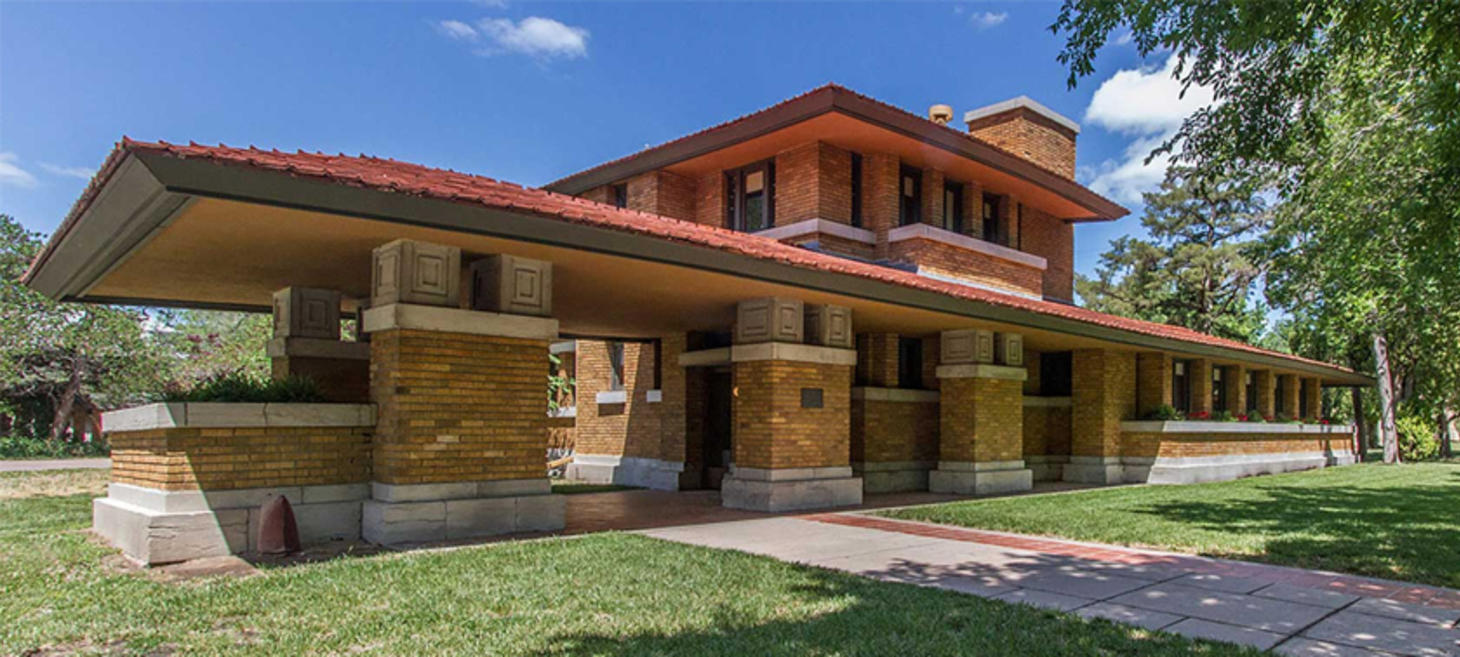
Frank Lloyd Wright’s Allen House Offers Outdoor Walking Tours Beyond Its Walls
Wichita, Kansas’s Frank Lloyd Wright–designed Allen House is expanding its visitor experience by introducing new outdoor walking tours that go beyond the traditional interior tours of the home. These tours are meant to give people a broader understanding of the house’s architectural context, its surrounding neighborhood, and the historical figures connected to the area, rather than focusing only on the structure itself.
A key addition is an extended outdoor walking tour program that takes place entirely outside the house and lasts roughly 1.5 to 2 hours, covering several blocks at a relaxed pace. On this extended tour, visitors walk through the historic College Hill neighborhood and nearby areas, stopping at notable homes and sites tied to prominent local figures such as business leaders, politicians, and other influential residents. Along the way, guides explain how these people and properties shaped Wichita’s development and how the Allen House fits into that broader story.
This extended walking experience is designed to complement, not replace, the indoor tour. While the interior tour highlights Frank Lloyd Wright’s design, furnishings, and architectural details, the outdoor component expands the narrative to include the social history, neighborhood layout, and wider architectural landscape. Together, they provide a more complete and immersive understanding of the site, encouraging repeat visits and offering a different perspective even for those who have already toured the house.
The Allen House has also started offering what it calls combo tours of the Allen House and the other Wright-designed building in Wichita, the Corbin Education Center on the Wichita State University campus. The 3-hour docent-led tours are scheduled for 9 a.m. Saturdays, April 4 and May 2; and noon Saturdays, April 18 and May 16. Participants must provide their own transportation. Tickets are $60, and are available on the Allen House website, as well.
Click for more details: kansas.com
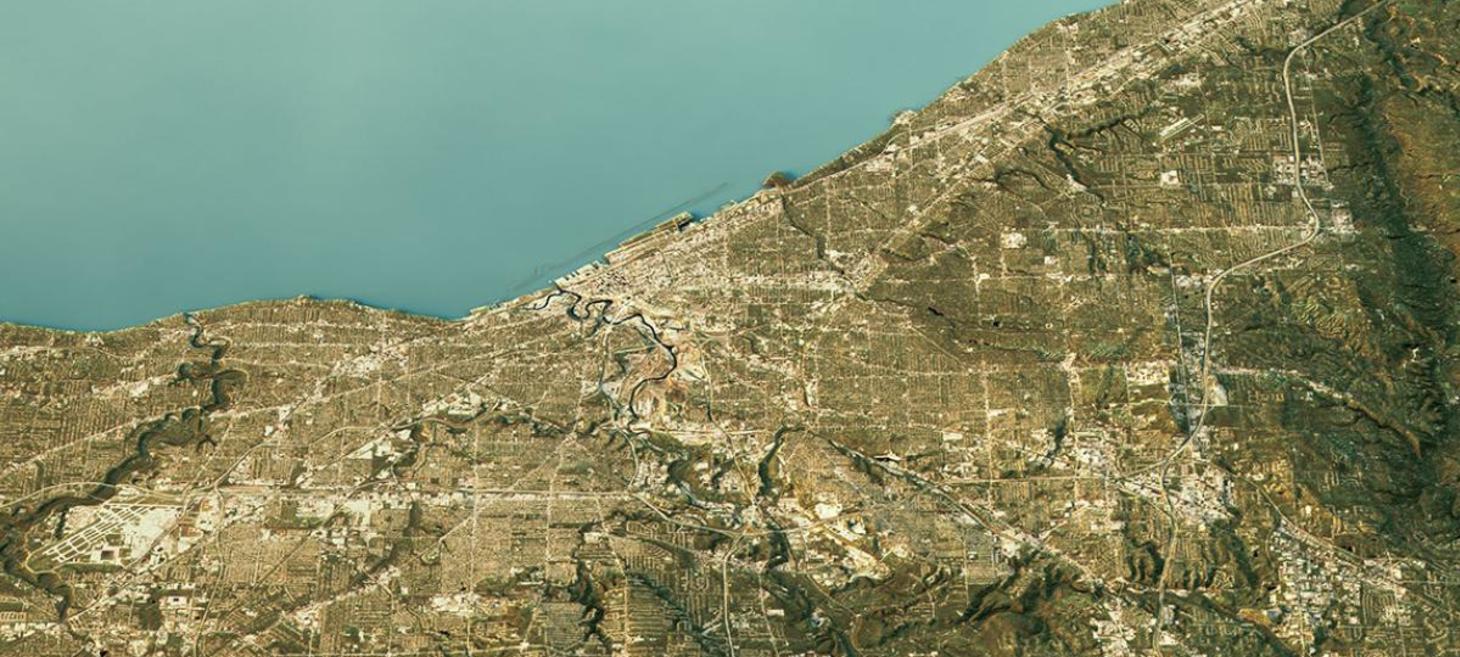
Art History's Henry Adams Discusses A Frank Lloyd Wright House In Willoughby Hills
Henry Adams, an art history professor at Case Western Reserve University, examined the newly built “RiverRock” house in Willoughby Hills, Ohio, which is based on Frank Lloyd Wright’s final residential design.
Proof of Frank Lloyd Wright’s enduring legacy, the RiverRock House holds a unique place in his architectural canon. Completed in 2025, this home is the final residential design of the master architect, brought to life nearly 65 years after his death.
Adams explains that the home embodies Wright’s core philosophy that architecture should model a well-lived life, emphasizing discipline, clarity, and harmony with nature. He highlights that Wright’s designs are not just functional structures but artistic compositions, using geometry and thoughtful planning to shape how people live and think.
Originally conceived in 1959, the RiverRock House embodies the core principles of Wright’s late-career Usonian style. Its striking horizontal lines, deeply cantilevered roof, and seamless integration with the surrounding landscape reflect his lifelong philosophy of organic architecture. The design calls for a symphony of natural materials—local stone, wood, and glass—all carefully chosen to complement its site.
This unique story of design and completion was the subject of a documentary, “The Last Wright,” which premiered on HBO Max and the Magnolia Network. The film chronicles the project’s journey, from Wright’s final sketches to the home’s final construction by a mother & daughter team, giving viewers an intimate look at the beautiful conclusion of a legendary career.
Click for more details: case.edu

Fallingwater Replaces Its Logo With A Wordmark From A 1986 Book Cover
The Western Pennsylvania Conservancy unveiled a wordmark to replace the UNESCO World Heritage site’s 2006 logo, which had abstracted the Frank Lloyd Wright–designed house’s terraces into a brushstroke graphic. The new identity was developed by the Los Angeles–based firm Fruition Co. over the course of a yearlong process led by designer Amy Blackman, who arrived at the conclusion: Fallingwater is “un-logoable.” No symbol, Blackman argued, could compete with the building’s own image—often depicted as the photograph of a concrete house floating above a cascade.
“A logo’s purpose is to provide a cognitive shortcut to brand essence,” Blackman said. “But Fallingwater’s iconic elements are too rich to compress graphically, yet too essential to abstract.”
What the team proposed instead was not a new mark but an inherited one. The wordmark is adapted from a typeface that Edgar Kaufmann jr. customized for the cover of his 1986 book Fallingwater: A Frank Lloyd Wright Country House. Kaufmann jr.—architect, author, and son of the family who commissioned the house—studied painting in Florence before becoming one of the country’s leading scholars of architecture and Wright’s work in particular. Working from the Aldus Roman font, he stretched the G to echo the house’s horizontals, tilted the W, and added flowing curves to the tails of the L’s. Kaufmann jr. donated the house to the Conservancy in 1963 and visited twice a year until his death in 1989. His ashes were scattered on the grounds.
“By embracing Kaufmann jr.’s vision, honoring our legacy, and adopting this wordmark as Fallingwater’s brand identity, we now have a signature that stands well with or without the Iconic View,” said Justin Gunther, director of Fallingwater.
The rebrand coincides with the start of Fallingwater’s 63rd tour season and the completion of a three-year, $7 million waterproofing project. A yearlong search for a new identity ended with an old one, made by someone who knew the building better than anyone.
Click for more details: archpaper.com
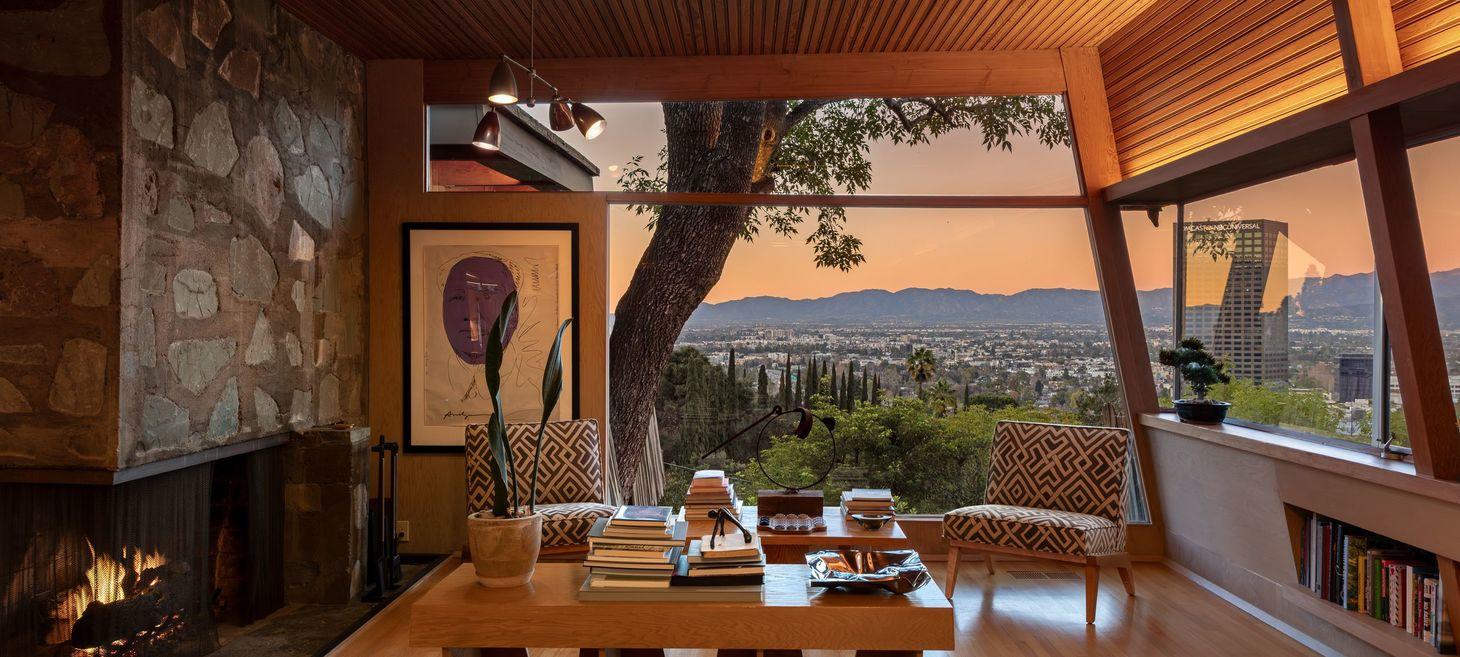
Rudolph Schindler’s Kallis-Sharlin Residence is for sale
Rudolph Schindler’s Kallis-Sharlin Residence – a modernist icon carved into an Los Angeles, California hillside – is up for sale. The 1946 landmark exemplifies Schindler’s vision of harmonising architecture with nature. Recently restored, it is now listed for $6.35 million.
Designed by modernist architect Rudolph Schindler, this home is a rare, historically significant example of his site-sensitive approach to architecture. Built for artist and film art director Mischa Kallis, the house is embedded into a steep hillside and designed to follow the natural contours of the land, using layered volumes, terraces, and extensive glass to connect indoor spaces with the surrounding landscape. It emphasizes Schindler’s distinctive design features, including unconventional geometries, strong spatial flow, abundant natural light, and the iconic butterfly roof, along with warm materials like wood that give the home a rich, tactile quality.
The property has been carefully restored in recent years by architects Barbara Bestor and Jeff Fink, balancing preservation of its historic character with modern updates that make it livable today. Not just a house, but a collectible work of architecture, with its designation as a Los Angeles Historic-Cultural Monument. Definitely an opportunity for buyers interested in design heritage, particularly those drawn to mid-century modernism and Schindler’s legacy.
Click for more details: wallpaper.com
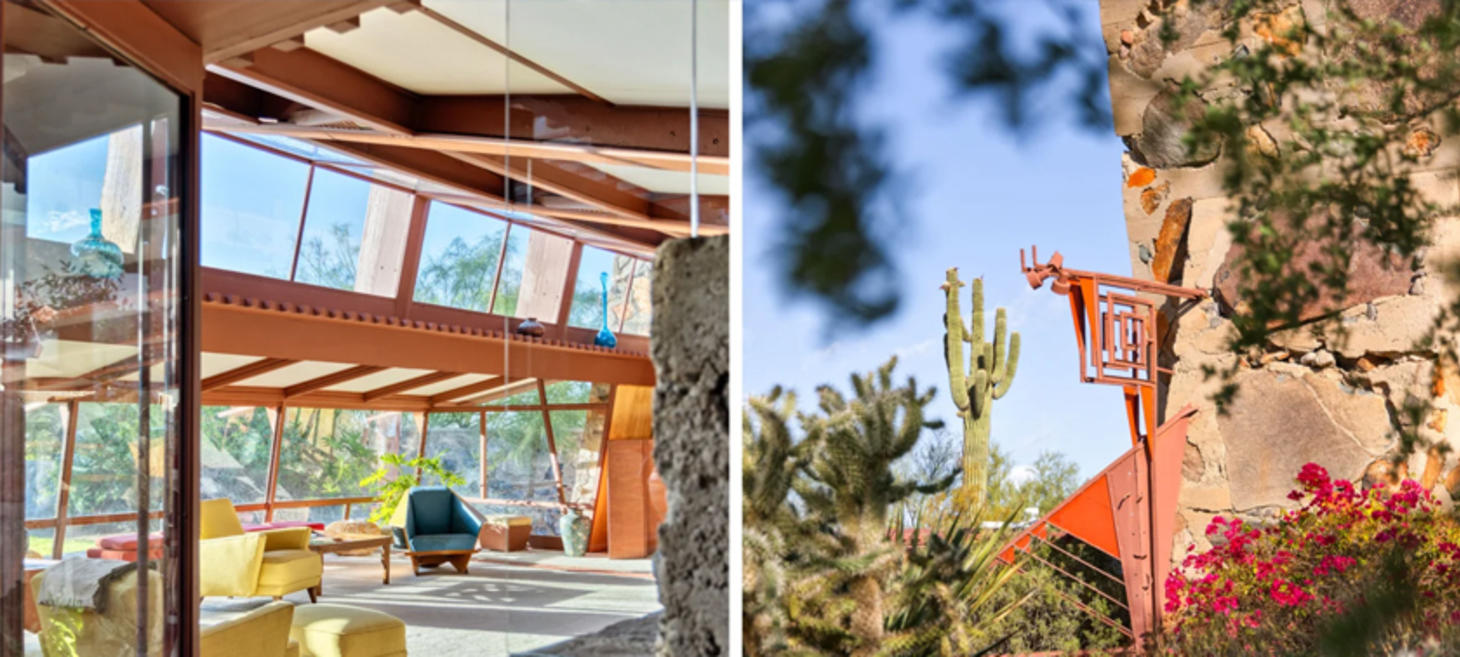
Arizona Is A Perfect Place For An Architecture-Themed Road Trip
Arizona is the perfect state to take a road trip designed for architecture lovers, highlighting this hub for “desert modernism,” a mid-20th-century style shaped by the landscape, postwar growth, and especially the influence of Frank Lloyd Wright.
Arizona’s wide-open desert served as a testing ground for bold architectural ideas, not just from Wright himself—through his Scottsdale home, Taliesin West—but also from his students and followers, who created experimental buildings that blend with the environment using natural materials, angular forms, and dramatic light.
Continue the road trip through a series of notable stops across the state, from retro roadside landmarks like a restored Route 66 motel in Flagstaff to striking religious and resort architecture in Sedona and Scottsdale. These places showcase a mix of styles, including midcentury modern hotels, sculptural churches embedded in red rocks, and “retro-futurist” designs that reflect both nostalgia and innovation.
Arizona is really an open-air museum of architectural experimentation, where travelers can experience how designers adapted modernist ideas to the desert—turning a scenic drive into a journey through 20th-century design history.
Click for more details: afar.com
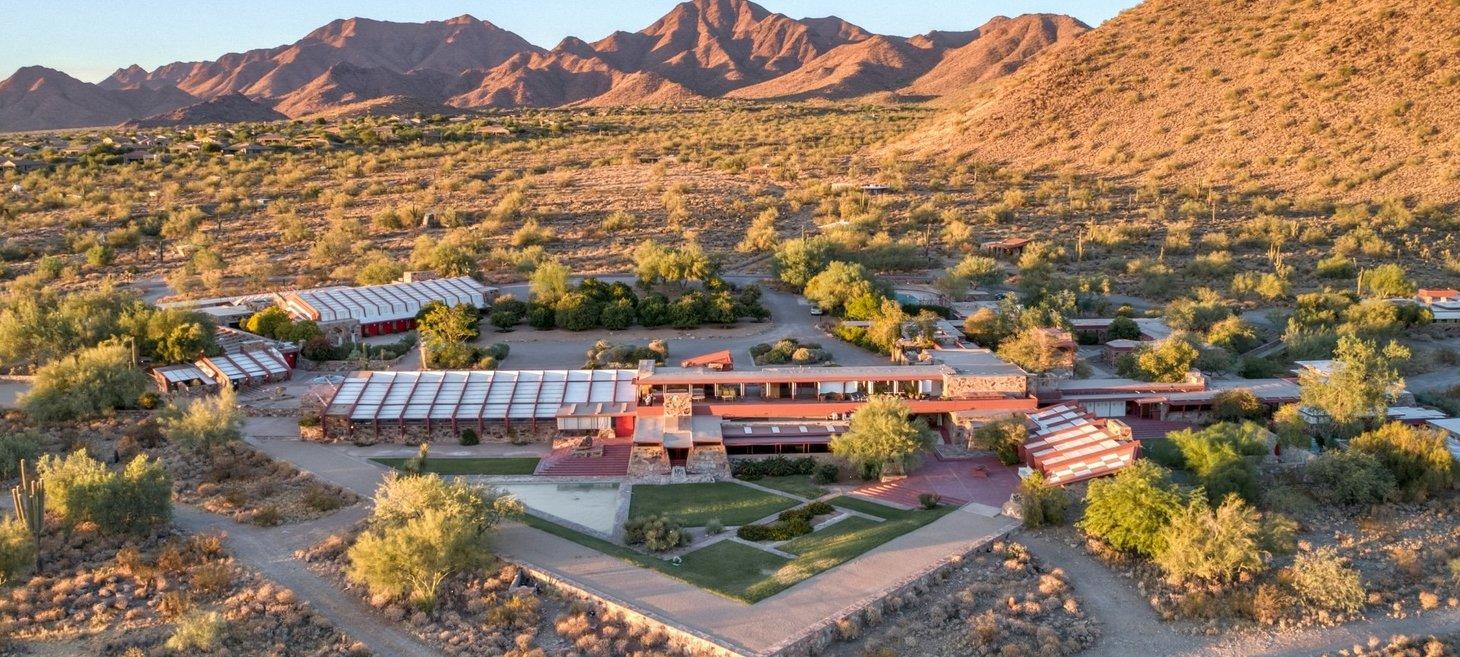
Innovation and Experimentation in Values-Based Preservation at Taliesin West
Taliesin and Taliesin West were always places of ongoing experimentation and change, qualities seemingly in tension with historic preservation. How does the Frank Lloyd Wright Foundation balance preservation with contemporary use to remain living landmarks? Jennifer Gray, Vice President and Director of the Taliesin Institute, sits down with Rebecca Barron, Director of Preservation, to talk about values-based preservation and how this approach informs a long-term project to restore the fabric roofs at Taliesin West — with implications for heritage and contemporary concerns around climate change.
Click for more details: franklloydwright.org
About
This weekly Wright Society update is brought to you by Eric O'Malley with Bryan and Lisa Kelly. If you enjoy these free, curated updates—please forward our sign-up page and/or share on Social Media.
If you’d like to submit content to be featured here, please reach out by emailing us at mail[at]wrightsociety.com.
Eric, Bryan & Lisa | Wright Society Publishers