
Announcements
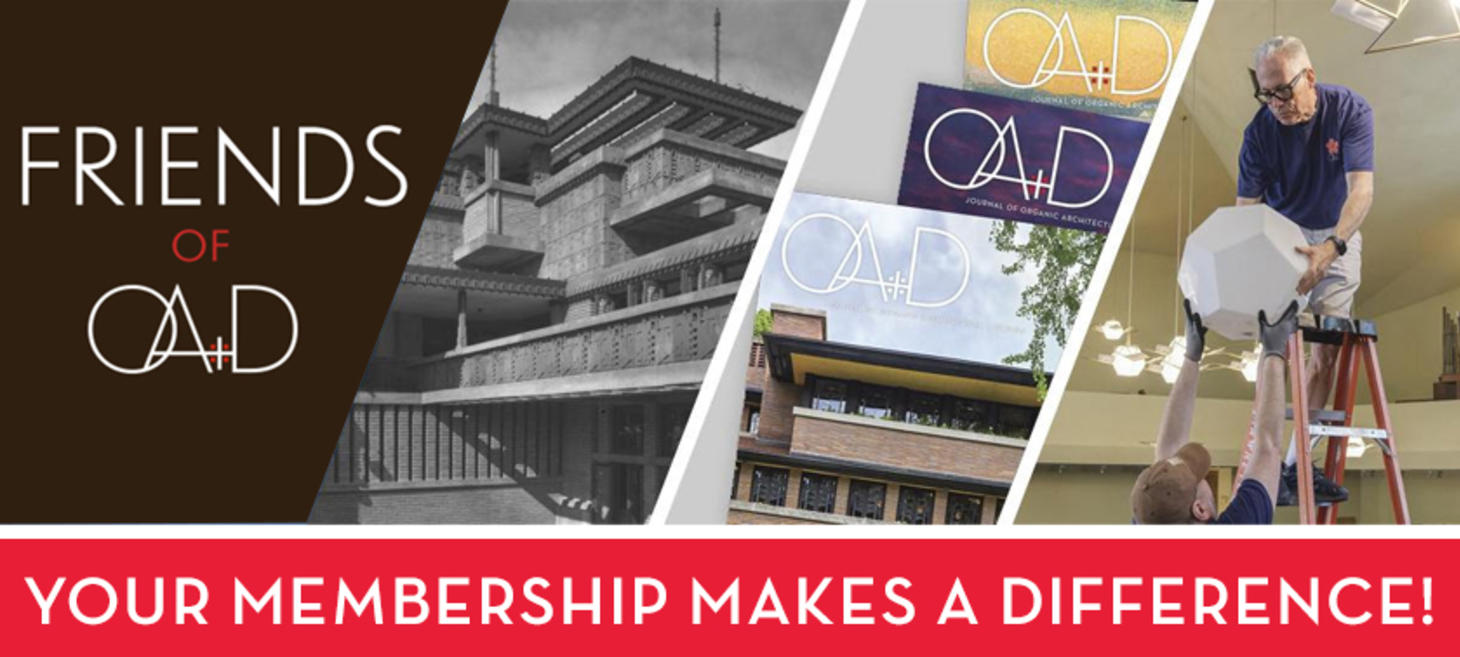
Your Membership Preserves the Organic Legacy
The future of organic architecture depends on what we choose to preserve today.
At the Organic Architecture + Design Archives, the legacy of this movement lives in original drawings, photographs, correspondence, and the ideas that shaped generations of architects. Preserving and sharing this material is essential work—made possible by a community of supporters who believe it matters.
This spring, we invite you to join that community through the Friends of OA+D Membership Drive.
As a Friend of OA+D, your support directly sustains the preservation of important collections, the advancement of new scholarship, and the ongoing work of the Archives. Members also receive the Journal of Organic Architecture + Design—a wholly unique publication devoted exclusively to the study, documentation, and continued exploration of organic architecture and design. Issued three times a year and available only through OA+D, the Journal brings forward rare material, new research, and stories of organic practitioners that cannot be found anywhere else.
With a sustaining membership, each new issue arrives automatically, connecting you directly to this growing body of work.
Become a Friend of OA+D today and help ensure that the Archives, the Journal, and the legacy of organic architecture continue to thrive.
Click for more details: oadarchives.org
The Headlines
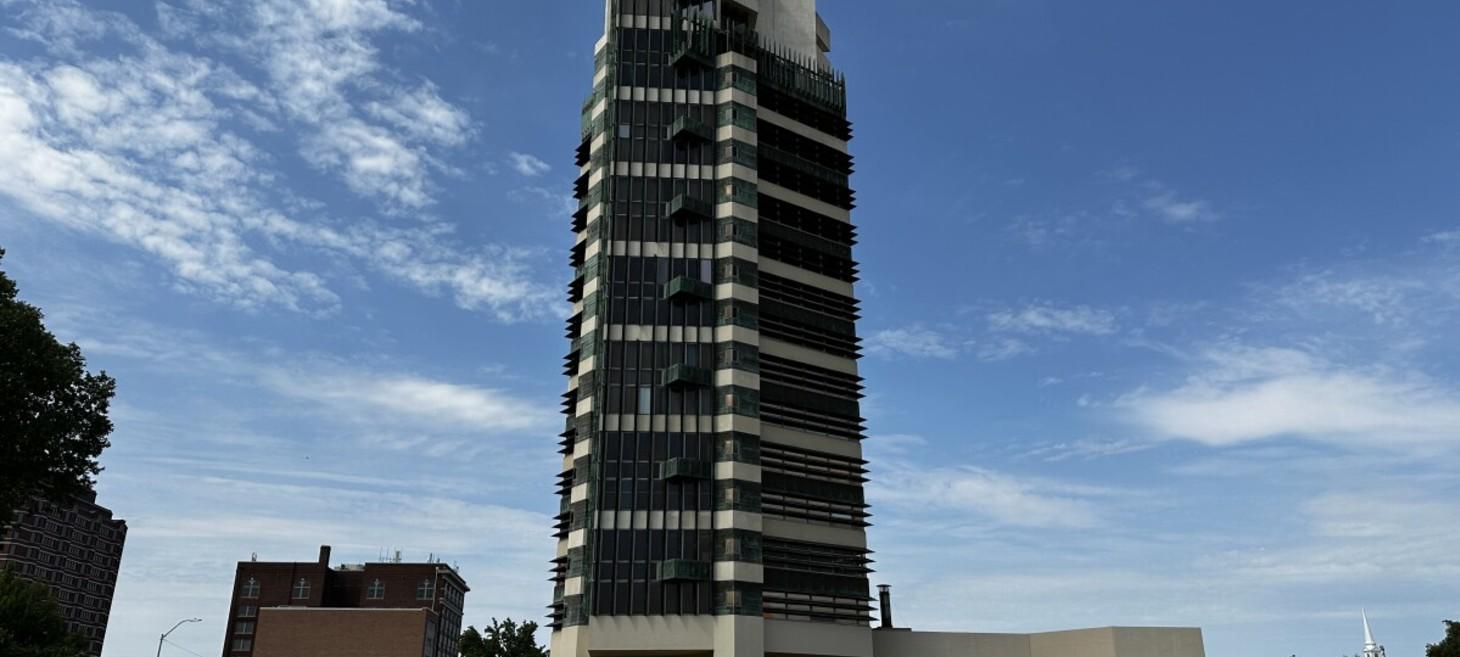
Litigation Surrounding Bartlesville's Price Tower Ends
Litigation surrounding the historic Price Tower in Bartlesville, Oklahoma has officially ended, according to the Frank Lloyd Wright Building Conservancy. The legal disputes had centered on the building’s ownership, preservation easement, and the sale of historic artifacts connected to the tower.
The conflicts began after financial problems and ownership changes led to the building’s closure and the controversial removal and sale of some furnishings and artifacts, which the Conservancy argued were protected under a preservation agreement. Multiple lawsuits followed, including disputes over whether those protections were valid and over the building’s sale.
In January 2025 the tower was sold to McFarlin Building LLC, and over time the Conservancy worked through court cases to enforce the preservation easement and recover missing items. As of March 11, all related litigation has been resolved, confirming guidelines for protecting the building and its artifacts. With the legal issues settled, the Conservancy says it will support the new owners as they move forward with plans to restore and eventually reopen the landmark, aiming to return it to use as a cultural and architectural attraction for the community.
Click for more details: kjrh.com
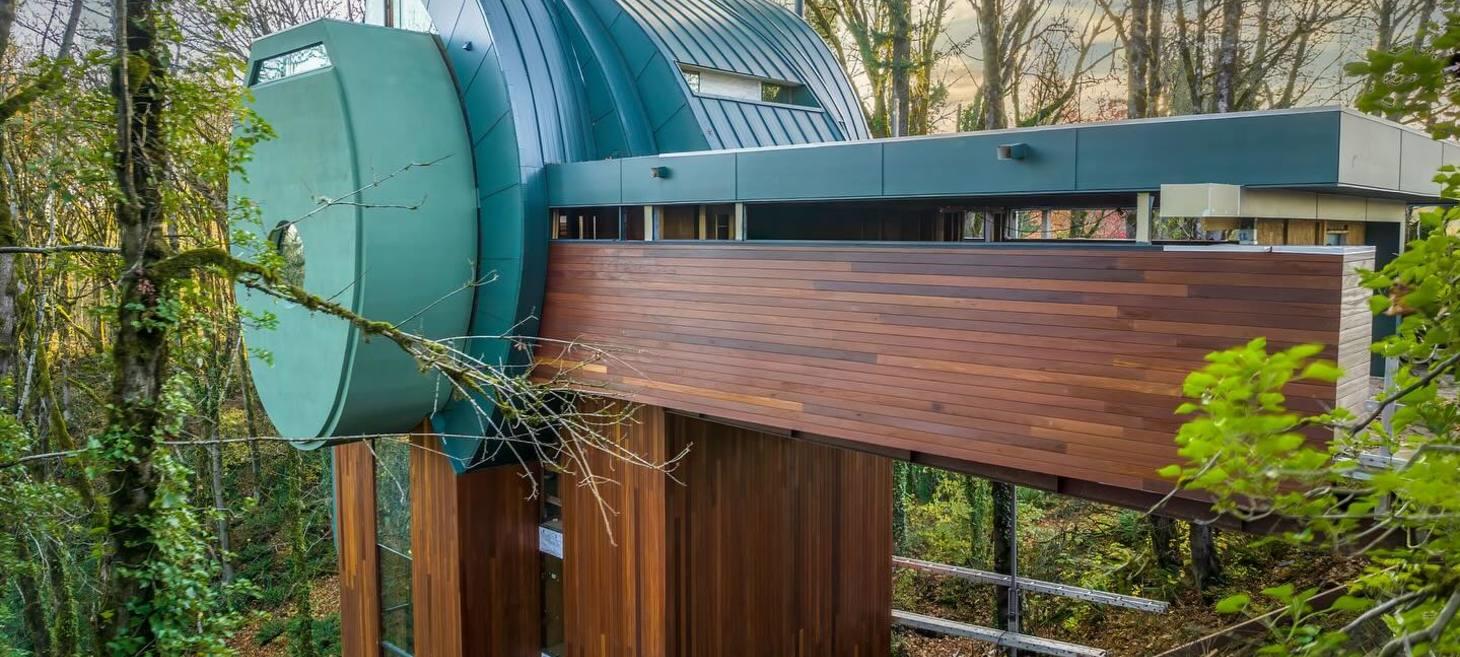
Organic Architecture Continues To Bloom In Portland
Organic architecture—design that integrates buildings with their natural surroundings—is continuing to thrive in Portland, Oregon, largely through the influence of local architects and the region’s environmental culture. Architect Robert Harvey Oshatz, whose sculptural homes use flowing forms, wood, and extensive glazing to blend structures with forests and landscapes, is creating spaces that feel almost grown from their sites rather than imposed on them. His designs demonstrate how organic architecture can produce dramatic, highly individualized buildings that emphasize craftsmanship and harmony with nature.
While organic architecture is often associated with earlier figures like Frank Lloyd Wright, Portland remains one of the few places where the philosophy still actively shapes contemporary design. The city’s abundant natural scenery, culture of environmental awareness, and strong tradition of wood construction make it especially receptive to architecture that emphasizes natural materials, daylight, and a close relationship between indoor and outdoor space.
Organic architecture tends to appear mostly in custom homes or boutique projects rather than large-scale commercial developments because the complex geometry and craftsmanship required can make it expensive and difficult to standardize. Even so, Portland architects continue to reinterpret the approach with modern technologies and sustainability strategies, ensuring that the tradition evolves rather than remaining a historical style.
Portland is a rare contemporary hub where organic architecture—rooted in landscape, ecological thinking, and expressive form—continues to develop and influence new generations of architects.
Click for more details: metropolismag.com
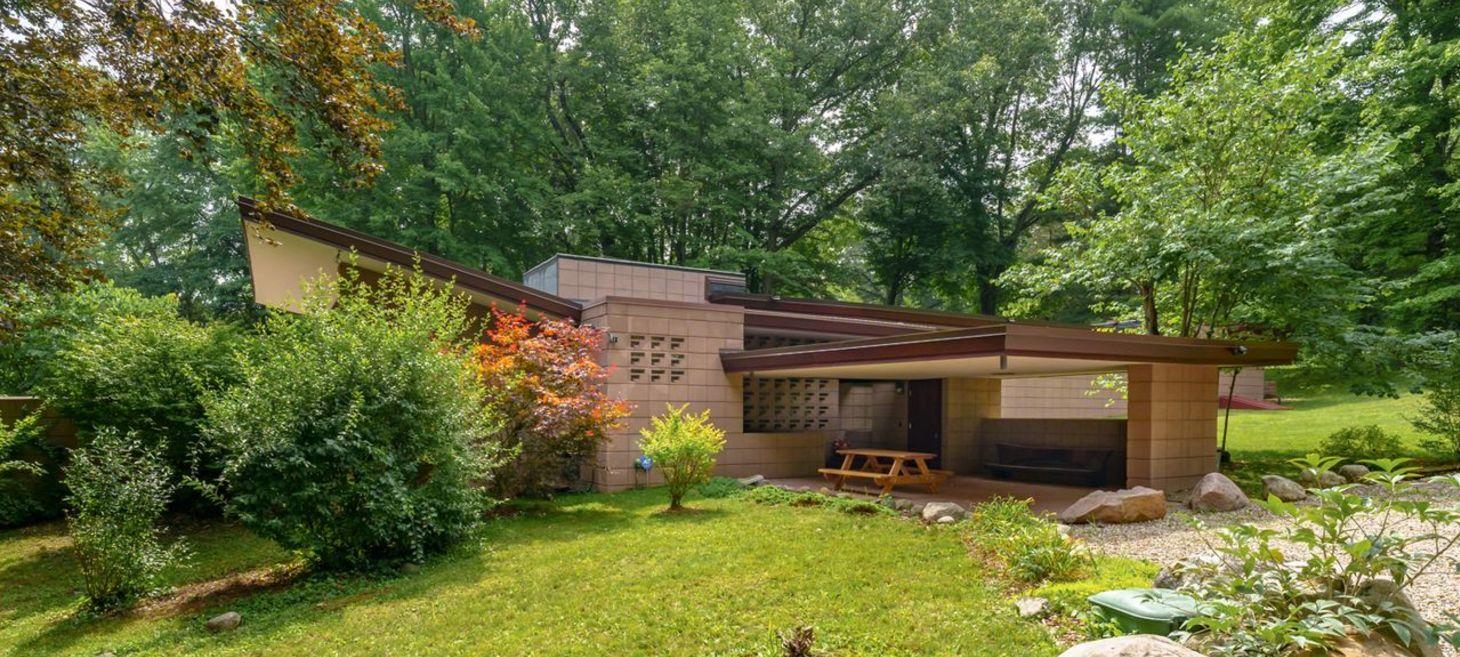
Is The Frank Lloyd Wright Real Estate Boom Over?
Architectural Digest argues that the recent boom in homes designed by Frank Lloyd Wright appears to be cooling after a surge in demand during the early 2020s. From about 2021 to 2023, Wright houses often sold quickly—sometimes above asking price—because of historically low interest rates, high liquidity among wealthy buyers, and pandemic-era lifestyle changes that encouraged people to seek unique homes with more space.
Recently, however, rising interest rates and the return of in-person work have reduced the pool of buyers willing to take on the responsibilities of owning and maintaining these historic properties. Some notable Wright homes that once might have sold quickly—such as the Weisblat House in Michigan—have lingered on the market or required price reductions, suggesting the earlier frenzy has slowed.
The market has not collapsed; instead, it has normalized. Prices for Wright houses are generally still higher than they were historically—many now list near or above $1 million, compared with far lower prices decades ago—but buyers are more selective. Because these houses often require expensive preservation work and careful stewardship, today’s purchasers tend to be motivated by architectural appreciation rather than speculation.
Homes in or near major cities like Chicago still attract stronger interest, while remote properties face a smaller buyer pool. It seems likely that the “boom” has faded into a more stable, slower market in which Wright homes remain valuable cultural artifacts but demand is less frenzied and buyers are more deliberate.
Click for more details: architecturaldigest.com
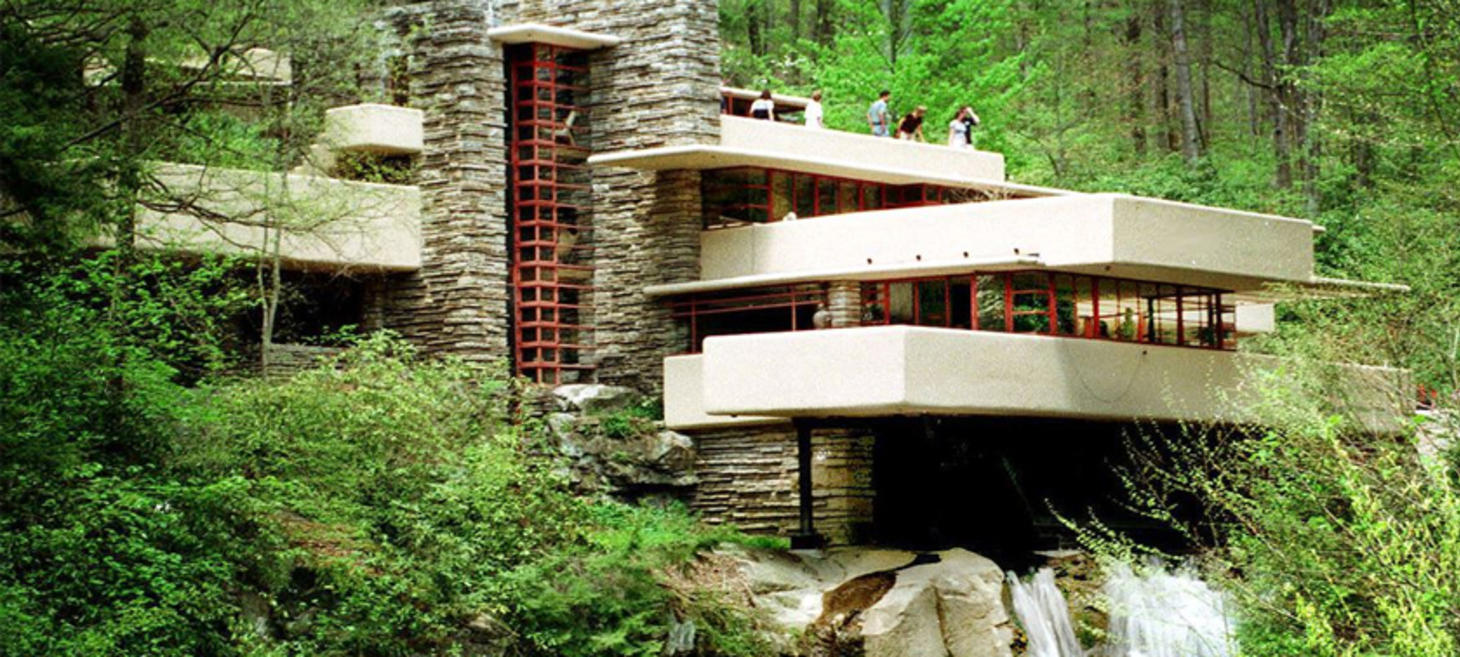
Fallingwater Completes Preservation Project For 90th Anniversary
Fallingwater, the famous house designed by Frank Lloyd Wright, is reopening for tours as it celebrates the 90th anniversary of its design in 1935. The milestone coincides with the completion of a three-year preservation project, during which scaffolding surrounded the house while repairs addressed long-standing issues such as water infiltration and structural wear. With the restoration finished, visitors can again see the building unobstructed.
The home—built dramatically over a waterfall for Pittsburgh, Pennsylvania department store owner Edgar J. Kaufmann Sr.—is considered one of the most iconic works of modern architecture and draws visitors from around the world. Managed by the Western Pennsylvania Conservancy, the site typically receives well over 100,000 visitors a year and has been open to the public since the 1960s.
The 2026 tour season includes the standard architectural tours along with special programming to mark the anniversary, highlighting the house’s design, its relationship with the surrounding landscape, and the ongoing effort required to preserve it. Events, lectures and special experiences throughout the year aim to celebrate the building’s cultural importance while helping ensure its long-term conservation.
This anniversary is both a celebration of Wright’s landmark design and a reminder that maintaining the nearly century-old structure requires continuous restoration and stewardship so future visitors can experience it.
Click for more details: post-gazette.com
About
This weekly Wright Society update is brought to you by Eric O'Malley with Bryan and Lisa Kelly. If you enjoy these free, curated updates—please forward our sign-up page and/or share on Social Media.
If you’d like to submit content to be featured here, please reach out by emailing us at mail[at]wrightsociety.com.
Eric, Bryan & Lisa | Wright Society Publishers