
Announcements
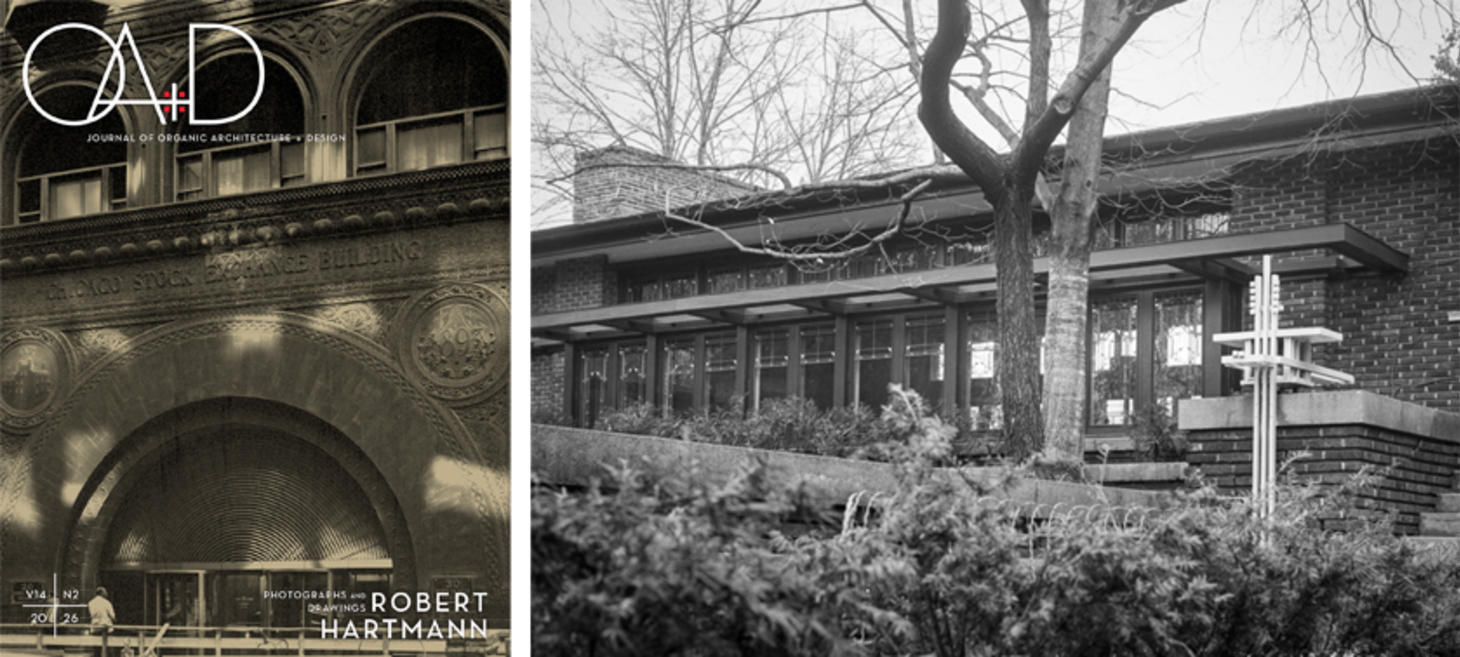
Be Among the First to Receive the Summer Journal OA+D!
The Summer 2026 issue of the Journal of Organic Architecture + Design (Vol. 14, No. 2) is heading to the printer soon, and now is the perfect time to reserve your copy.
This highly anticipated issue celebrates the work of photographer and artist Robert Hartmann, featuring a remarkable collection of rare photographs, drawings, and architectural studies documenting the work of Frank Lloyd Wright, Louis Sullivan, Bruce Goff, Taliesin Associated Architects, and many others. Filled with historic images and insightful commentary, this issue offers a unique look at some of the most important figures and places in organic architecture.
Want to be among the first to receive a copy when it arrives this summer? Join the Friends of OA+D sustaining membership program today. Active Friends of OA+D members automatically receive every new issue of Journal OA+D as part of their membership, ensuring they never miss an issue while directly supporting the preservation, research, and sharing of the world's most significant organic architecture and design collections.
Join today and secure your copy before the issue ships. Your support helps preserve the past while making these important stories accessible to future generations.
Click for more details: bigcartel.com
The Headlines
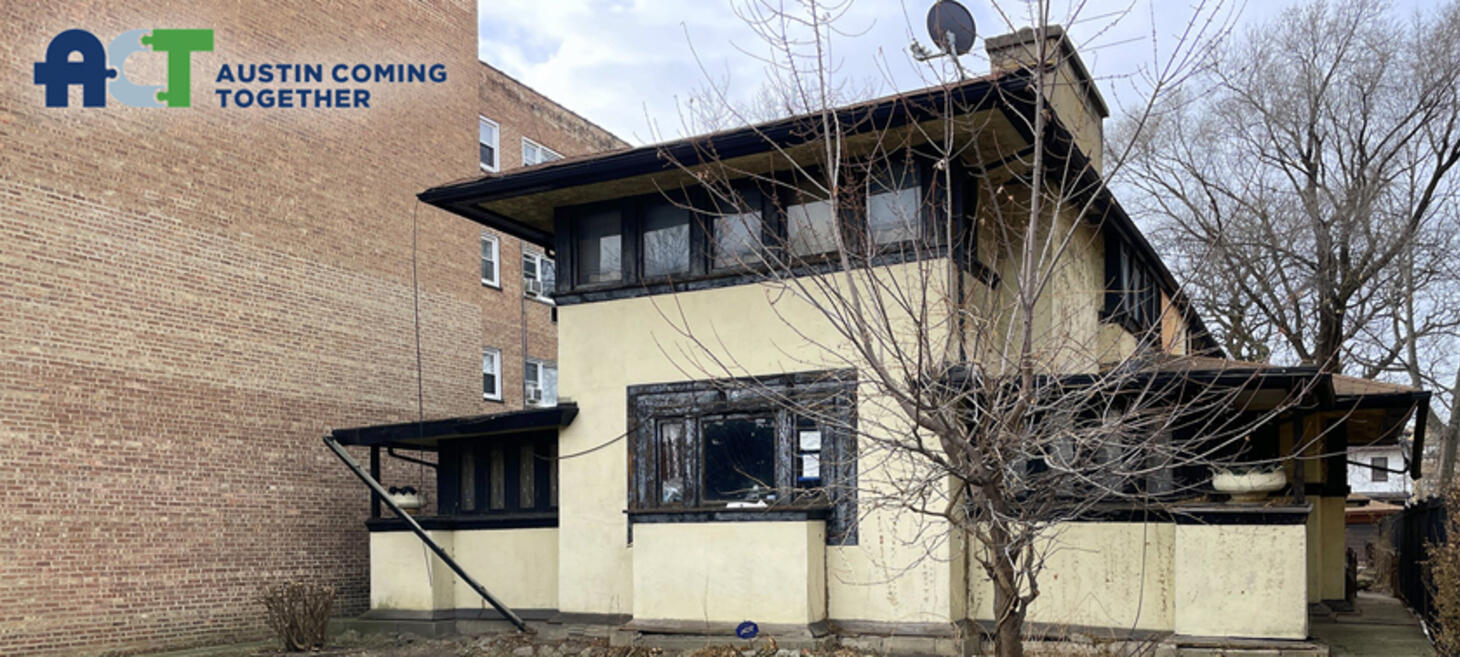
Austin Coming Together Acquires Frank Lloyd Wright’s J.J. Walser House, Preserving Historic West Side Landmark
Austin Coming Together (ACT) announced today that it has acquired the J.J. Walser House –– the Frank Lloyd Wright-designed residence at 42 N. Central Avenue in Chicago’s Austin neighborhood. The acquisition marks a major preservation milestone for Austin, with ACT taking responsibility for the endangered landmark and guiding its next chapter with community accountability and long-term care.
Designed by Frank Lloyd Wright in 1903 for Joseph J. and Grace Walser, the home is a rare example of Wright’s Prairie-period residential work in the city of Chicago. It is a designated Chicago Landmark, listed on the National Register of Historic Places, and is Wright’s only single-family residence on Chicago’s West Side.
“The J.J. Walser House is part of Austin’s story, and we believe its next chapter should be shaped by the people who call this community home,” said Darnell Shields, Executive Director of Austin Coming Together. “ACT stepped in because this house is critically important, not only as a Frank Lloyd Wright design, but as a piece of Austin’s history. Our first responsibility is to stabilize this treasured landmark and protect it from further deterioration. From there, we will work with residents and partners to envision a future that honors both the house and the community.”
The Walser House has benefited from generations of stewardship, including nearly five decades of care by Hurley and Anne Teague, who purchased the home in 1970. Following Anne Teague’s passing in 2019, the property entered a period of vacancy and uncertainty, underscoring the need to protect the home and carry forward its legacy.
ACT is positioned to carry that legacy forward, bringing both preservation leadership and a long-standing commitment to Austin to the next chapter of the Walser House. That combination of architectural preservation and community connection is what partners see as essential to the home’s future.
“ACT understands the potential waiting to be unlocked by revitalizing this landmark Frank Lloyd Wright design, celebrating Austin as a destination for notable architecture,” said Barbara Gordon, Executive Director of the Frank Lloyd Wright Building Conservancy. “The organization’s deep roots in the community mean they know the rich stories the house can tell about how it has changed over time, and what Austin residents envision for its future.” The acquisition reflects a broad coalition effort to move the house from uncertainty into stewardship. Preservation partners, community stakeholders, civic leaders, Fannie Mae, and Community Investment Corporation worked with ACT to create a pathway for the property’s transfer, an outcome preservation advocates described as significant for both the landmark and the West Side community.
“Austin Coming Together’s acquisition of Frank Lloyd Wright’s Walser House will be transformative for both the home and the community,” said Ward Miller, Executive Director of Preservation Chicago.
“We commend Austin Coming Together for its vision and determination to preserve the J.J. Walser House, a nationally recognized architectural and cultural asset on Chicago’s West Side,” said Kendra Parzen, Landmarks Illinois Advocacy Manager.
The acquisition is not only about preserving a Frank Lloyd Wright-designed home. It is also about recognizing the Walser House as part of Austin’s future. As steward of the Austin Forward. Together. quality-of-life plan, ACT sees the house as a historic asset with the potential to anchor preservation, education, cultural pride, and community along one of the neighborhood’s key corridors. ACT extends special thanks to the Frank Lloyd Wright Building Conservancy, Landmarks Illinois, Preservation Chicago, the City of Chicago, local elected officials, community residents, and the Teague family and heirs for their roles in supporting the effort to protect the Walser House.
ACT will share updates as planning moves forward and community engagement opportunities are created. For the latest information, please visit www.austincomingtogether.org/walser.
Click for more details: austincomingtogether.org
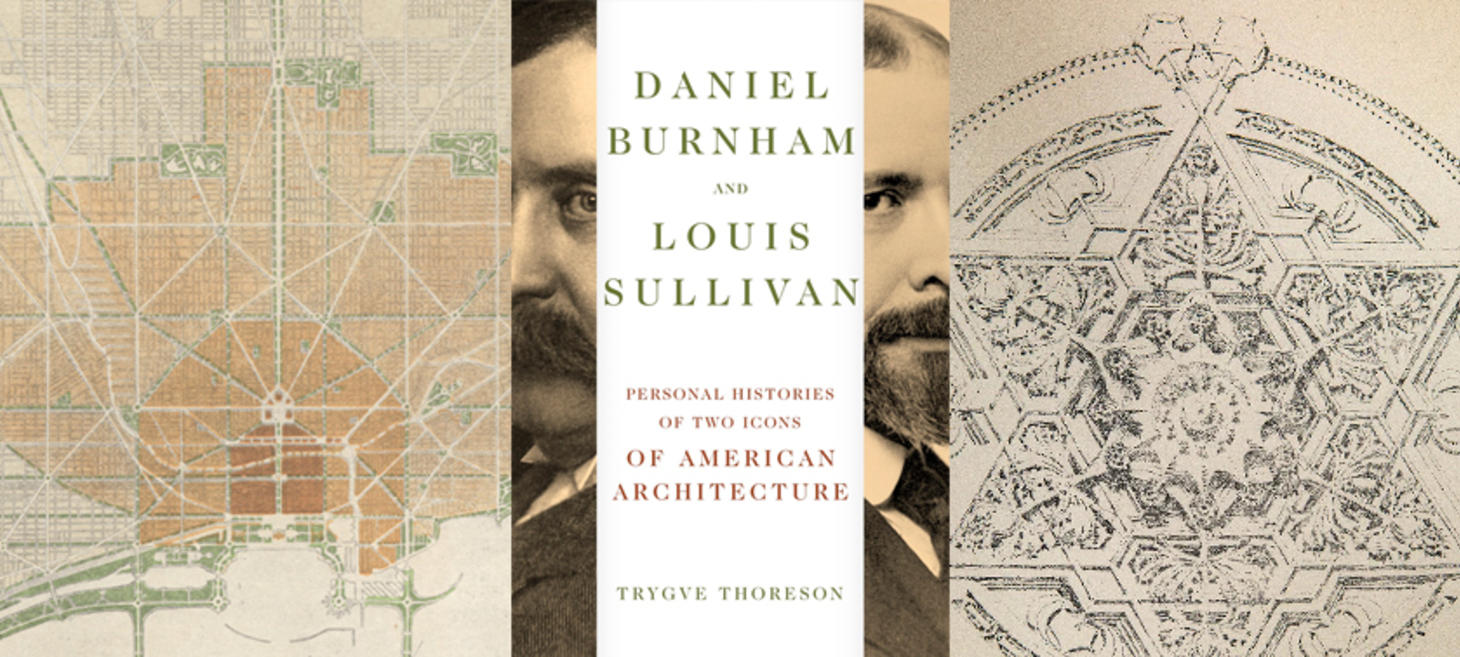
Retired Harper College Professor Explores Lives Behind Chicago Architecture Icons
Retired Harper College professor Trygve Thoreson and the decade-long research journey that led to his new book, Daniel Burnham and Louis Sullivan: Personal Histories of Two Icons of American Architecture, was inspired by architecture tours he led for students in downtown Chicago. Thoreson became fascinated by the intellectual and spiritual influences behind architect Louis Sullivan, particularly the connection between Sullivan’s work and Transcendentalist thinkers such as Ralph Waldo Emerson.
Further research revealed that both Sullivan and Daniel Burnham were influenced by Swedenborgian religious ideas, helping explain the spiritual dimensions of their architecture. Thoreson’s book challenges the common portrayal of Burnham and Sullivan as simple opposites. While Burnham is often remembered as a practical organizer and Sullivan as an artistic visionary, Thoreson found a more complex relationship that included mutual admiration alongside criticism. He highlights examples showing that the two architects influenced and supported each other more than many historical accounts suggest.
Approaching the subject as a humanities scholar rather than an architect, Thoreson focused on the personalities behind the famous buildings, exploring their childhoods, beliefs, ambitions, and contradictions. His research uncovered lesser-known aspects of their lives, including evidence that Sullivan may have fathered a child who was later adopted and writings by Burnham that complicate his public image.
Click for more details: harpercollege.edu
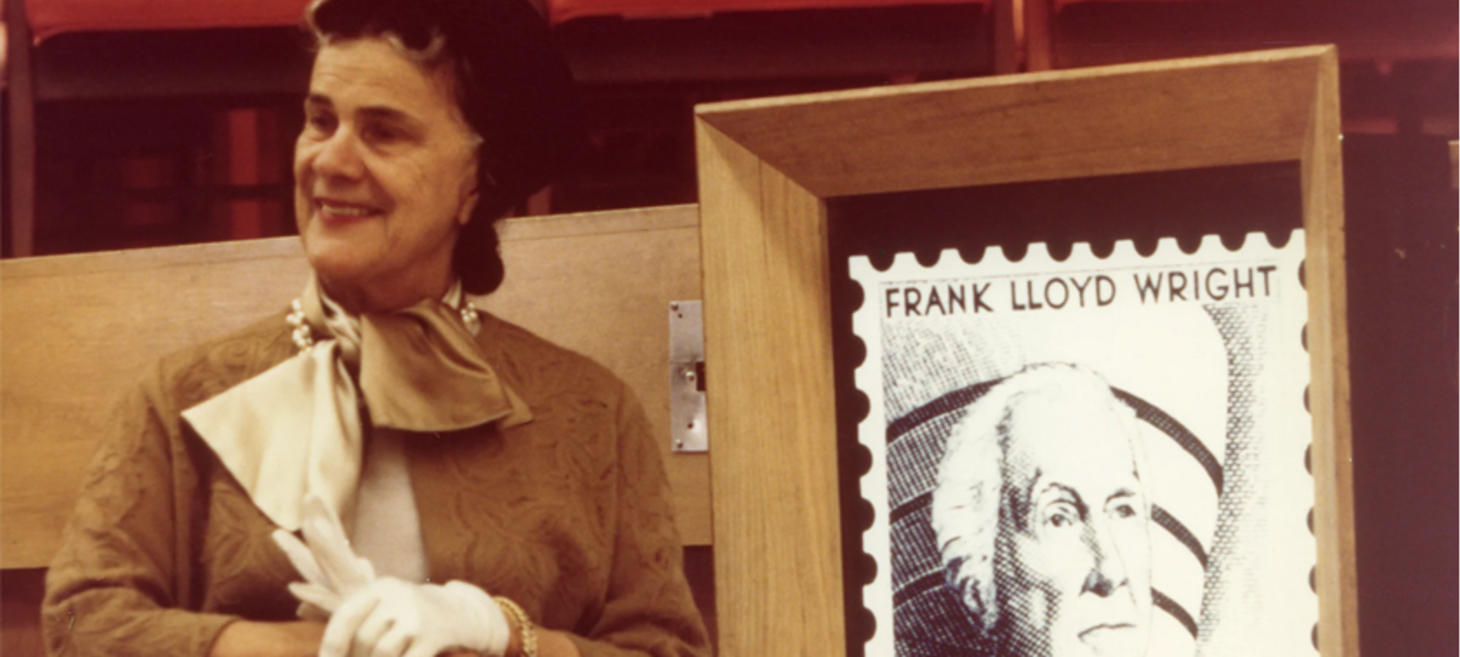
Celebrating America At 250: The United States Postal Service And Frank Lloyd Wright
The upcoming 250th anniversary of the United States provides an opportunity to reflect on the relationship between the U.S. Postal Service and the legacy of Frank Lloyd Wright.
In 1966, Frank Lloyd Wright (1867-1959) was honored with a 2 cent “Prominent Americans Issue” stamp. Issued on what would have been his 97th birthday, the ceremony took place near Taliesin and was attended by his widow, Olgivanna Lloyd Wright. She remarked that Wright would have viewed the recognition as a miracle and a tribute from a government he deeply admired. The stamp featured Wright’s portrait with the Solomon R. Guggenheim Museum in the background and was largely designed by members of the Wright Foundation staff.
In 1982, a stamp depicting Fallingwater appeared in a series celebrating American architecture. In 1998, Wright’s Robie House was featured in the “Celebrate the Century” stamp series. Then, in 2005, the Solomon R. Guggenheim Museum was included in a set honoring masterpieces of modern American architecture.
The U.S. Postal Service has repeatedly used stamps to recognize Wright’s influence on American culture and architecture, connecting his legacy to broader celebrations of the nation’s history as America approaches its 250th anniversary.
Click for more details: franklloydwright.org
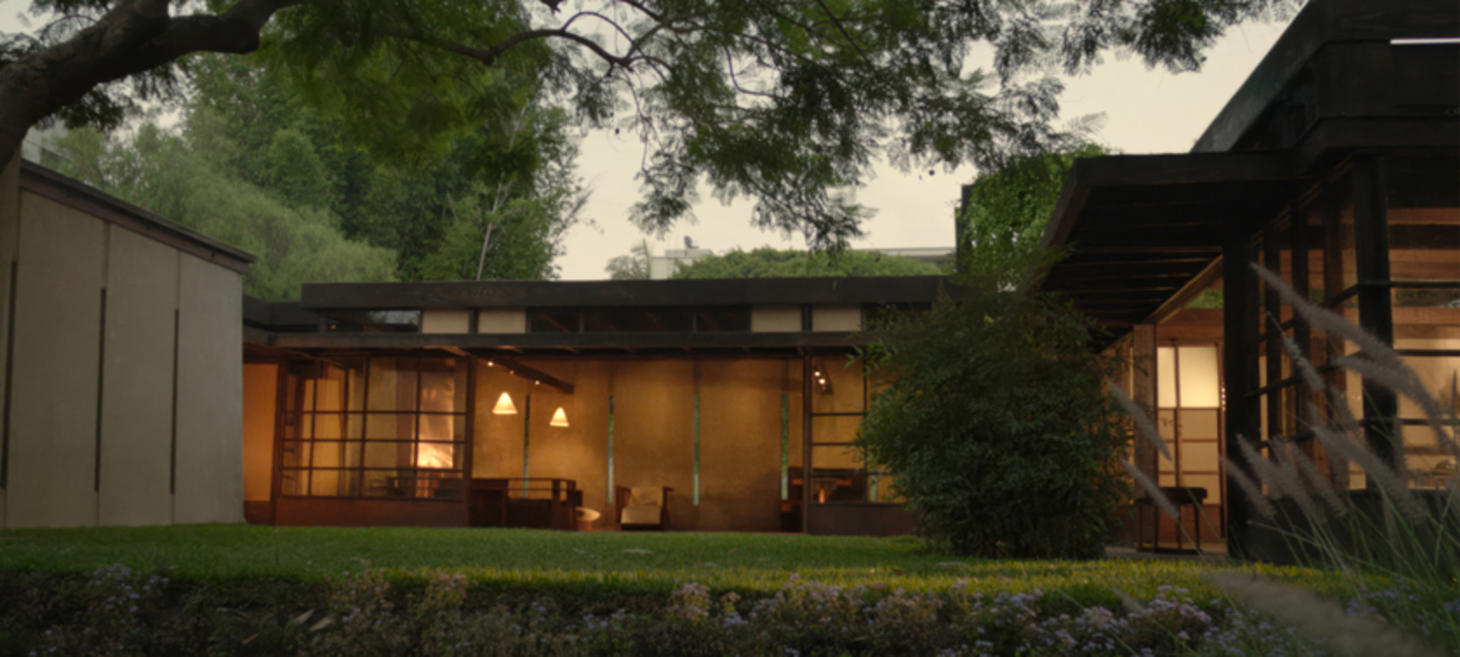
Abramorama Acquires “Schindler Space Architect” In North America
Independent film distributor Abramorama has acquired the North American theatrical rights to the documentary Schindler Space Architect, marking a significant distribution deal for the film ahead of its broader release.
The documentary, directed by Valentina Ganeva, explores the life, work, and lasting influence of architect R. M. Schindler, a pioneering figure in modern architecture whose designs helped shape Southern California’s indoor-outdoor living style. The film examines Schindler’s architectural philosophy, his creative achievements, and his often complicated relationships with contemporaries such as Frank Lloyd Wright and Richard Neutra.
Narrated by Meryl Streep and featuring commentary from prominent architects including Frank Gehry, the documentary has already toured international film festivals and received several awards. According to reports, Abramorama plans a North American theatrical rollout that will bring the film to wider audiences interested in architecture, design, and cultural history. The acquisition reflects continued interest in documentaries centered on influential creative figures and architectural heritage.
Click for more details: realscreen.com
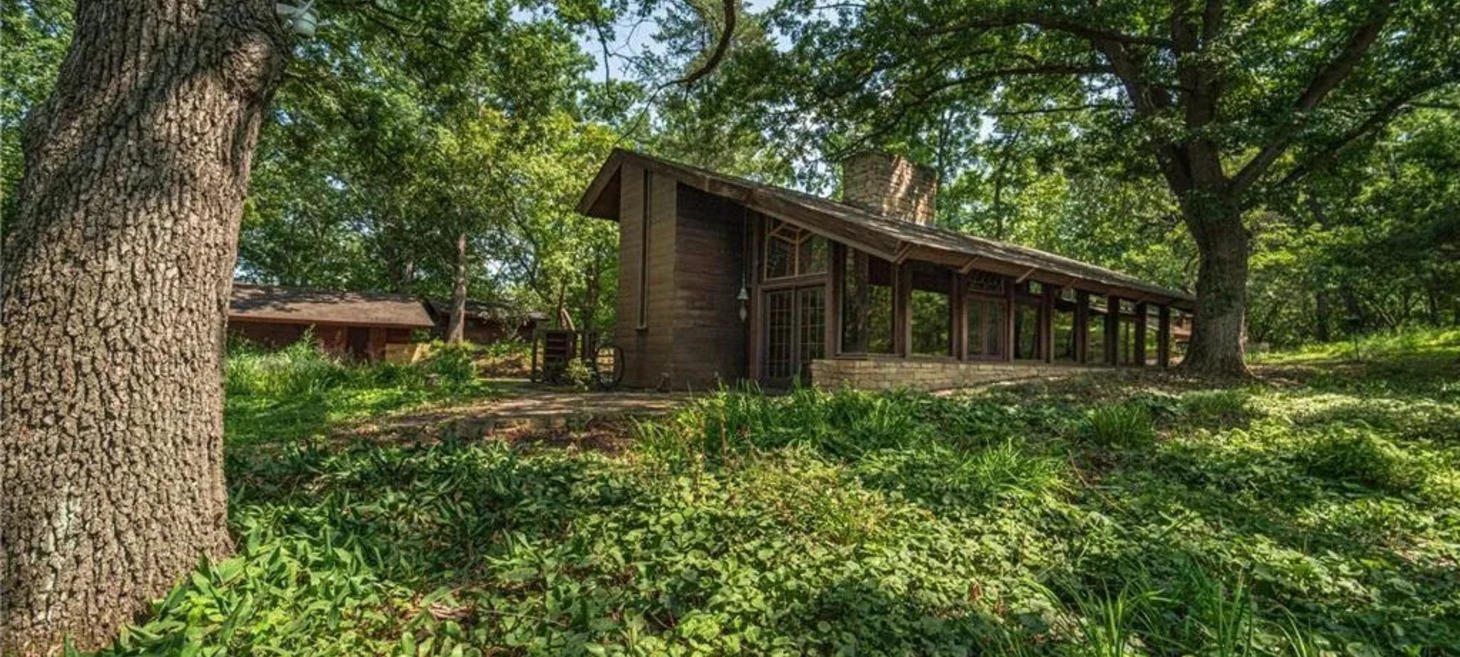
Wanna Buy A John H. Howe Masterpiece On 11 Acres Of Twin Cities Parkland?
There is a newly listed house in Prior Lake, Minnesota, but the real focus is on architect John Howe and his legacy. The 1968 home sits on more than 11 wooded acres within the boundaries of Murphy-Hanrehan Park Reserve and is being marketed as a rare example of Howe’s work.
Designed in the Usonian tradition associated with Frank Lloyd Wright, the house includes features such as a massive limestone fireplace, original built-in furnishings, stained-glass windows, and a design that emphasizes a close relationship with the surrounding landscape.
Howe was far more than Wright’s assistant. After joining Wright’s studio in 1932, Howe became his master draftsman and worked alongside him for 27 years until Wright’s death in 1959. He later established his own practice in Minneapolis and designed more than 120 homes across the Upper Midwest. Although less famous than some contemporaries, architectural historians regard Howe as a significant figure who extended Wright’s organic-design principles while developing a distinctly regional approach suited to Minnesota’s climate and terrain.
A key theme is Howe’s sensitivity to place. According to historian Jane King Hession, Howe would carefully walk and study a site before beginning a design and refused to reshape landscapes merely to accommodate a building. As a result, many of his houses appear to emerge naturally from their surroundings.
The Prior Lake residence exemplifies that philosophy: it is deeply embedded in forested parkland, offering privacy and a strong connection to nature while remaining close to suburban amenities. The house is not simply real estate but a rare opportunity to own a well-preserved work by John Howe, an architect who carried forward Wright’s ideals while creating a uniquely Upper Midwestern form of organic architecture.
Click for more details: racketmn.com

Step Inside the World of Frank Lloyd Wright at Taliesin's Award-Winning Weekend Workshops
Looking for an unforgettable architectural experience? Taliesin Preservation's Weekend Workshops offer rare opportunities to learn, create, and immerse yourself in the inspiring landscape and legacy of Frank Lloyd Wright's Wisconsin home, studio, and estate. Recognized with a prestigious National Geographic Traveler "50 Tours of a Lifetime" distinction, these intimate workshops combine hands-on learning, behind-the-scenes access, and meaningful connections in one of America's most celebrated architectural settings. Each workshop is limited to a small group, allowing participants to fully engage with expert instructors while experiencing Taliesin in a way few visitors ever do.
One workshop that will be especially appealing to Frank Lloyd Wright enthusiasts is the Taliesin Fellowship Experience Workshop, taking place October 2–4, 2026. Participants will explore the history, daily life, and creative spirit of the Taliesin Fellowship while gaining a deeper understanding of Wright's unique educational community and its lasting impact on organic architecture. This immersive weekend offers a rare chance to experience Taliesin through the lens of the apprentices and fellows who lived, worked, and learned alongside Wright. Space is limited, and this popular workshop is expected to fill quickly. Learn more and reserve your place today.
Click for more details: taliesinpreservation.org
About
This weekly Wright Society update is brought to you by Eric O'Malley with Bryan and Lisa Kelly. If you enjoy these free, curated updates—please forward our sign-up page and/or share on Social Media.
If you’d like to submit content to be featured here, please reach out by emailing us at mail[at]wrightsociety.com.
Eric, Bryan & Lisa | Wright Society Publishers