
Announcements
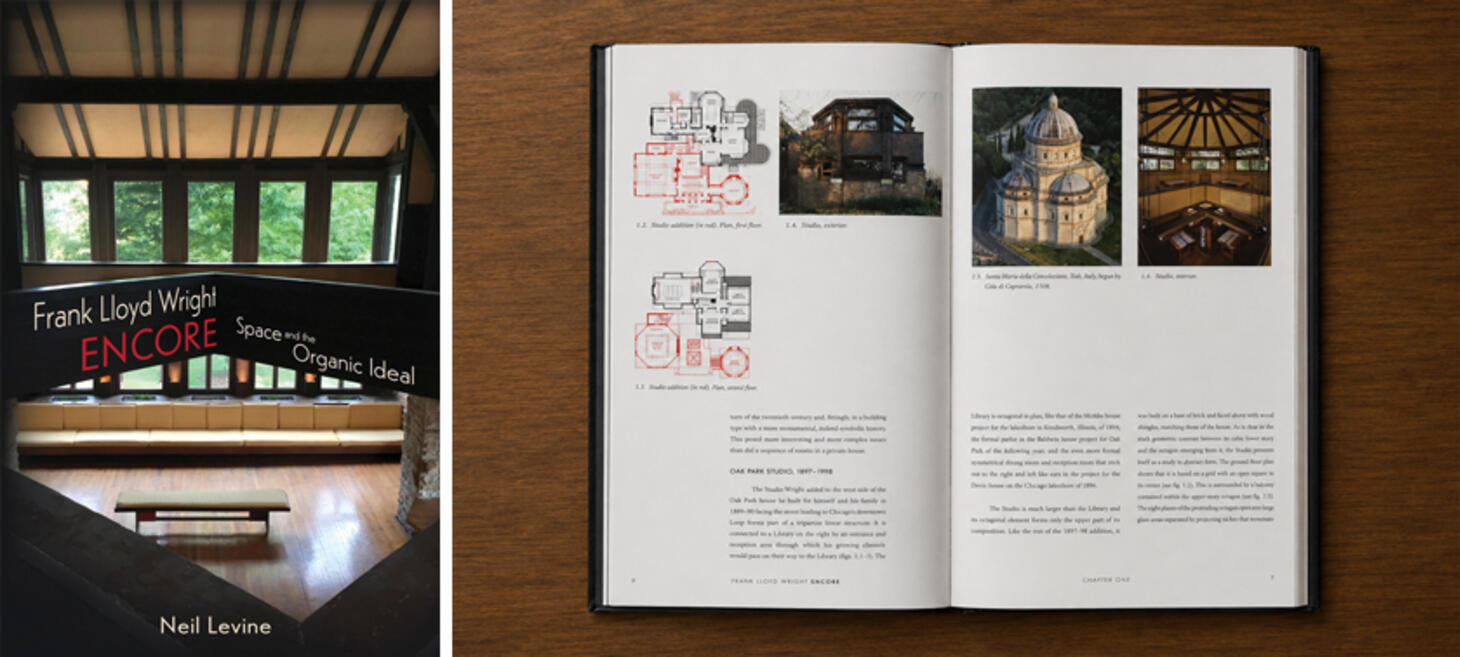
New Book from OA+D Archives Press: Frank Lloyd Wright Encore
OA+D Press is pleased to announce that Frank Lloyd Wright Encore: Space and the Organic Ideal, the newest book by eminent Wright scholar Neil Levine, is now available to order.
Through three illuminating essays, Levine takes readers deep into Frank Lloyd Wright’s revolutionary understanding of architectural space. From the vertical geometries of Wright’s earliest work to the flowing, interpenetrating spaces of his mature designs, Levine traces how Wright transformed architecture from a series of enclosed rooms into something fluid, dynamic, and profoundly connected to human experience.
More than a study of individual buildings, Frank Lloyd Wright Encore explores the ideas behind Wright’s architecture and the evolution of his organic ideal. Levine reveals how Wright sought to unite material, purpose, context, form, idea, and spirit into a complete architectural vision, offering readers a deeper understanding of what made his work so transformative.
Beautifully produced as a 128-page hardcover, the book features more than 40 color and black-and-white photographs and architectural drawings, making it an essential addition to the library of anyone interested in Frank Lloyd Wright, organic architecture, architectural history, or modern design.
Priced at just $25, Frank Lloyd Wright Encore is an exceptional opportunity to own an important new work of Wright scholarship published by OA+D Press.
Copies are available now. Order today and be among the first to receive this handsome new volume and add an important new perspective on Frank Lloyd Wright to your collection.
Order Frank Lloyd Wright Encore Today
Please note: This special OA+D Press publication is not included with a Journal OA+D subscription and must be purchased separately.
Click for more details: bigcartel.com
The Headlines
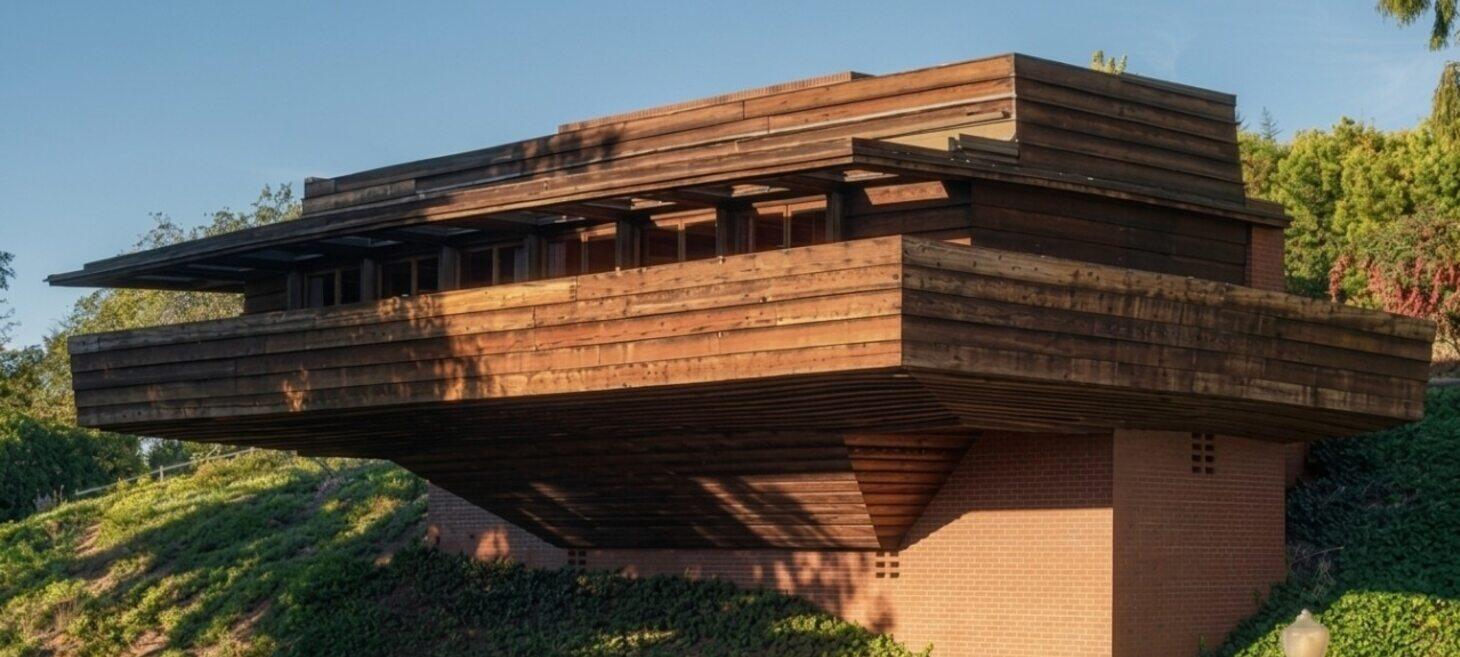
Wright's Only Usonian House In Los Angeles Risks Demolition By Neglect
Domus reports that the Sturges House, Frank Lloyd Wright’s only Usonian house in Los Angeles, is now in such severe disrepair that demolition is a real possibility. Designed in 1939 for actors George and Selma Sturges, the house is an important example of Wright’s later residential work, known for its dramatic cantilevered design and integration with the hillside.
Two years after the completion of the famous Kaufmann House, better known as Fallingwater, the great American architect dedicated himself to designing a villa for George and Selma Sturges in Los Angeles. This home was conceived according to the principles of the Usonian style, recognizable in many of Wright's works. Like others of its kind, this building features relatively modest dimensions (1185 square feet), the use of natural and local materials, a carport separated from the main volume, and an imposing fireplace.
The most emblematic element is the large cantilevered terrace, almost 20 feet long and supported by structural beams clad in wood to harmonize with the rest of the structure and its surroundings. As in Fallingwater itself and many other projects, the Sturges House reveals Wright's extraordinary ability to build in harmony with the morphological characteristics of the site, which in this case constituted the most complex challenge and of which the terrace overlooking the canyon is the ultimate expression.
In 2016, the property was acquired by the All Right Now Foundation, a nonprofit organization whose mission is to preserve and promote the property for educational purposes. Years of neglect have left the structure badly deteriorated. Its condition has reportedly worsened to the point where restoration is becoming increasingly difficult and expensive, raising concerns among preservationists about the loss of a significant piece of Wright’s architectural legacy.
The situation has now come to the attention of the authorities: on July 1, 2026, the Los Angeles Department of Building and Safety issued the owner a building code violation notice, granting 30 days to bring the property into compliance or submit a plan to resolve the issues.
The situation at Sturges House has thus prompted the Los Angeles Conservancy to list it as the top priority on its 2026 L.A. Watch List and to mobilize institutions and citizens. Meanwhile, one of the most unique houses built by Wright in California continues to await restoration.
Click for more details: domusweb.it
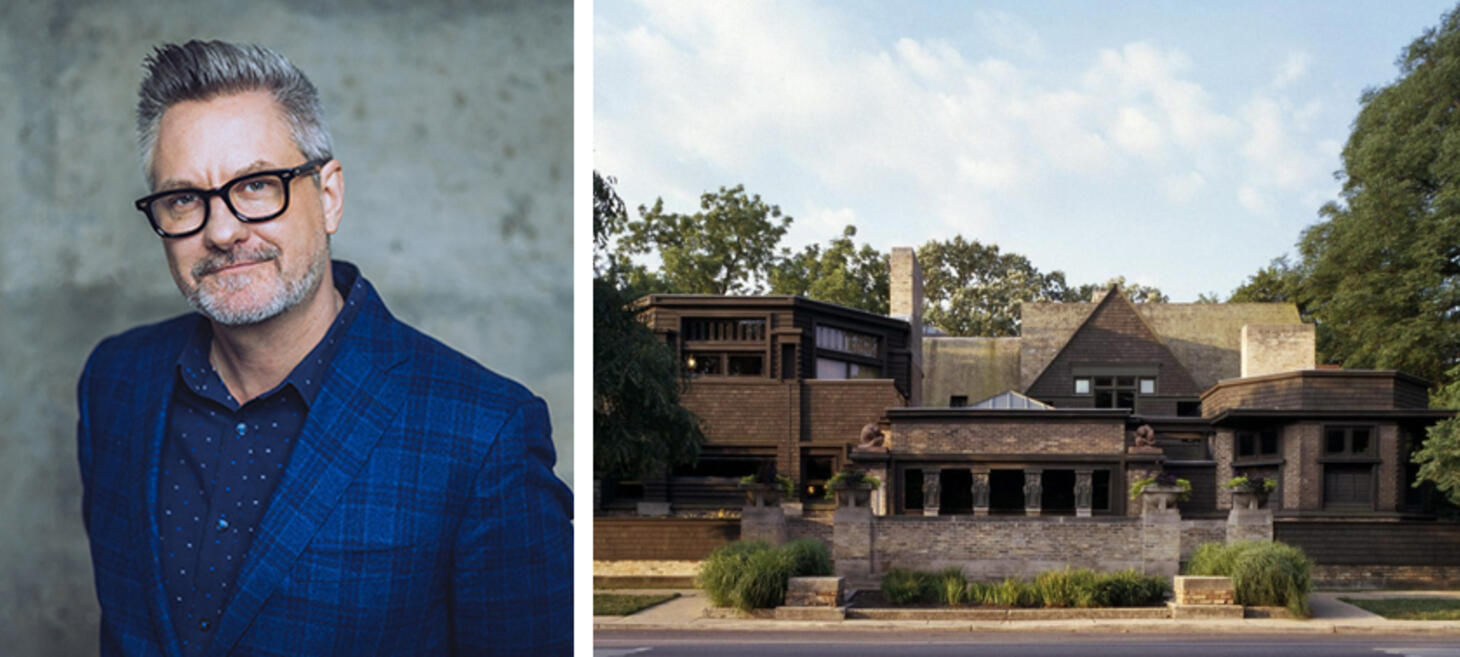
The Frank Lloyd Wright Trust Appoints Christopher R. Taylor As New President And CEO
The Frank Lloyd Wright Trust announced the appointment of Christopher R. Taylor as its new President & CEO, following a nationwide search process. He begins that role in mid-October.
Chris (he/him) has spent more than 25 years leading mission-driven arts and cultural organizations. As a seasoned executive leader with a distinguished career in arts administration, fundraising, and nonprofit management.
“We are very excited to have Chris on board to steer the Trust into our next phase. He will be a great fit and we are excited about his vision and skills as we continue to serve our mission of inspiring the public with the ideas and works of Frank Lloyd Wright,” said John M. Rafkin, Chairman of the Frank Lloyd Wright Trust Board of Directors.
Chris’ connection with Chicago is real. He held early career positions in the city, including work at the Art Institute of Chicago, Center on Halsted, and service on the board of the Beer Culture Center. Chris holds a Bachelor of Fine Arts in Sculpture and a Bachelor in Religious Studies from Indiana University of Pennsylvania. He holds a Master of Arts Administration and Policy from the School of the Art Institute of Chicago. He has held chief executive roles at prominent institutions such as the Museum of Boulder, Pilchuck Glass School, The Clay Studio, and Holter Museum of Art, consistently demonstrating his ability to strengthen organizational finances, expand audiences, and deliver strategic results. He has been a grant review panelist for the National Endowment for the Arts, the Pennsylvania Council on the Arts, the Windgate Foundation, and many others.
"It's an honor to lead the Frank Lloyd Wright Trust at a pivotal moment in its history,” said Taylor. “Frank Lloyd Wright talked about a house being of the hill, not on the hill. He was talking about sustainable design long before it was fashionable. That way of thinking has something to say about how we build and live now and into the future. My job, along with a dedicated group of staff and volunteers, is to make sure the Trust sets the stage so people can experience Wright's legacy firsthand.”
He continued, “The Frank Lloyd Wright Trust has extraordinary assets: UNESCO World Heritage sites, a nationally recognized education program, a committed volunteer base, and a mission that connects to something permanent in American culture. I look forward to working with the board and staff to strengthen the organization while adding financial clarity and strategic focus to the Trust’s next chapter.”
Click for more details: flwright.org
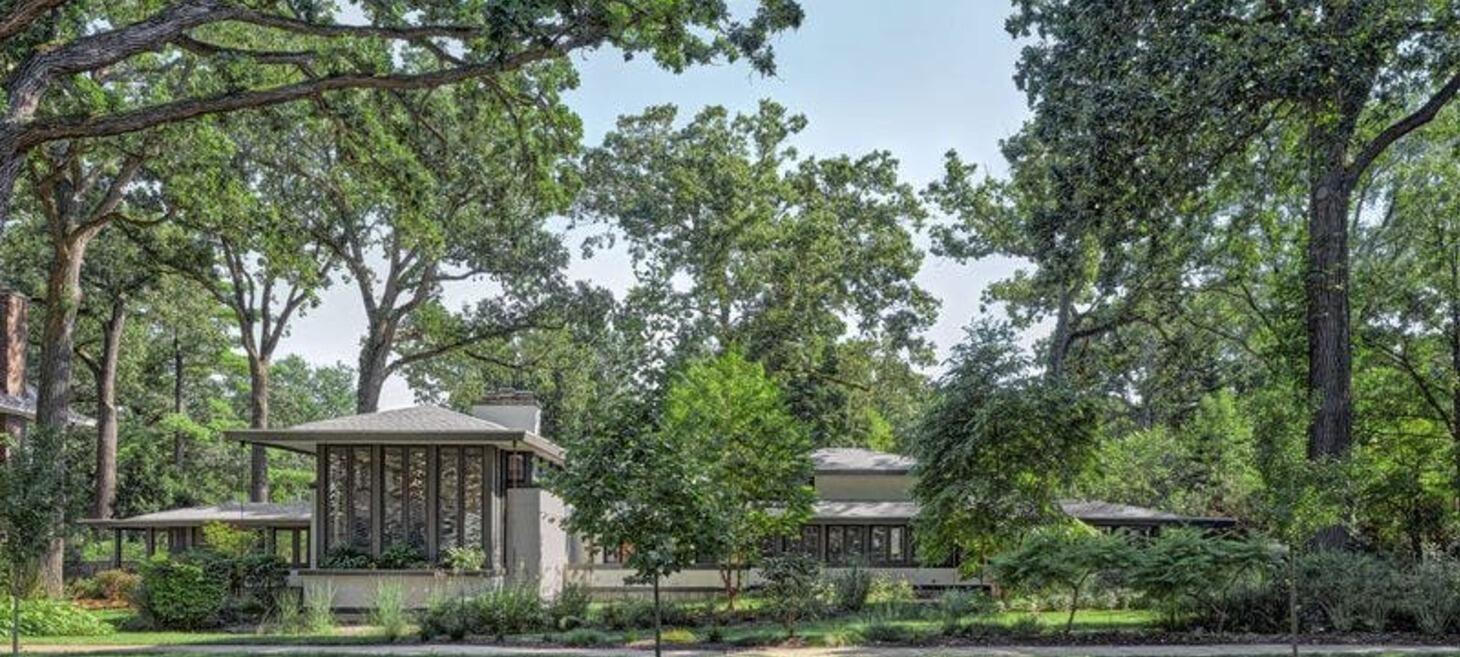
Wilmette Homeowners Honored For Restoring Frank Lloyd Wright's Baker House
Wilmette residents Amy and Eric Bauer will receive a 2026 Wright Spirit Award from the Frank Lloyd Wright Building Conservancy for the restoration and renovation of the Baker House, a Frank Lloyd Wright-designed home at 507 Lake Ave. in Wilmette.
The conservancy announced four Wright Spirit Awards and two Conservancy Awards for 2026 on Thursday.
The Wright Spirit Award has been given annually since 1991 to recognize extraordinary commitment to preserving the built works of Frank Lloyd Wright and enriching his legacy, according to the Frank Lloyd Wright Building Conservancy. The Conservancy Award is given selectively, on the initiative of the staff, to honor those who have provided special assistance in carrying out the education and preservation mission of the organization.
"Wright's buildings are treasured by countless people around the globe - but, each year, it is the extraordinary efforts of a dedicated few that we celebrate with our awards,” said executive director Barbara Gordon. “Their work to preserve Wright's legacy fuels our movement, strengthening our resolve to preserve these remarkable places so they can inspire for generations to come."
According to the Frank Lloyd Wright Foundation, the Prairie-style Baker House has a T-shaped design similar to Wright's Isabel Roberts House, another Illinois residence built in 1908. The foundation said the design also stemmed from another residential project that fell through after Wright's project with client William Norman Guthrie was called off, and that a near-exact plan was then submitted to Baker.
The foundation said Baker was a trained engineer and lawyer who worked in the electric service industry. Baker and his two children lived in the home, often referred to as the Baker Bungalow, until 1923.
The two-story home was built in 1909 and measures 4,800 square feet. It has five bedrooms, three-and-a-half bathrooms and three fireplaces. An addition was made to the house 10 years after the initial construction that included two bedrooms and a bathroom. The house is considered one of Wright's larger wood and plaster homes.
The awards will be presented during the gala at the conservancy's annual conference in Scottsdale, Arizona, on Saturday, Nov. 7.
Click for more details: patch.com
Marin Clarifies Role Of Civic Center Conservancy
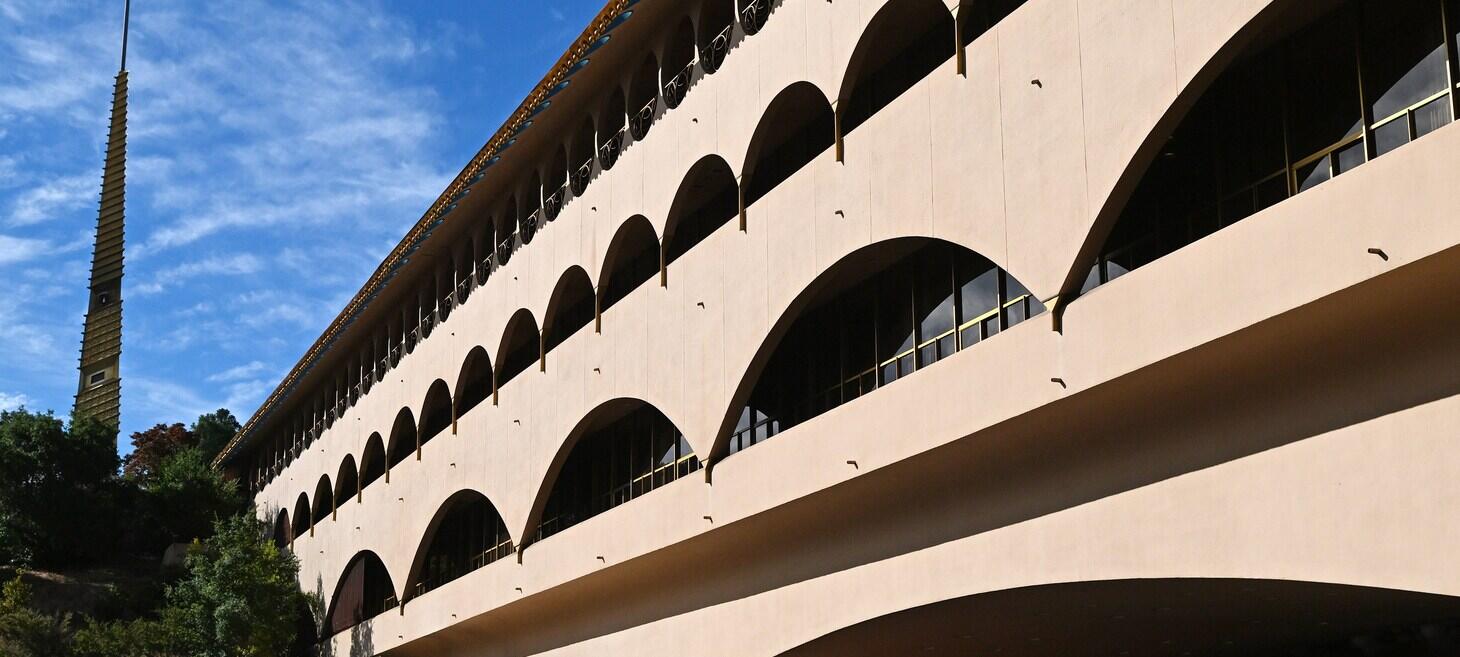
Marin County is clarifying the role of the Civic Center Conservancy, a nonprofit created to help support and enhance the Marin Civic Center. County supervisors this month voted to preserve the Frank Lloyd Wright Civic Center Conservancy while also clarifying the limits of its powers and responsibilities. The county wants to make clear that the Conservancy is a partner rather than an organization that controls or manages the Civic Center itself.
The distinction matters as Marin undertakes a broad revitalization of the Frank Lloyd Wright–designed campus. The county remains responsible for the Civic Center’s public facilities, operations, maintenance, and major capital improvements, while the Conservancy’s role is focused more on fundraising, advocacy, programming, and helping build community support for improvements. This clarification is intended to prevent confusion about who is responsible for decisions and spending as numerous Civic Center projects move forward.
Designed by Wright not long before his death in 1959, the Civic Center buildings — the Administration Building, the Hall of Justice, Veterans Memorial Auditorium and Exhibit Hall — were constructed during the 1960s and early 1970s. The campus is listed on the National Register of Historic Places.
The conservancy was initially created in 1990 to review proposed alterations, advise supervisors on maintenance, preserve original furnishings and educate the public about the Civic Center and Wright’s legacy.
In 1996, the supervisors determined that there was a need for fundraising to underwrite long-term restoration of the campus. The board approved “in concept” the creation of a nonprofit, initially called the Civic Center Preservation Fund, to raise and manage private funds for preservation purposes.
In 1997, supervisors formally established the Frank Lloyd Wright Civic Center Conservancy, merging the original Civic Center Conservancy Commission with the preservation fund. The merger unified preservation oversight and fundraising into a single organization.
“While fundraising was originally envisioned as part of the conservancy’s mission, in practice, the conservancy has primarily functioned as a preservation advisory body and has not served as a fundraising organization,” Libby Garrison, deputy director of the Marin County Department of Cultural Services, told supervisors Tuesday,
The conservancy’s failure to raise funds was noted in a civil grand jury report issued in June titled, “Marin County Civic Center: In Need of Love.” The report noted that there is $100 million to $200 million in deferred maintenance in the Administration Building and Hall of Justice alone according to estimates by county staff.
Garrison said the conservancy’s history had “created some uncertainty regarding its status and role.” The resolution adopted by supervisors on Tuesday eliminates that ambiguity.
“It formally clarifies that the conservancy is a county advisory committee whose primary purpose is to provide expert and community-based advice regarding preservation and stewardship of the Civic Center,” Garrison said.
She said the resolution makes it clear that the conservancy is not intended to function as an independent nonprofit organization, hold assets, enter into contracts or operate separately from the county unless specifically authorized by supervisors.
Click for more details: marinij.com
About
This weekly Wright Society update is brought to you by Eric O'Malley with Bryan and Lisa Kelly. If you enjoy these free, curated updates—please forward our sign-up page and/or share on Social Media.
If you’d like to submit content to be featured here, please reach out by emailing us at mail[at]wrightsociety.com.
Eric, Bryan & Lisa | Wright Society Publishers