
The Headlines
Wright Plus 2026 Brought Families To Visit Childhood Homes
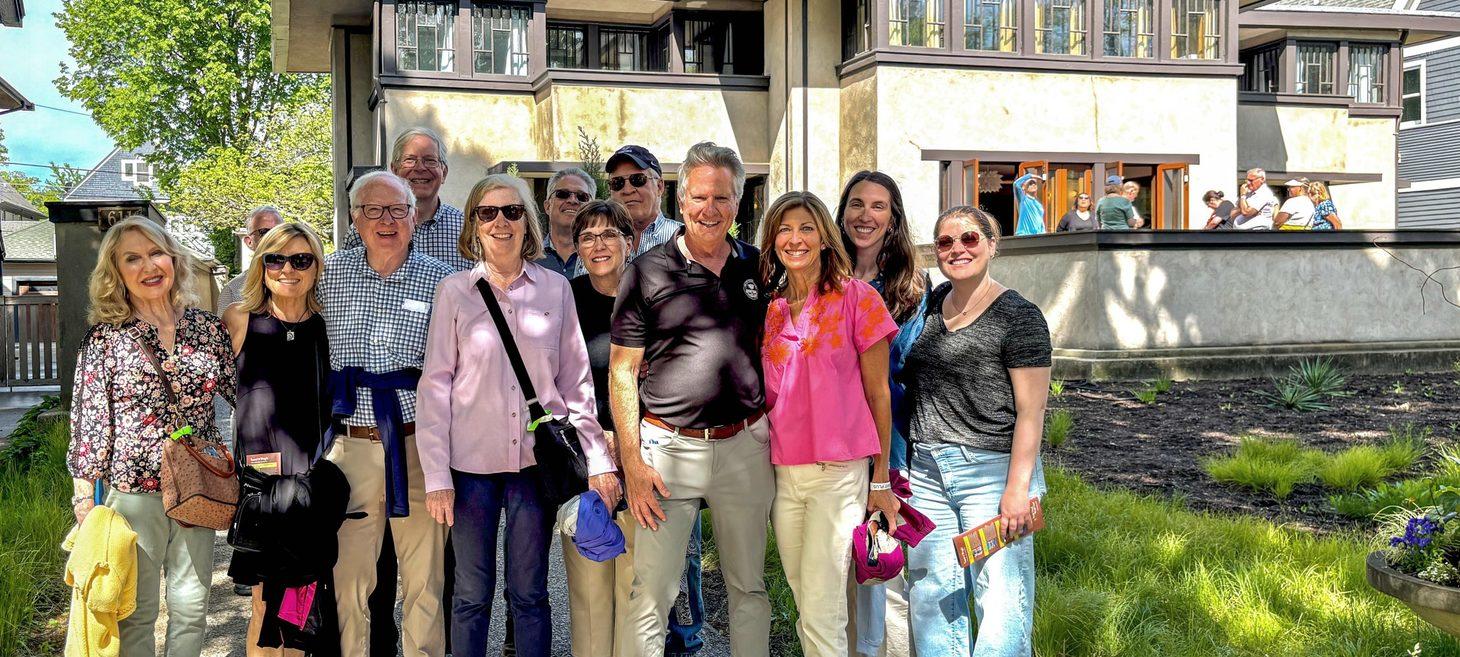
The Oscar and Nonie Balch House in Oak Park, Illinois, designed by Frank Lloyd Wright in 1911, was featured on this year’s Wright Plus tour not only for its architectural significance but also for its rich family history. From 1957 to 1962, the house was home to Oak Park’s first village manager, Mark Keane, his wife Carolyn, their growing family, and Mark’s father. The family arrived with five boys and left with eight children after the birth of a daughter and two more sons.
Though the house retained its original footprint during the Keanes’ residency, the children remembered it as spacious and full of life. They watched for Sputnik from the home’s flat roof, delivered newspapers for the local Oak Leaves, and experienced everyday family life in a household of eleven people. Mark Keane became known for helping save Oak Park’s trees during the Dutch elm disease outbreak by establishing a parking sticker fee to fund forestry efforts.
After leaving Oak Park, the Keane family maintained a strong connection to the house, returning for visits in 2003 and again during this year’s Wright Plus event. Four siblings, along with children and grandchildren, gathered at the home where many of their earliest memories were formed. Researcher Ken Simpson, a volunteer with the Frank Lloyd Wright Trust, interviewed family members and uncovered stories, photographs, and personal recollections that brought the home’s history to life.
Simpson says these family connections are among the most rewarding parts of his work. Former residents and their descendants are often eager to share memories and artifacts, helping transform Wright’s houses from preserved architectural landmarks into living histories shaped by the generations who called them home.
Click for more details: oakpark.com
Frank Lloyd Wright And Transformative Culture
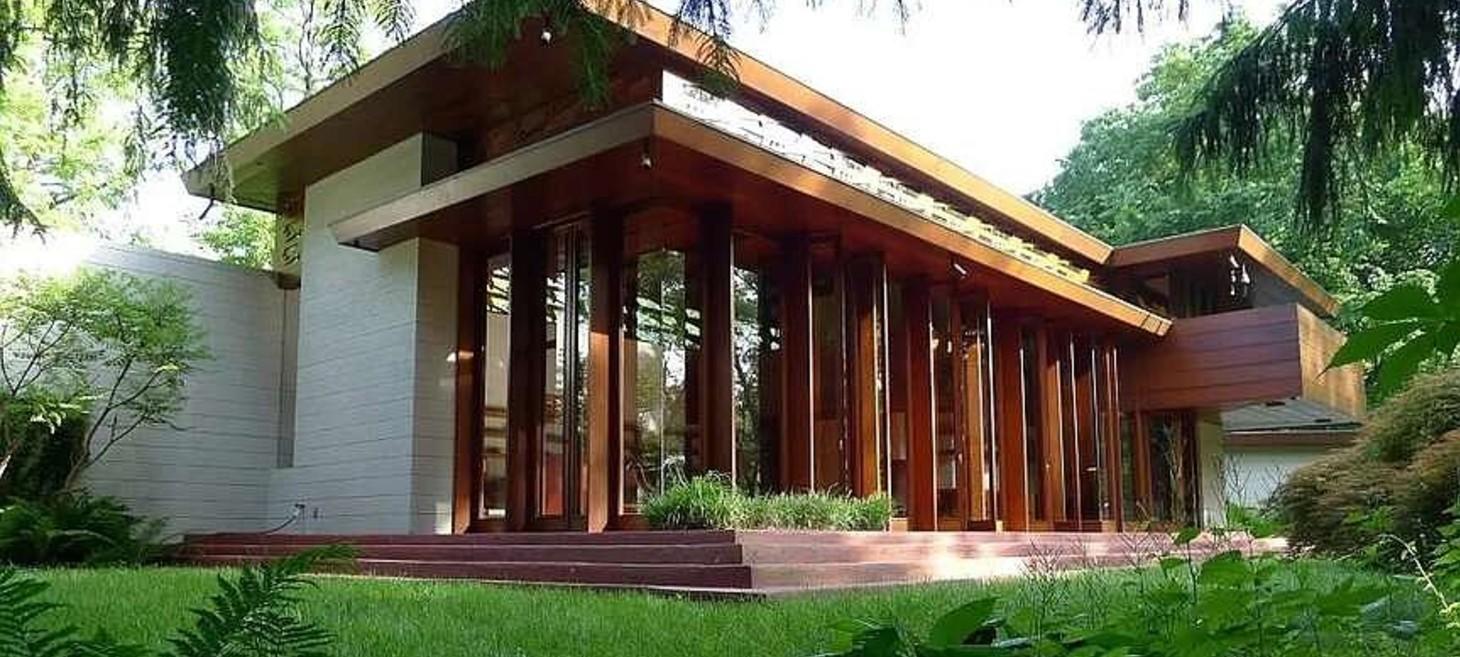
Frank Lloyd Wright’s buildings are celebrated as masterpieces that transformed American architecture, particularly through his idea of “organic architecture,” which sought to integrate buildings with their natural surroundings. Yet many of his works have also been criticized for functional problems such as leaks, maintenance challenges, and engineering shortcomings. These flaws do not diminish Wright’s importance. Instead, they illustrate a broader question about how society evaluates great creators: whether innovation and beauty should be judged primarily by practicality or by the power of their ideas.
Wright’s influence endures because he expanded what architecture could be, even when some of his designs proved difficult to maintain or inhabit. Using Wright as a case study, one can explore the relationship between ambition, creativity, and imperfection. Transformative figures often leave behind work that is both inspiring and flawed, and that their lasting significance comes less from flawless execution than from their ability to reshape how people think about a field.
Wright’s legacy lies in the boldness of his vision and the continuing debate it provokes about the balance between art, function, and human aspiration.
Click for more details: nwaonline.com
Student Summer Camps Offered At Alden B. Dow Home And Studio
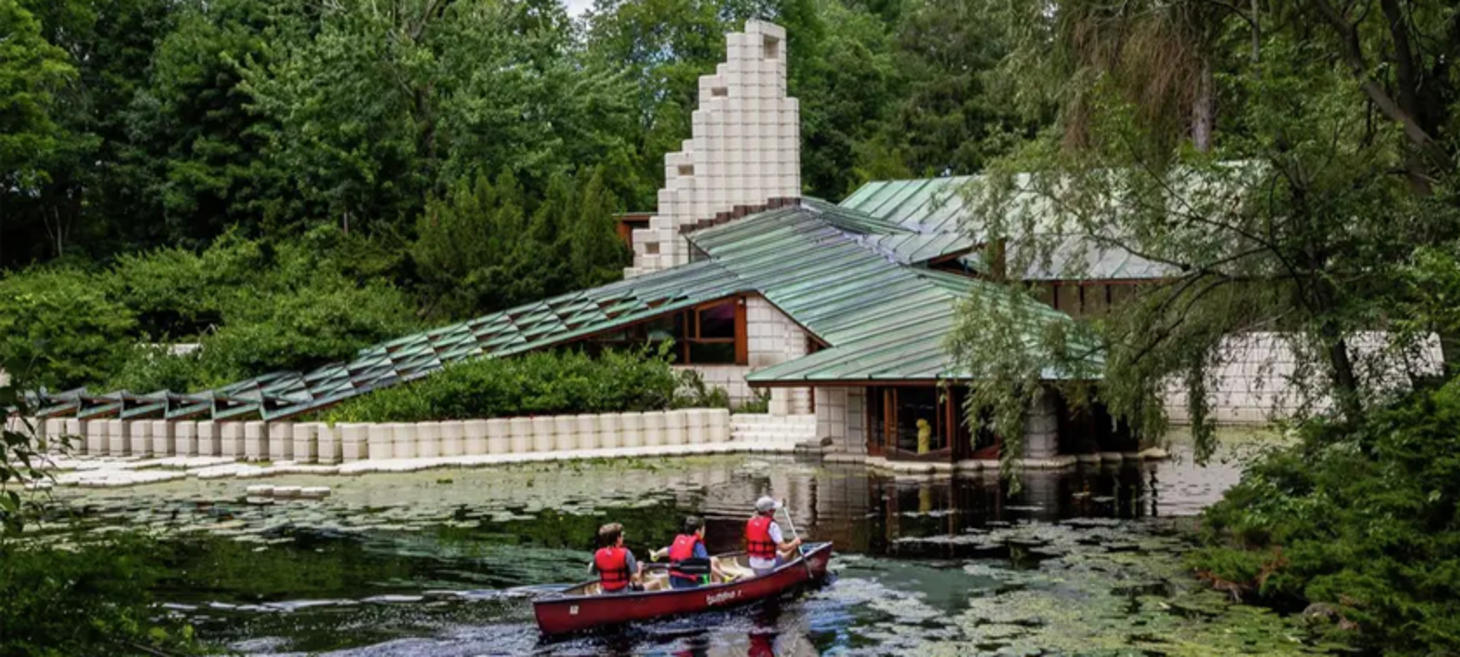
This summer, students have the opportunity to enroll in an Architecture or Design Summer Camp at the Alden B. Dow Home and Studio in Midland, Michigan.
Summer camps offer a great balance of indoor and outdoor activities for both learning and enjoyment. Weather permitting, all camps include visiting another Mid-Century Modern structure and canoeing on the pond surrounding what architect and author Tobias S. Guggenheimer called “one of the most moving, if undiscovered, architectural treasures in the United States.”
Each camp concludes with an open house where campers can share their experiences with family and friends.
Camps offered include:
Architecture I Camps for 4th-6th grade • $190 Session 1: July 20-23, 9:30 a.m.-4 p.m.
Architecture II Camps for 4th-6th grade • $190 Session 2: July 27-30, 9:30 a.m.-4 p.m.
Design I Camps for 7th-9th grade • $190 Session 1: June 22-25, 9:30 a.m.-4 p.m.
Design II Camps for 7th-9th grade • $190 Session 1: July 13-16, 9:30 a.m.-4 p.m.
For more information, visit abdow.org.
Click for more details: ourmidland.com
Oregon Home designed By Frank Lloyd Wright Apprentice Received An Offer In Days -
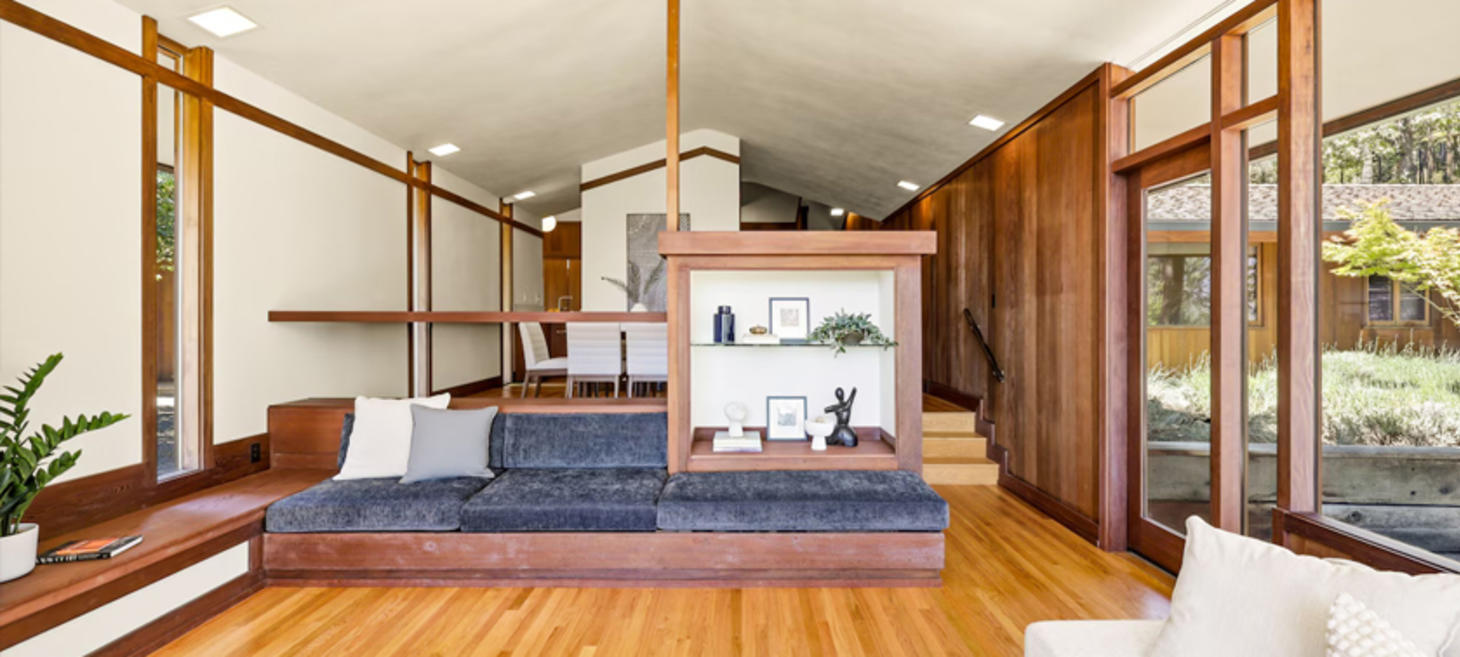
A striking home in Ashland, Oregon that was designed by an apprentice of Frank Lloyd Wright, architect Donald Fairweather, quickly attracted buyer interest after being listed for sale.
Fairweather studied under Wright between 1948 and 1952. He and others in Wright’s coveted fellowship program spent winters at Wright’s home and studio Taliesin West in Scottsdale, Arizona, and summers at Taliesin in Spring Green, Wisconsin.
Donald Fairweather designed this 1959 house, his first residential commission, for Bill and Peg Sammons. The Sammons family sold the home to Fairweather 55 years later in 2014. He lived there the rest of his life. Fairweather died in 2021.
The property for sale is elevated above downtown Ashland and was carefully sited within its natural surroundings. The residence reflects Wright’s philosophy of organic architecture, emphasizing harmony with its natural surroundings through extensive use of wood, large windows, clean lines, and a strong connection between indoor and outdoor spaces.
The house has been carefully maintained and updated over the years while preserving its original architectural character. Located on a wooded site with scenic views, it combines mid-century modern design with contemporary livability. According to the listing, the property received an offer within just a few days of hitting the market, underscoring the strong demand for architecturally significant homes and the enduring appeal of Wright-inspired design.
Click for more details: oregonlive.com
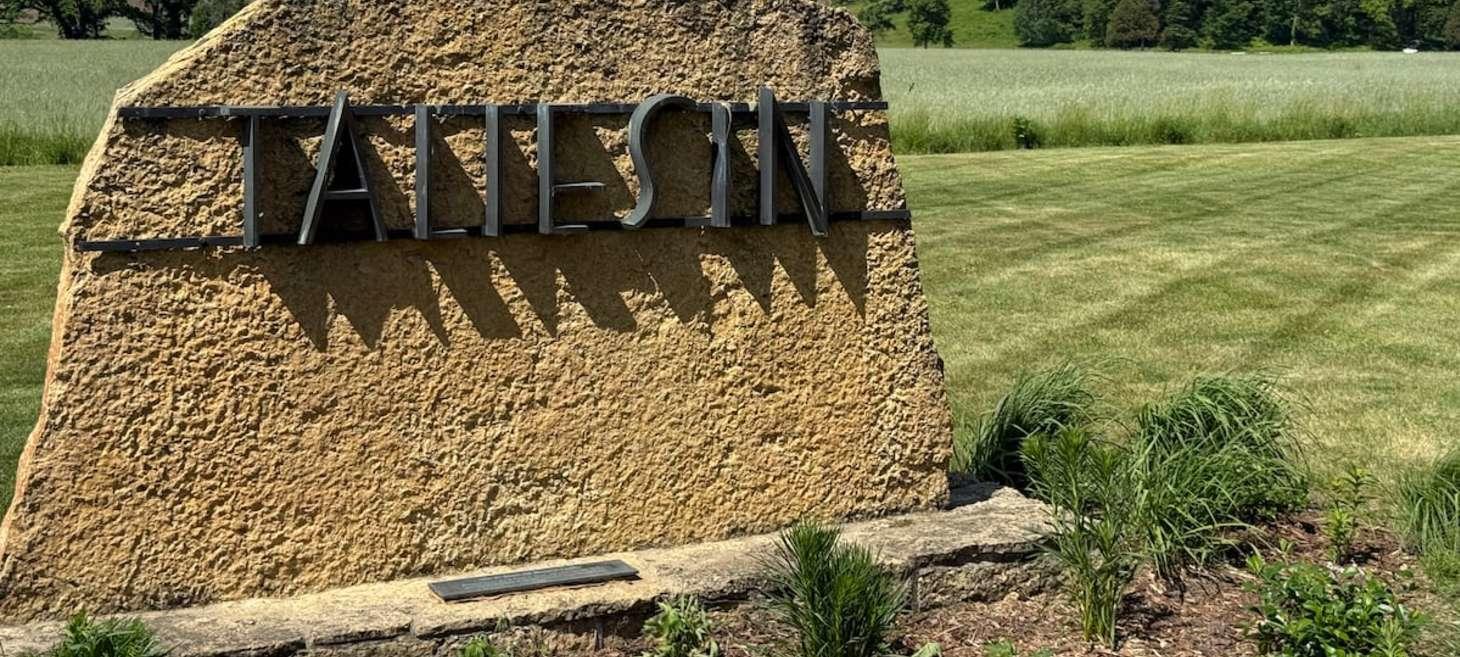
Frank Lloyd Wright’s Influence Still Felt In Wisconsin And Beyond
Frank Lloyd Wright was a world-renowned architect and designer who called Wisconsin home. Wright was born June 8, 1867, in Richland Center.
“Wright was a Wisconsin farm kid. He didn’t graduate from high school. He dropped out of college. He went on because he had a dream and an idea and he persisted with that,” said Carrie Rodamaker, executive director of Taliesin Preservation.
Wright designed a home in Spring Green, Wisconsin and lived there for decades. It’s nestled among the rolling hills and beauty of southwestern Wisconsin. He called his home Taliesin. This was Wright’s home starting in 1911, he had lived here for more than 50 years of his life,” said Rodamaker.
Taliesin is a prime example of the brilliance of Wright and his design style.
“He was kind of the originator of what we call ‘organic architecture’ and that’s really about the embodiment, the blending in harmony of the natural, the build, and the cultural environment,” said Rodamaker.
There’s also no shortage of Wright’s designs for you to check out. His work can be see all over the world, including many buildings right here in the Midwest.
“He’s got over 500 different buildings that he built in his career which is quite phenomenal. And over 1,000 he designed throughout his lifetime,” added Rodamaker.
Taliesin is available for the public to come visit. You can check out the 800-acre property on a guided tour. Wright’s creativity is on full display as you move from room to room.
“Everything that he did here was intentional,” said Rodamaker. “I’ve been with the organization for 24 years and I’m always learning something new and I’m always seeing something different.”
Wright died in 1959 but his legacy lives on through his work.
You can tour Taliesin every day during the week in the summer. They are open 9 a.m. until 5 p.m. Tours start at $40.
Click for more details: wmtv15news.com
About
This weekly Wright Society update is brought to you by Eric O'Malley with Bryan and Lisa Kelly. If you enjoy these free, curated updates—please forward our sign-up page and/or share on Social Media.
If you’d like to submit content to be featured here, please reach out by emailing us at mail[at]wrightsociety.com.
Eric, Bryan & Lisa | Wright Society Publishers