
The Headlines
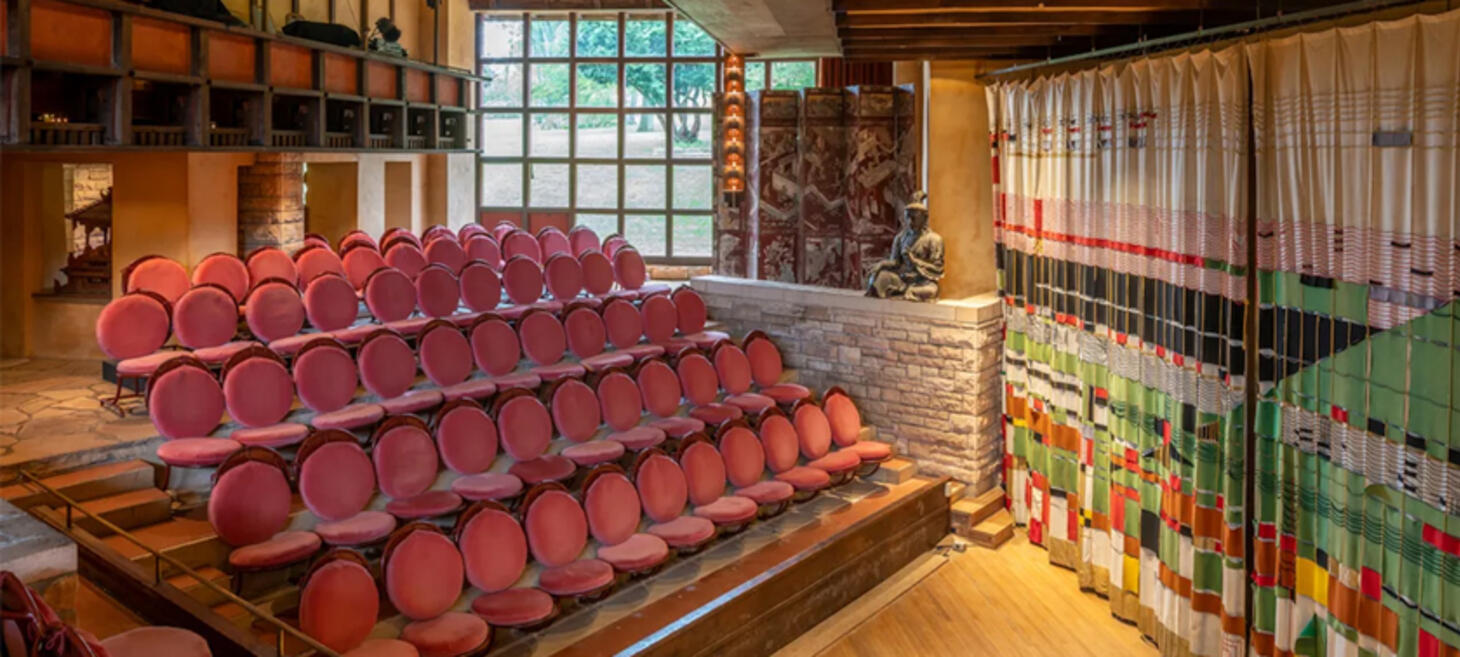
Taliesin Preservation Awarded Grants for Improved Audio Accessibility at Historic Hillside Theater
Taliesin Preservation was awarded grants from the Community Foundation of Southern Wisconsin’s Robert G. Campbell Community Fund and the Frankenmuth Insurance Charitable Foundation in support of improved audio accessibility for historic Hillside Theater at Taliesin. Grant funds were used to acquire and install an ADA-compliant assistive listening system in the theater, ensuring that all visitors can fully experience theater performances, lectures, and other public programs. Audience members can use provided receivers or connect to the system through their personal Bluetooth-enabled hearing aids, earbuds, or headphones.
Maria Kopecky, Programs Manager at Taliesin Preservation, says that no matter who is coming to this theater, they’ll be able to hear and participate in the experience. “We were so excited to learn about the Auracast technology because it really is non-invasive – and it works really well in a place like this.” Kopecky's comments are featured in a video produced by Full Compass telling the story behind the installation, available here.
Approximately 60% of the audience at Hillside Theater events is age 65 or older, and data from the National Institute of Health indicates that at least 31% of this 65+ demographic has some or significant difficulty hearing.
As our Hillside Theater offerings continue to grow in 2026 and beyond, this investment in enhanced audio accessibility will directly benefit an estimated 400-600 visitors with hearing loss each year. Families and caregivers of visitors with hearing loss will also benefit from knowing that their loved ones will enjoy full access and enjoyment of events at Hillside Theater – in the same place Frank Lloyd Wright enjoyed viewing regular performances during his lifetime.
For a full lineup of events at Hillside Theater and to join us for a lecture, live music, artistic performance, classic film, and more, please visit here.
Click for more details: taliesinpreservation.org
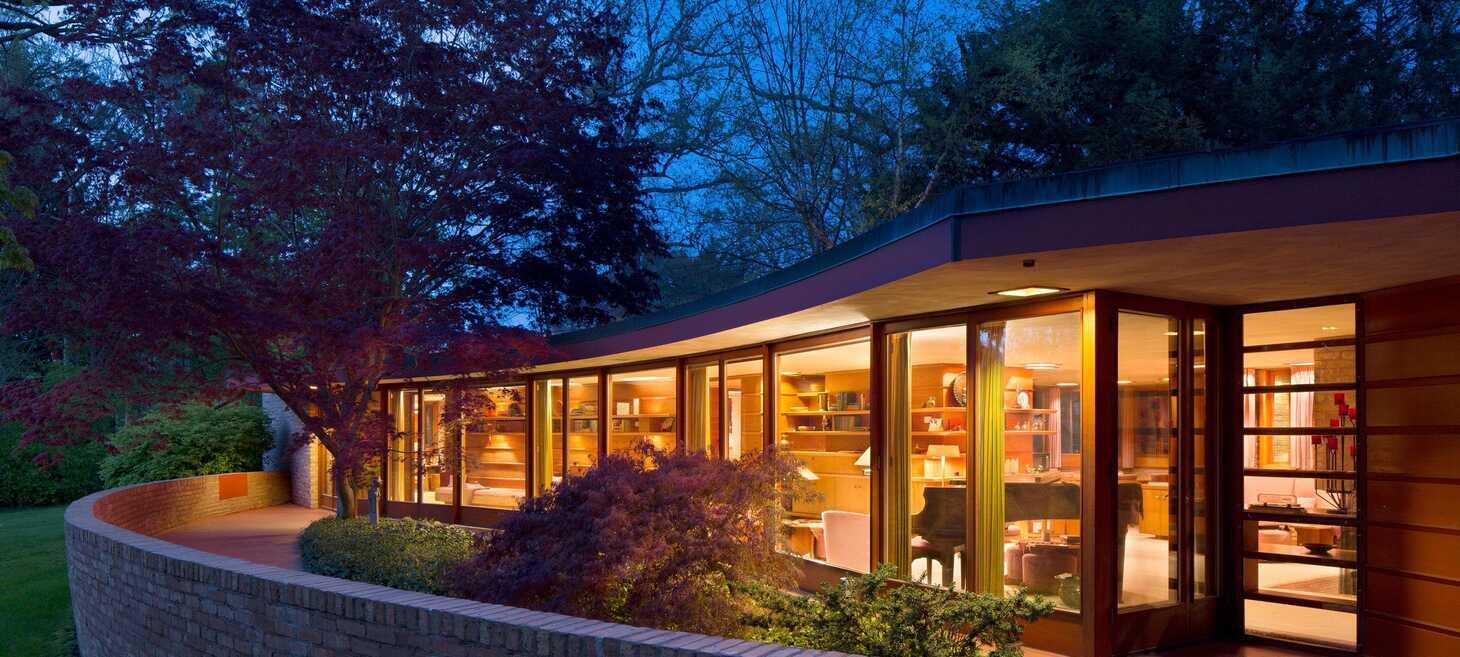
Rockford Event Highlights Wright’s Vision For Accessible Homes
The Laurent House Foundation will host a lecture on Frank Lloyd Wright's architectural philosophy July 18 celebrating Frank Lloyd Wright’s groundbreaking approach to accessible home design through the Laurent House, the only home he designed specifically for a wheelchair user. The speaker, John H. Waters, AIA, is preservation programs director at the Frank Lloyd Wright Building Conservancy. This talk will look at examples of Wright buildings, ranging from his work inscribed on UNESCO’s World Heritage list to the Laurent House to see how Wright unified form and function.
The event highlights how Wright worked closely with Kenneth Laurent, a World War II veteran who was paralyzed, to create a home that emphasized independence, dignity, and ease of movement decades before accessibility standards such as the Americans with Disabilities Act existed. Waters highlights Wright’s innovative use of wide doorways, open spaces, and barrier-free design, showing how accessibility and beautiful architecture can coexist.
Organizers emphasize that the Laurent House remains an important educational resource and a lasting example of inclusive design, inspiring architects, preservationists, and visitors to consider accessibility as a core element of good design rather than an afterthought. Tickets start at $10.00.
Click for more details: rrstar.com
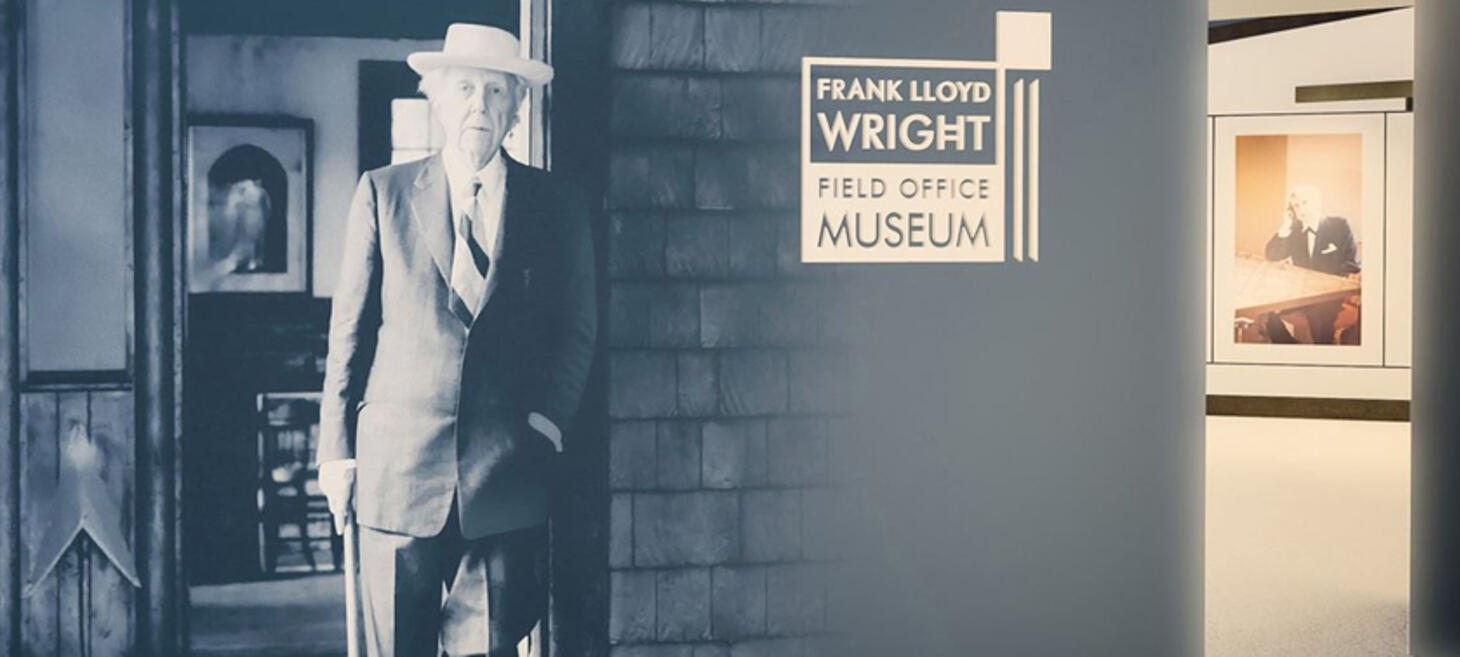
Frank Lloyd Wright's Field Office Is The Star Of A New Museum In Erie
A unique museum within a museum, Frank Lloyd Wright Field Office Museum opened on June 27, 2026 in Erie centering on a rare surviving field office designed by architect Frank Lloyd Wright. Originally built in the 1950s as a temporary workspace for the construction of a Wright-designed home, the modest structure has been carefully preserved and relocated to the Hagen History Center, where it now serves as the museum's centerpiece.
In 2004, Carnegie Museum of Art director Richard Armstrong told the Post-Gazette that it was selling Wright’s San Francisco field office and that a very large institution was needed to display and maintain it.
“Can you name five that would be able to maintain it at that level of commitment?” he said. “There’s no particular reason why it has to be in Western Pennsylvania.”
The Hagen History Center in Erie heard the clarion call and was willing to take on that challenge.
“The museum had the space and funding to do the work,” said Cal Pifer, its president and CEO.
Fallingwater director Justin Gunther was impressed after attending the opening of Hagen History Center’s new Frank Lloyd Wright Field Office Museum on June 27.
“The Field Office Museum offers visitors an opportunity to explore yet another original Wright-designed space, making our region one of the best in the country to experience the architect’s remarkable legacy,” he said via email.
While Wright’s reassembled field is the museum’s main attraction, the interactive exhibits showcasing the legendary architect will appeal to visitors of all ages, Gunther added.
The museum explores how Wright's portable field offices functioned as command centers where he met with clients, reviewed plans, and oversaw construction. Although simple in appearance, the building reflects many of Wright's hallmark design principles, including natural materials, efficient use of space, and a strong connection to its surroundings. The exhibit also places the office within the broader story of Wright's career and his influence on American architecture.
In addition to the restored office itself, visitors can see original furnishings, architectural drawings, photographs, and other artifacts that illustrate Wright's design process and the history of the building's preservation. Organizers hope the museum will attract architecture enthusiasts while highlighting Erie's connection to one of America's most influential architects.
Click for more details: post-gazette.com
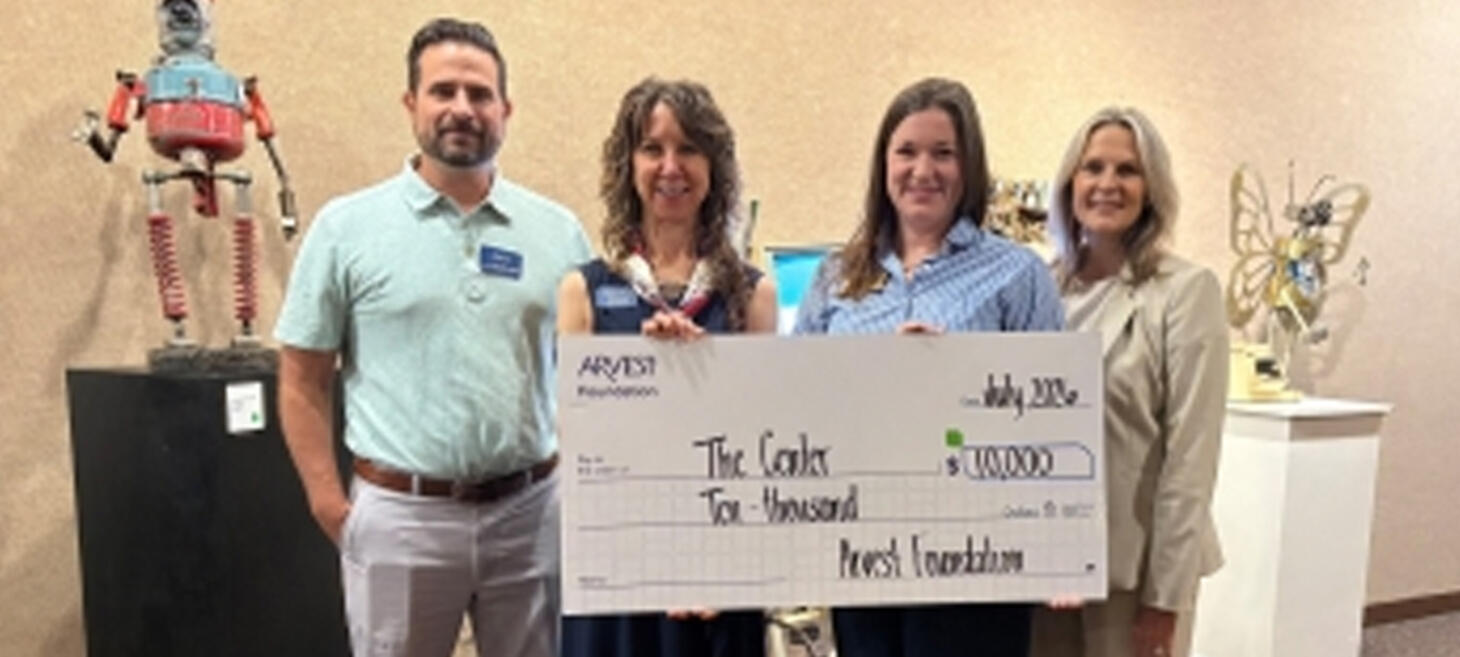
Arvest Foundation Donates $10K to The Center
The Arvest Foundation has awarded a $10,000 grant to the Bartlesville Community Center to support a new exhibition series designed to showcase emerging artists and expand opportunities for local creatives.
Designed by architect William Wesley Peters, an apprentice of Frank Lloyd Wright, the Bartlesville Community Center opened in 1982 as a complement to Price Tower. Since then, the facility has served as a venue for civic meetings, performing arts productions, art exhibitions in the Lyon Gallery, educational seminars in the Marie Foster Performing Arts Hall, and community events held both indoors and at Unity Square.
The donation will fund "First Impressions," an emerging artist series that will feature the work of four new, unestablished artists throughout the year in the Center's Lyon Gallery. Each artist will receive an individual exhibition, providing the opportunity to display their work in a professional gallery setting and helping advance their artistic careers.
Arvest Wealth Management Trust Officer Aaron Tesavis and Arvest Marketing Manager Stevie Williams presented the donation to the Center's Development Director Valarie Hulse and Managing Director Caitlyn Kraemer.
"We are happy to present this donation on behalf of the Arvest Foundation," Williams said. "The Center continues to find imaginative ways to inspire the community through various forms of art. We enjoyed exploring the gallery during the first show featuring the talented Josh Wadell, on display now through July 31."
The Bartlesville Community Center said the "First Impressions" series aligns with its mission to provide cultural and educational facilities and programming that strengthen the city's culture and economy.
Click for more details: bartlesvilleradio.com
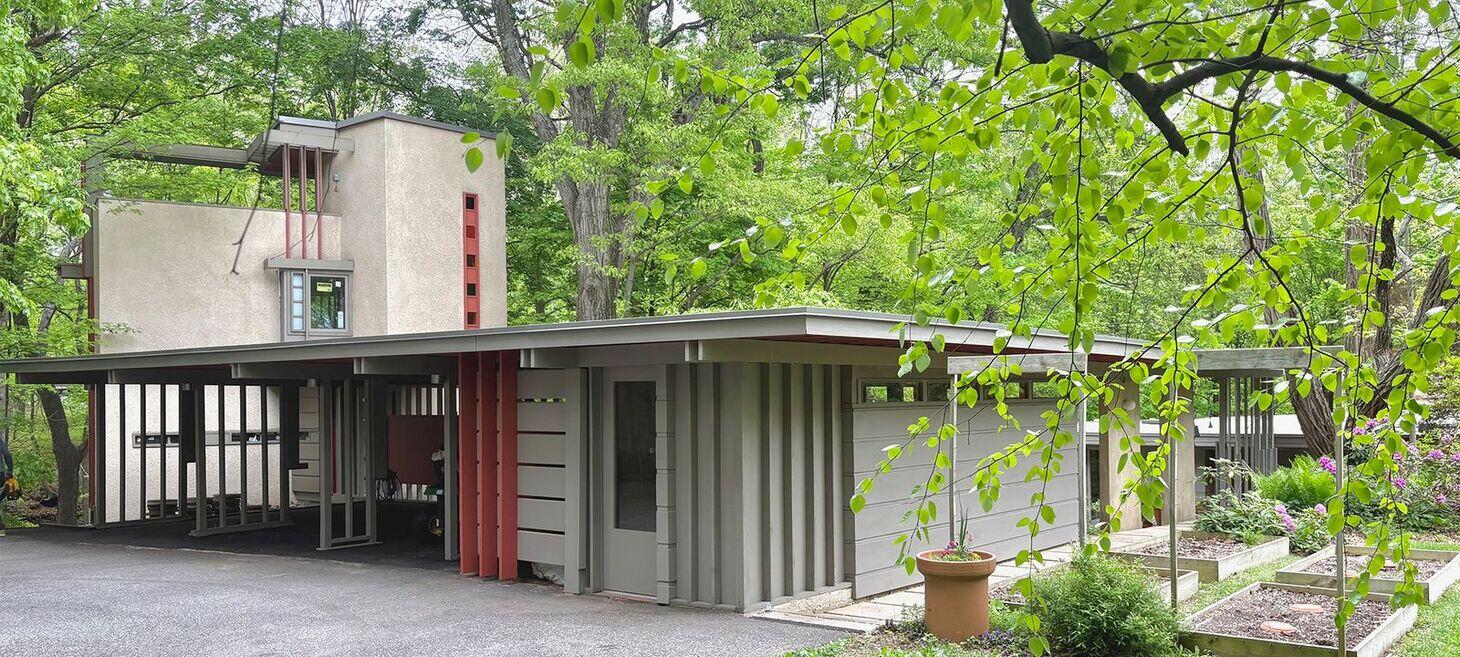
Three Frank Lloyd Wright Followers Designed This $1.1M Ohio Midcentury With An “Ivory Tower”
Dwell profiles Glenbrow, also known as the Gunning House, a meticulously restored midcentury home in Blacklick, Ohio, listed for $1.099 million. Built in 1940 on a 2.5-acre wooded ravine, the house was designed by Tony Smith, Ted van Fossen, and Laurence Cuneo, three architects influenced by Frank Lloyd Wright’s philosophy of organic architecture.
Tony Smith, Ted van Fossen, and Laurence Cuneo met in 1937 at the New Bauhaus in Chicago, then headed by László Moholy-Nagy. After the school closed, Smith and Cuneo joined Frank Lloyd Wright’s Taliesin Fellowship; in 1939, van Fossen received a commission to design and build a house for Rob and Mary Gunning, a young couple with a wooded lot on the edge of a ravine. The trio applied Wright’s principles of organic design to the residence, which they named Glenbrow.
The home emphasizes harmony with its surroundings through the use of stone quarried on-site, cypress wood, expansive French doors, and carefully framed views of the landscape. After years of vacancy and deterioration, the property underwent an extensive restoration completed in 2017 under architect Joe Kuspan. The renovation preserved the home's original character while discreetly incorporating modern upgrades such as energy-efficient windows, a redesigned kitchen with soapstone countertops, custom built-ins, and restored original furnishings. Kuspan intentionally distinguished new interventions from the historic fabric while maintaining the home's authentic material palette and architectural spirit.
A standout feature of the estate is the four-story "Ivory Tower," added in 1964 by Ted van Fossen as a writer’s retreat, guesthouse, and studio. The tower has been structurally restored with a new roof, windows, and framing but remains unfinished inside, allowing a future owner to complete it. Together with the Zen garden, terraces, wood-fired oven, and ravine setting, the property represents a rare example of Central Ohio’s modernist heritage and an early collaboration among designers who would go on to have influential careers.
Click for more details: dwell.com
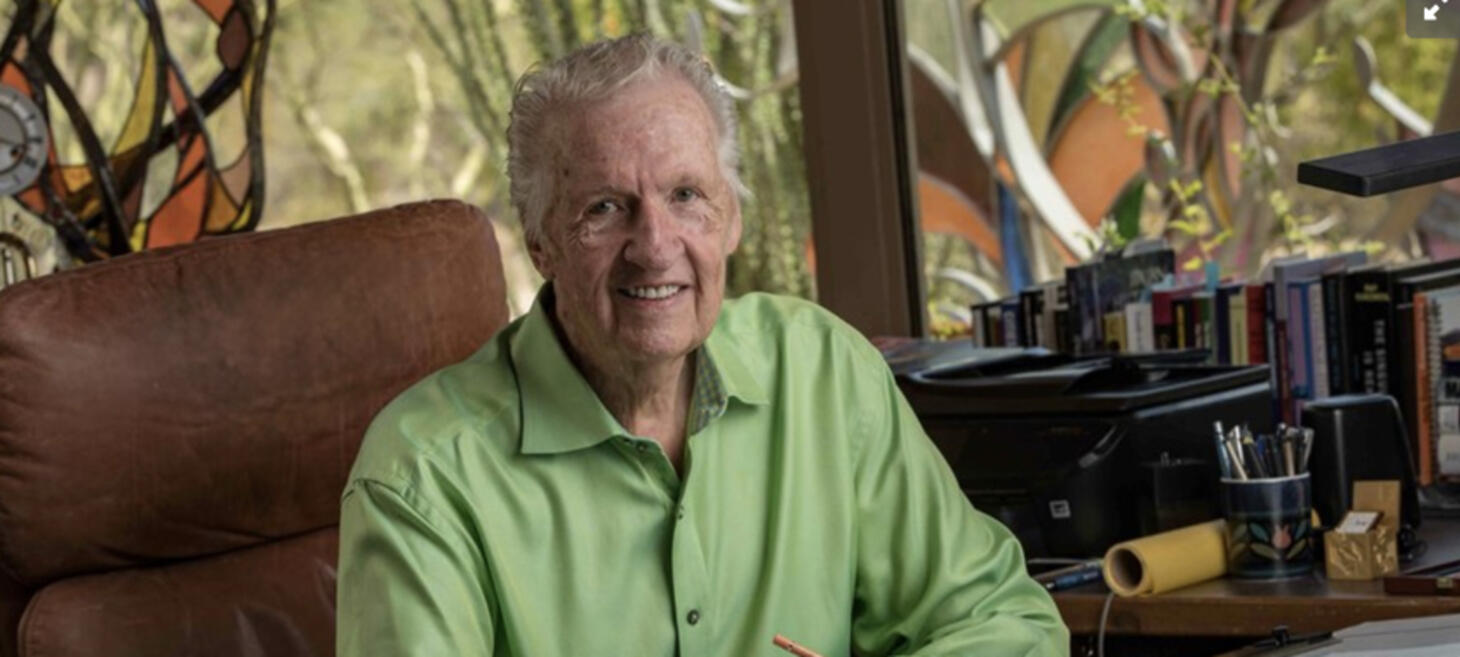
Vernon Swaback, Frank Lloyd Wright Apprentice, Dies At 87
Renowned Phoenix architect Vernon Swaback has died at the age of 87. Swaback was one of the youngest apprentices of Frank Lloyd Wright and went on to become one of Arizona's most influential architects.
Vernon "Vern" D. Swaback, born in Chicago, Illinois in 1939, passed away peacefully on July 5th, 2026, leaving behind an indelible legacy carved into the landscapes of the American Southwest.
Vern was an internationally recognized architect, author, and community planner. Born with an innate eye for beauty, Vern’s lifelong love for architecture truly ignited at just 17 years old. He made history by becoming the youngest apprentice to the legendary Frank Lloyd Wright. Spending 21 years within the Taliesin and Taliesin West communities, Vern absorbed Wright's principles of organic architecture. He later served as the Director of Planning and interim CEO and President for the Frank Lloyd Wright Foundation.
In 1978, he founded VSA (Vernon Swaback Associates) which later became SWABACK in Scottsdale, Arizona. Through his firm, his passion evolved to include residential, commercial, institutional, and master-planned communities. He shaped Arizona's landscape through countless projects such as the rezoning of the Arizona Biltmore Estates, planning of DC Ranch and Anthem, as well as securing historic firsts in the application of high-rise, mid-rise, and residential zoning ordinances in Phoenix and Scottsdale, alongside a 25-year involvement in the design of Kohler Village, Wisconsin.
Grounded in the principles of comprehensive design he learned from Frank Lloyd Wright, Vern viewed buildings as unified works of art where interior and exterior spaces flow seamlessly together. This philosophy inspired him to establish Studio V Interior Design in 1999, and achieve a dual Fellow of the AIA and AICP and earn professional accolades as an Arizona Historymaker. He extended his visionary leadership to the nonprofit sector by founding the Two Worlds Community Foundation in 2011, aiming to inspire young architects and designers to build a more sustainable future.
A true polymath, his artistic talent extended far beyond design into writing, sculpting, painting, and playing the trumpet. Vern was a man of immense wisdom, a captivating storyteller, and a philosopher, who viewed family and community as the ultimate cornerstones of a well-lived life. Constantly sharing his love for Frank Lloyd Wright, Vern was an infectious optimist and a true spokesman for the future, deeply believing that design, community, and love can change the world for the better.
Click for more details: bizjournals.com
About
This weekly Wright Society update is brought to you by Eric O'Malley with Bryan and Lisa Kelly. If you enjoy these free, curated updates—please forward our sign-up page and/or share on Social Media.
If you’d like to submit content to be featured here, please reach out by emailing us at mail[at]wrightsociety.com.
Eric, Bryan & Lisa | Wright Society Publishers